Understanding Positional Play: 5-Point Guide for Cohesive Attack Structures
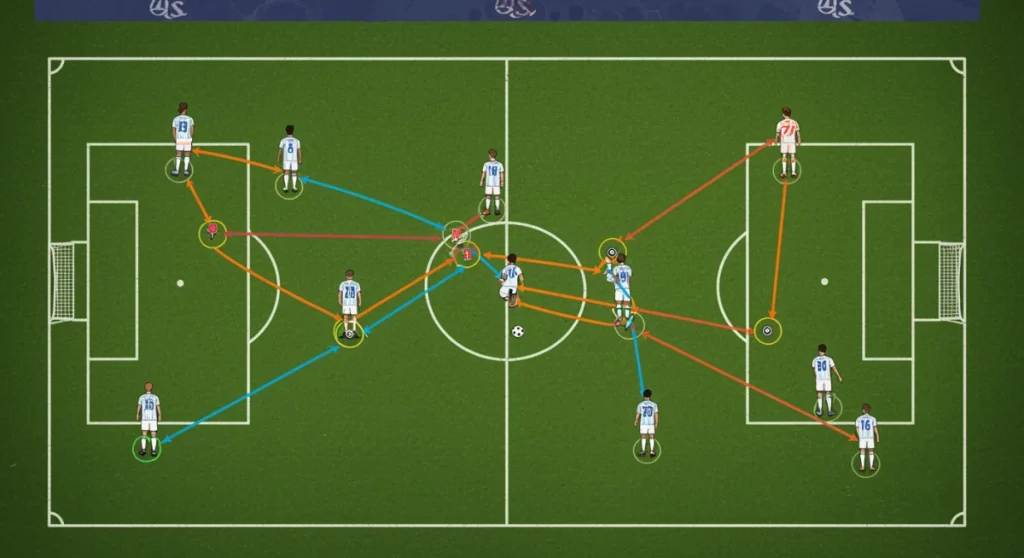
Positional play, a cornerstone of modern soccer, emphasizes strategic player placement and movement to create superiorities and build cohesive attacking structures, vital for competitive success in 2026.
In the ever-evolving world of soccer, understanding positional play guide has become paramount for teams aiming for sustained success. This tactical philosophy, often associated with some of the sport’s most dominant sides, focuses on creating numerical and qualitative advantages through intelligent player positioning and movement. It’s not just about passing the ball; it’s about controlling space, manipulating opponents, and building intricate attacking patterns that lead to goal-scoring opportunities. As we look towards 2026, mastering these principles will be more crucial than ever for coaches and players alike.
The Foundations of Positional Play: Space and Superiority
Positional play, or ‘Juego de Posición,’ is a complex tactical system built upon fundamental concepts of space occupation and the creation of various superiorities. It’s a philosophy that dictates how players should position themselves on the field, both with and without the ball, to maximize offensive potential and defensive stability. The ultimate goal is to control the game by dominating possession and dictating the tempo, often leading to a relentless attacking rhythm that can overwhelm opponents.
This approach isn’t merely about holding onto the ball; it’s about using possession as a tool to disorganize the opposition and open up pathways to goal. Players are encouraged to constantly assess their surroundings, understanding where their teammates are, where the opponents are, and, most importantly, where the critical spaces lie. This constant spatial awareness allows for quick, intelligent decisions that maintain the team’s structure and forward momentum.
Spatial Occupation and Control
One of the core tenets of positional play is the intelligent occupation of space. This involves players positioning themselves in a way that creates passing lanes and triangles, ensuring that the player with the ball always has multiple options. The field is essentially divided into zones, and players are coached to occupy these zones strategically, avoiding clustering and maintaining optimal distances from one another.
- Creating Passing Triangles: Players form triangles around the ball carrier, offering short and quick passing options.
- Maintaining Width and Depth: Utilizing the full width of the pitch stretches the opposition, creating central spaces.
- Occupying Half-Spaces: These are the channels between the central and wide areas, often exploited to create numerical advantages.
- Dynamic Movement: Constant movement off the ball is crucial to open up new spaces and dismark opponents.
By effectively occupying and controlling space, teams can manipulate the opposition’s defensive shape, forcing them to make difficult choices between pressing the ball and maintaining their structure. This creates the conditions for offensive breakthroughs.
Creating Superiorities
The concept of ‘superiority’ is central to positional play. It refers to gaining an advantage over the opponent in various aspects, which can be numerical, positional, qualitative, or socio-affective.
- Numerical Superiority: Having more players than the opponent in a specific area of the pitch, particularly around the ball.
- Positional Superiority: Occupying positions that give a player a better angle or line of sight compared to their direct opponent.
- Qualitative Superiority: Utilizing a player’s individual skill or talent to overcome an opponent.
- Socio-Affective Superiority: The understanding and cohesion between teammates, leading to intuitive movements and passes.
These superiorities are not static; they are constantly sought and created through fluid movement and intelligent decision-making. The ability to consistently establish these advantages is what allows positional play teams to dominate possession and launch effective attacks. Understanding these foundational elements is the first step towards building a truly cohesive attacking structure.
Point 1: The Importance of a Strong Defensive Base in Positional Play
While often associated with attacking flair, a robust defensive base is absolutely critical for any successful positional play system. Without a solid foundation, the intricate offensive movements can quickly unravel, leaving the team vulnerable to counter-attacks. The defensive principles in positional play are deeply intertwined with its attacking philosophy, emphasizing proactive defense and quick transitions.
The goal is not just to win the ball back, but to win it back in areas that facilitate immediate offensive transitions. This means pressing high, cutting off passing lanes, and forcing opponents into predictable areas. A well-organized defensive structure ensures that even when possession is lost, the team is well-positioned to recover the ball quickly and restart their attacking phase.
Pressing and Counter-Pressing
In positional play, defense starts from the front. The forwards and midfielders are the first line of defense, initiating pressure on the opponent’s ball carrier. This high press aims to disrupt the opponent’s build-up play and force turnovers in dangerous areas of the pitch.
- Immediate Pressure: As soon as possession is lost, the nearest players press the ball carrier to prevent a clean pass.
- Cover Shadows: Players position themselves to block passing lanes to other opponents, limiting options.
- Compactness: The team maintains a compact shape both vertically and horizontally to reduce space for the opposition.
Counter-pressing, the immediate reaction to losing possession, is perhaps even more crucial. It’s a collective effort to win the ball back within seconds of losing it, often before the opponent has a chance to organize their attack. This aggressive recovery phase is vital for maintaining the team’s dominance and preventing dangerous transitions.
Defensive Shape and Transitions
The defensive shape in positional play is fluid and adapts to the situation, but always prioritizes compactness and cover. When attacking, players are spread out to create width and depth, but upon losing the ball, they quickly collapse into a more compact defensive block.
Transitions from attack to defense, and vice-versa, are seamless and well-rehearsed. Players understand their roles in both phases, ensuring that there are no gaps or vulnerabilities during these critical moments. The ability to switch quickly from an expansive attacking shape to a compact defensive one is a hallmark of elite positional play teams.
Ultimately, a strong defensive base in positional play is not about being passive; it’s about being proactive and intelligent. It’s about using defensive actions to create offensive opportunities, ensuring that the team is always in control, regardless of who has possession. This symbiotic relationship between defense and attack is what makes positional play such a powerful tactical framework.
Point 2: Establishing Numerical Superiorities in Key Areas
The ability to establish numerical superiorities in key areas of the pitch is a cornerstone of effective positional play. This isn’t simply about having more players than the opponent; it’s about strategically concentrating players in specific zones to overwhelm the opposition and create advantageous situations. These superiorities are not static but are constantly shifting and being created through intelligent movement and passing.
The primary objective is to create an overload in the area where the ball is, or where it is expected to go, thereby giving the ball carrier more passing options and making it difficult for the opposition to defend effectively. This often involves sacrificing numerical balance in other areas, but always with a calculated risk, as the team’s structure is designed to quickly recover if possession is lost.
Overloads in Build-Up Play
Numerical superiority often begins in the build-up phase, deep in the team’s own half. Goalkeepers and defenders are encouraged to play short passes and draw opponents in, creating space further up the field. By having more players than the opposition’s first line of press, the team can comfortably circulate the ball and progress it forward.
- Central Overloads: Midfielders dropping deep to create a numerical advantage against opposing strikers.
- Wide Overloads: Full-backs pushing high and wide, supported by wingers or central midfielders, to create 2v1 or 3v2 situations.
- Goalkeeper as a “Plus One”: The goalkeeper acting as an extra outfield player during build-up, creating a numerical advantage against a pressing forward.
These initial overloads are crucial for breaking the opponent’s first line of defense and establishing control of possession. They allow the team to dictate the tempo and choose when and where to accelerate their attack.
Creating Advantages in the Attacking Third
As the ball progresses into the attacking third, the creation of numerical superiorities becomes even more critical for breaking down stubborn defenses. This often involves intricate movement patterns and quick exchanges to disorganize the opposition’s defensive block.
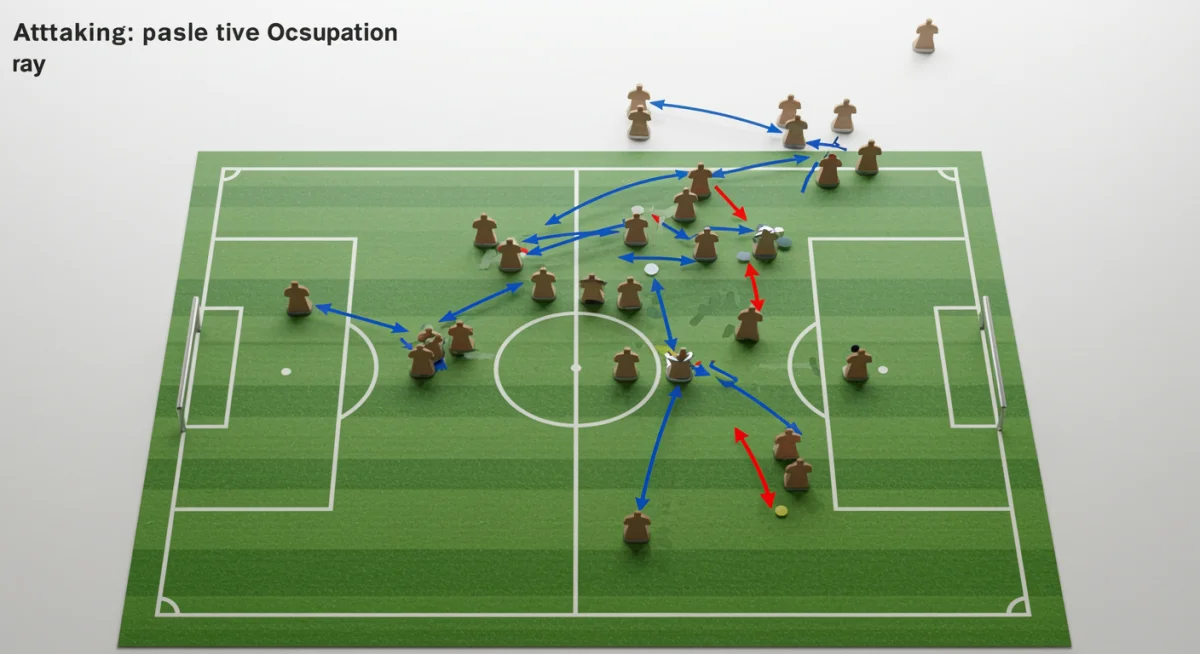
Players are taught to occupy the half-spaces, the channels between the central and wide areas, as these are often difficult for defenders to mark effectively. By having players in these zones, combined with central and wide options, the team can create multiple passing triangles and threaten the goal from various angles.
- Rotational Movement: Players exchanging positions to pull defenders out of shape and create new spaces.
- Third-Man Runs: A player making a run into space, often after a one-two pass, to exploit gaps in the defense.
- Central Overload with Wide Isolation: Concentrating players centrally to draw defenders in, then quickly switching play to an isolated winger in a 1v1 situation.
The constant pursuit of numerical superiorities in key areas ensures that the attacking team always has an advantage, making it incredibly difficult for the opposition to defend effectively. This systematic approach to creating overloads is a hallmark of high-level positional play and a key factor in building cohesive attacking structures.
Point 3: Mastering Positional Rotations and Player Interchangeability
Positional play thrives on fluidity and unpredictability, and these qualities are largely achieved through masterful positional rotations and player interchangeability. It’s not about players being fixed to a single position, but rather understanding the roles and responsibilities associated with different zones of the pitch, allowing for dynamic movement and seamless transitions between roles. This constant movement and swapping of positions keep opponents guessing and create openings that would otherwise not exist.
The concept emphasizes that a player’s initial starting position is merely a reference point, and their actual role on the field can evolve significantly throughout a match. This requires intelligent players who possess a high tactical understanding and the ability to adapt to changing game situations quickly. The goal is to always maintain the overall team structure while individual players move to exploit weaknesses.
Fluidity in Movement and Roles
Positional rotations involve players exchanging positions to create new passing angles, draw defenders out of shape, and open up channels for others. This is not arbitrary movement; it is highly coordinated and purposeful, always maintaining the team’s balance and defensive integrity.
- Full-backs Inverting: Moving into central midfield areas to create overloads or provide an extra passing option.
- Wingers Drifting Centrally: Creating an extra attacking midfielder or striker, pulling wide defenders inside.
- Central Midfielders Making Forward Runs: Breaking beyond the strikers to add an element of surprise to the attack.
These fluid movements ensure that the team’s attacking patterns are never static or predictable, making it incredibly difficult for the opposition to mark individual players effectively. The constant interchange of positions forces defenders to make split-second decisions, often leading to errors and creating space.
Player Interchangeability and Tactical Intelligence
For positional rotations to be effective, players must possess a high degree of interchangeability. This means that multiple players should be capable of performing similar roles in different areas of the pitch, ensuring that the team’s structure remains intact even during complex movements.
Tactical intelligence is paramount. Players need to understand not only their own role but also the roles of their teammates and how their movements impact the overall team shape. They must be able to read the game, anticipate the next pass, and react quickly to changes in possession or opponent positioning.
- Understanding Principles: Players are taught the underlying principles of positional play rather than rigid instructions for each position.
- Anticipation: Developing the ability to predict opponent movements and react proactively.
- Decision-Making: Empowering players to make intelligent decisions on the fly, within the framework of the team’s tactical plan.
The ultimate aim of mastering positional rotations and player interchangeability is to create a dynamic, unpredictable, and highly effective attacking unit. By allowing players the freedom to move and adapt while maintaining a cohesive structure, teams can unlock their full offensive potential and dominate games through intelligent, fluid play.
Point 4: The Role of the “Third Man” and Progression Through Lines
In the intricate tapestry of positional play, the concept of the “third man” is a subtle yet profoundly effective mechanism for progressing the ball through opposition lines and disorganizing their defensive structure. It’s a fundamental principle that underpins many of the most aesthetically pleasing and tactically astute attacking sequences in modern soccer. This involves a player making a run into space, often unseen by the direct opponent, to receive a pass that has bypassed an initial defender.
This principle is not just about a single pass; it’s about a sequence of movements and passes that collectively break down defensive barriers. The “third man” provides a solution when direct passes are blocked, allowing the team to maintain possession and advance into more dangerous areas of the pitch. It requires excellent communication, timing, and a deep understanding of spatial relationships between players.
Understanding the “Third Man” Concept
The “third man” refers to a player who receives the ball after an initial pass has drawn an opponent out of position. Imagine Player A passes to Player B, drawing Player B’s marker. At the same time, Player C, the “third man,” makes a run into the space vacated by the marker, receiving a pass from Player B. This creates a quick numerical or positional superiority and allows the ball to progress through a defensive line.
- Drawing Opponents: The initial pass and reception are designed to attract one or more defenders.
- Exploiting Vacated Space: The “third man” runs into the area that has been opened up by the opponent’s movement.
- Surprise Element: The movement of the “third man” is often unexpected by the defense, creating a momentary advantage.
This sequence is incredibly effective because it exploits the natural tendency of defenders to mark the ball or the immediate receiver. By introducing a third player into the equation, the attacking team can bypass the initial defensive pressure and advance the ball into more threatening positions.
Progressing Through Defensive Lines
The “third man” concept is intrinsically linked to the broader goal of progressing the ball through the opponent’s defensive lines. Modern soccer teams often defend in compact blocks, making it difficult to play direct passes through the center. The “third man” offers a sophisticated solution to this challenge.
Instead of forcing a risky pass, teams can use a series of short, quick passes and movements to destabilize the opponent’s structure. The “third man” pass often breaks the second or even third line of defense, putting the receiving player in a position to attack the goal directly or set up a teammate.
- Breaking the First Line: Often achieved through goalkeeper or defender passes to midfielders.
- Bypassing the Midfield Line: The “third man” often operates here, linking defense to attack.
- Penetrating the Defensive Line: Final passes to forwards making runs into the box.
Mastering the “third man” concept requires extensive training and a deep understanding of tactical principles. When executed effectively, it allows teams to slice through even the most organized defenses, creating high-quality scoring opportunities and maintaining offensive momentum. It is a testament to the intelligent and fluid nature of positional play.
Point 5: Adapting Positional Play to Opponent and Game State
While positional play is characterized by a strong adherence to its core principles, true mastery lies in the ability to adapt these principles to the specific opponent and the evolving game state. A rigid application of any tactical system, no matter how sophisticated, will eventually be exploited. Therefore, the most successful positional play teams are those that can subtly adjust their approach based on the opposition’s strengths and weaknesses, as well as the demands of the match.
This adaptability doesn’t mean abandoning the philosophy; rather, it involves modifying certain aspects – such as the tempo of play, the areas of the pitch to overload, or the emphasis on certain types of runs – to gain an advantage. It requires a high level of tactical awareness from both the coaching staff and the players, enabling them to make informed decisions in real-time.
Scouting and Pre-Match Adjustments
A crucial aspect of adapting positional play is thorough opponent analysis. Before each match, coaches meticulously scout the opposition to identify their defensive patterns, pressing triggers, and individual player tendencies. This information then informs the pre-match tactical adjustments.
- Identifying Weaknesses: Pinpointing specific areas or players in the opponent’s defense that can be exploited.
- Countering Strengths: Devising strategies to neutralize the opponent’s key players or tactical approaches.
- Varying Build-Up: Adjusting the starting positions of defenders and midfielders to bypass the opponent’s initial press.
For example, if an opponent has a strong central defense but vulnerable full-backs, a positional play team might emphasize wider overloads and quicker switches of play. Conversely, against a team with aggressive wingers, the full-backs might be instructed to be more conservative in their attacking runs.
In-Game Adaptations and Player Intelligence
The ability to adapt during a match is equally important. Game states can change rapidly due to goals, red cards, or simply different tactical approaches from the opponent. Players must be intelligent enough to recognize these shifts and adjust their movements and decision-making accordingly.
Coaches play a vital role in providing guidance, but ultimately, the players on the field are the ones who execute these adaptations. This highlights the importance of fostering a culture of tactical understanding and independent decision-making within the squad.
- Tempo Control: Speeding up or slowing down the pace of play based on the opponent’s energy levels or defensive organization.
- Shifting Overload Zones: Moving the focus of numerical superiorities to different areas of the pitch as the game progresses.
- Positional Flexibilty: Players being able to seamlessly transition between different roles and responsibilities based on the tactical demands.
By effectively adapting positional play to the opponent and game state, teams can maintain their tactical dominance throughout a match, overcoming challenges and consistently creating cohesive attacking structures that lead to success. This dynamic approach is what truly distinguishes elite positional play sides.
Point 6: Continuous Training and Tactical Repetition
The sophisticated nature of positional play means it cannot be mastered overnight. It demands relentless dedication to continuous training and tactical repetition, both on the training ground and through analytical sessions. This ongoing process instills the principles of positional play into the players’ muscle memory and decision-making processes, making complex movements and passes second nature. Without this constant reinforcement, the intricate patterns and fluid movements that define this philosophy would quickly break down under match pressure.
The goal of training is not just to improve individual skills, but to enhance the collective understanding and execution of the tactical system. Every drill, every small-sided game, and every tactical exercise is designed to reinforce the core tenets of space, superiority, and movement, ensuring that players are always thinking within the framework of positional play.
Drills for Positional Understanding
Training sessions for positional play are highly structured and often involve specific drills designed to simulate match situations. These drills focus on improving spatial awareness, decision-making under pressure, and the precise execution of passes and movements.
- Rondos and Positional Games: Small-sided games that emphasize keeping possession in tight spaces, creating passing triangles, and quick ball circulation.
- Positional Grids: Drills conducted in specific zones of the pitch, focusing on player positioning, movement off the ball, and creating overloads in those areas.
- Build-Up Play Simulations: Rehearsing sequences from the goalkeeper to the attacking third, with specific roles and movements for each player.
These drills are not just physical exercises; they are mental challenges that require players to constantly process information and make intelligent decisions. The repetition of these scenarios helps players to internalize the principles of positional play, allowing them to react instinctively in real match situations.
Video Analysis and Feedback
Beyond on-field training, video analysis plays a crucial role in the continuous development of a positional play team. Coaches use match footage and training recordings to provide detailed feedback to players, highlighting both successes and areas for improvement.
This analytical approach helps players to visually understand how their movements impact the team’s overall structure and how they can better execute the tactical plan. It’s an opportunity for collective learning, where the entire squad can analyze patterns, identify mistakes, and refine their understanding of the system.
- Individual Feedback: Players receive personalized analysis of their positioning, decision-making, and execution.
- Team Analysis: Collective sessions where the entire squad reviews tactical patterns and discusses improvements.
- Opponent Analysis Integration: Using video to demonstrate how positional play principles can be adapted to specific opponents.
Continuous training and tactical repetition, supported by rigorous analysis, are indispensable for mastering positional play. This ongoing commitment ensures that the team’s attacking structures remain cohesive, fluid, and effective, allowing them to consistently dictate play and achieve their objectives on the field.
| Key Aspect | Brief Description |
|---|---|
| Defensive Base | A strong defensive foundation is crucial for quick transitions and ball recovery to sustain attacks. |
| Numerical Superiorities | Creating overloads in key areas to facilitate ball progression and offensive dominance. |
| Positional Rotations | Fluid player movement and interchangeability to disorganize opponents and create space. |
| Third Man Concept | Utilizing an unmarked player to receive a pass that bypasses defensive lines. |
Frequently Asked Questions About Positional Play
The primary goal of positional play is to control the game through intelligent occupation of space and creation of superiorities, leading to cohesive attacking structures. It aims to manipulate opponents, dictate the tempo, and generate high-quality scoring opportunities by maintaining possession and exploiting defensive weaknesses.
Positional play differs by emphasizing fluid, coordinated movement and spatial awareness over fixed positions or direct attacking. It prioritizes creating numerical and positional advantages in specific zones to break down defenses systematically, rather than relying solely on individual brilliance or direct long balls.
A strong defensive base is crucial because it ensures quick ball recovery and seamless transitions from defense to attack. It involves proactive pressing and counter-pressing to win the ball back high up the pitch, preventing opponent counter-attacks and maintaining the team’s offensive dominance and structural integrity.
Half-spaces are the vertical channels between the central and wide areas of the pitch. They are significant because they are often difficult for defenders to cover effectively, creating opportunities for players to receive the ball in dangerous areas, create passing triangles, and launch attacks, thus disorganizing the opposition.
Teams adapt by analyzing opponent strengths and weaknesses, making pre-match adjustments to build-up play and overload zones. In-game adaptations, guided by player intelligence and coach instructions, involve varying the tempo, shifting overloads, and utilizing positional flexibility to exploit new opportunities or counter threats effectively.
Conclusion
Mastering positional play is an ongoing journey that demands a deep understanding of its core principles, from establishing a strong defensive base to executing fluid positional rotations and leveraging the ‘third man’ concept. As the tactical landscape of soccer continues to evolve towards 2026, the ability to build and adapt cohesive attacking structures through intelligent spatial occupation and the creation of superiorities will be the hallmark of successful teams. This guide provides a comprehensive framework, emphasizing that success in modern football hinges on a holistic approach where individual brilliance is seamlessly integrated into a well-drilled, tactically astute collective. Continuous training, rigorous analysis, and a commitment to adaptability will ultimately unlock the full potential of positional play, transforming teams into formidable forces on the global stage.