Unpacking the $150 Million Striker Saga: 2026 Transfer Factors
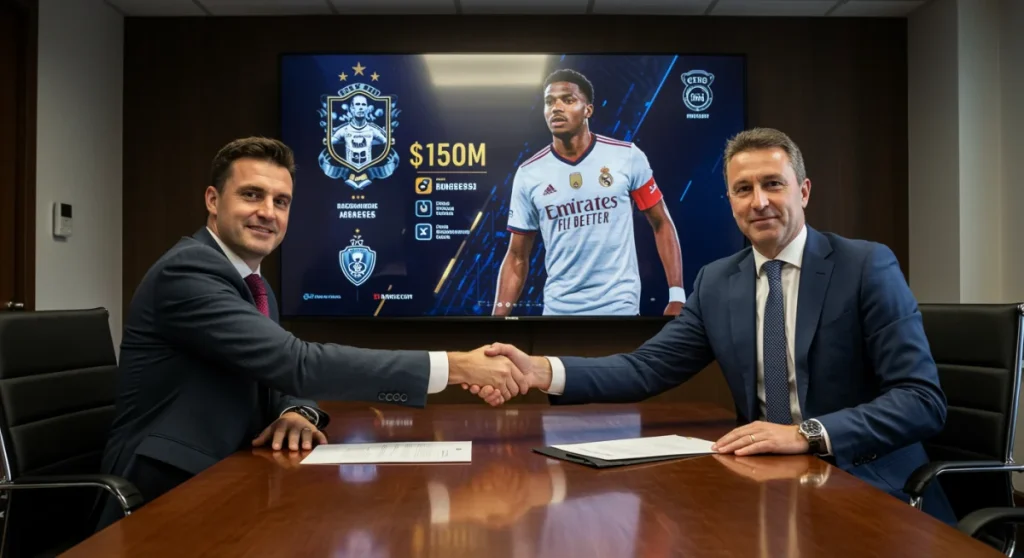
The 2026 $150 million striker transfer saga is shaped by player performance metrics, intricate club financial considerations, and evolving global market dynamics influencing valuations and negotiation strategies.
The world of football transfers is perpetually in motion, but the prospect of a $150 million striker transfer negotiation in 2026 brings an unparalleled level of scrutiny and excitement. This isn’t just about a player changing clubs; it’s a complex interplay of economics, talent, and strategic planning that redefines market benchmarks. Understanding the core elements driving these monumental deals offers a fascinating glimpse into the future of the beautiful game.
The unparalleled impact of player performance and potential
At the heart of any colossal transfer fee is the player themselves. For a striker commanding a $150 million valuation, their on-field performance is not merely impressive; it’s consistently exceptional, game-changing, and often record-breaking. This isn’t just about goal tallies, though those are certainly crucial. It encompasses a broader spectrum of contributions that make a player indispensable.
Statistical dominance and on-field influence
Modern football relies heavily on data analytics, and for a top-tier striker, these metrics must paint a picture of undeniable superiority. Clubs are looking for more than just a poacher; they seek a complete forward who can contribute in various phases of play. This includes their ability to create chances, press from the front, and link up with midfielders.
- Goal-scoring consistency: A proven track record of netting 25+ goals per season across multiple campaigns.
- Assists and chance creation: Demonstrating an ability to facilitate goals for teammates, indicating vision and selflessness.
- Expected goals (xG) and expected assists (xA) overperformance: Consistently exceeding statistical models suggests elite finishing and playmaking.
- Big-game temperament: Performing under pressure in crucial league matches, cup finals, and international competitions.
Beyond the numbers, the player’s influence on the team’s overall dynamic and morale is also a significant, albeit less quantifiable, factor. Are they a leader? Do they elevate the performance of those around them? These intangible qualities add layers to their perceived value.
Age, injury history, and future development curve
Investment in a $150 million striker is a long-term commitment, making age and potential crucial. Ideally, the target will be in their prime or approaching it, offering several years of peak performance. A striker aged 22-26 often represents the sweet spot, balancing proven ability with significant resale value or sustained excellence. A thorough medical history becomes paramount, as clubs will not risk such an investment on a player prone to recurrent injuries. Furthermore, scouts and analysts assess their potential for further growth, considering their adaptability to different tactical systems and their capacity for continuous improvement. A player with a clear development pathway still ahead of them offers a higher return on investment.
In conclusion, the foundation of a $150 million striker transfer is built upon a bedrock of elite performance, statistical dominance, and a promising future trajectory. Clubs meticulously analyze every facet of a player’s game to justify such an astronomical outlay.
The intricate dance of club finances and strategic budgeting
While player prowess is the magnet, a club’s financial health and strategic foresight are the engines driving a $150 million transfer. Such an investment is never made lightly; it requires meticulous planning, a deep understanding of financial fair play (FFP) regulations, and a clear vision for how the player fits into the club’s long-term commercial and sporting objectives.
Navigating financial fair play regulations
The shadow of Financial Fair Play looms large over every major transfer. Clubs cannot simply spend what they wish; they must operate within strict parameters set by governing bodies like UEFA. A $150 million transfer necessitates a strong revenue stream, either through commercial deals, broadcast rights, matchday income, or player sales. Clubs often prepare for such a large expenditure by offloading fringe players or even key assets in preceding transfer windows to balance the books.
- Revenue generation: Strong commercial partnerships, global merchandising, and robust broadcast deals are essential.
- Debt management: Keeping debt levels manageable ensures financial stability and compliance.
- Player sales: Strategic sales of other players can fund a significant portion of the incoming transfer.
- Wage structure: Accommodating a high-earning striker without disrupting the existing wage bill requires careful planning.
The ability to demonstrate sustainable finances is key, not just for compliance but also for attracting top talent who want to join a stable and ambitious project.
Return on investment: sporting success vs. commercial appeal
For a club investing $150 million, the desired return is multifaceted. On the sporting front, the striker is expected to deliver goals, trophies, and elevate the team to new heights. This includes securing Champions League qualification, winning domestic titles, or competing for European glory. The sporting success directly translates into increased revenue through prize money and enhanced brand visibility.
Commercially, a superstar striker brings immense marketing potential. Their image can be leveraged for shirt sales, sponsorship deals, and expanding the club’s global fanbase, particularly in lucrative markets like Asia and North America. The player becomes a brand ambassador, generating revenue far beyond their on-field contributions. The challenge lies in balancing these two aspects, ensuring that the sporting rationale remains paramount while maximizing commercial opportunities. A successful transfer will achieve both, creating a virtuous cycle of success and financial growth.
Ultimately, a $150 million transfer is a calculated financial risk, heavily influenced by a club’s fiscal health, its adherence to FFP, and its strategic vision for both sporting glory and commercial expansion.
The global market dynamics and competitive landscape
The football transfer market is a dynamic ecosystem, constantly influenced by global economic trends, emerging leagues, and the intense competition among elite clubs. A $150 million striker transfer in 2026 will not happen in a vacuum; it will be a product of these broader forces, reflecting the escalating values and fierce bidding wars for generational talents.
Escalating transfer fees and agent influence
Transfer fees have been on an upward trajectory for years, driven by increased broadcast revenues, more lucrative sponsorship deals, and the relentless pursuit of success. The $150 million price tag, while astronomical, is a reflection of this market inflation. Agents play a pivotal role in this landscape, often orchestrating moves and negotiating complex deals that include significant commissions. Their ability to generate bidding wars among interested clubs can push valuations even higher. Understanding the agent’s relationship with the player and their strategic objectives is crucial for any club entering such a negotiation.
Emerging markets and geopolitical impacts
The global nature of football means that new markets can significantly influence transfer dynamics. Leagues in Saudi Arabia and the MLS, for instance, have shown an increasing willingness and capacity to attract top European talent, thereby creating more competition for premium players. This expanded pool of potential suitors can drive up transfer fees and wage demands. Geopolitical stability and economic conditions in key footballing nations also play a role; a booming economy in a particular region might empower its clubs to spend more liberally, while downturns could lead to more conservative approaches. The interconnectedness of the global economy ensures that even seemingly distant events can have ripple effects on the transfer market.
These external factors add layers of complexity to any major transfer negotiation. A club must not only assess the player and its own finances but also navigate a competitive global landscape where multiple powerful entities are vying for the same talent. Strategic timing, strong negotiation tactics, and a clear understanding of market trends are essential to securing a $150 million striker.
The negotiation battleground: strategy and leverage
Securing a $150 million striker is not just about having the money; it’s about shrewd negotiation, understanding leverage, and often, outmaneuvering rival clubs. The transfer window is a high-stakes chess game where every move is carefully calculated and has significant repercussions.
Club relationships and player desire
The relationship between the buying and selling clubs can significantly impact negotiations. A history of positive dealings or a willingness to compromise can smooth the process. Conversely, animosity or a lack of trust can complicate matters, leading to protracted discussions and inflated demands. Crucially, the player’s desire to join a specific club is often the most powerful leverage. If a striker has their heart set on a particular destination, it can influence their current club to facilitate the move, even if it means accepting a slightly lower fee, to avoid a disgruntled asset. The player’s agent will actively work to align the player’s ambitions with the most lucrative or prestigious offers available.
Contractual situations and release clauses
A player’s current contract status is a primary determinant of their transfer fee. If a striker has multiple years left on a long-term deal, their current club holds significant power, able to demand a premium. Conversely, if a player is entering the final year or two of their contract, their value diminishes, as the selling club risks losing them for free. Release clauses, while less common in some leagues, provide a clear, non-negotiable price tag. If a club triggers a release clause, the selling club is obliged to accept, effectively bypassing lengthy negotiations. Clubs will meticulously analyze a target’s contract situation to determine their negotiation strategy and assess the feasibility of a deal.
In essence, the negotiation battleground for a $150 million striker is a complex interplay of personal relationships, contractual obligations, and strategic leverage. Success hinges on a club’s ability to navigate these elements deftly, ensuring they secure their target without overpaying or jeopardizing future ambitions.
Long-term implications of a blockbuster striker signing
A $150 million striker transfer is more than just a single transaction; it’s a seismic event that sends ripples through the entire club, impacting everything from tactical setups to youth academy development and future transfer strategies. The ripple effect can be profoundly positive or, if mismanaged, can lead to unforeseen challenges.
Tactical evolution and team chemistry
Integrating a $150 million striker into an existing squad requires a significant tactical rethink. Coaches must adapt their formations, playing style, and even the roles of other key players to maximize the new signing’s strengths. This isn’t always straightforward, and it can take time for the team to gel. Disrupting established partnerships or altering the team’s defensive shape to accommodate a new attacking focal point can be a delicate process. Furthermore, team chemistry, a vital component of success, can be affected. The arrival of a superstar with a massive salary might inadvertently create friction or alter the existing hierarchy within the dressing room. Clubs must proactively manage these dynamics to ensure a smooth transition and maintain squad harmony.
Impact on youth development and future transfers
While a blockbuster signing brings immediate star power, it can also have long-term implications for a club’s youth academy. The presence of an elite, expensive striker might block the pathway for promising young talents hoping to break into the first team. Clubs must strike a balance between attracting established stars and nurturing their own homegrown talent. Over-reliance on expensive transfers can sometimes stifle the development of future generations. Moreover, committing $150 million to a single player significantly impacts a club’s budget for future transfer windows. This means less flexibility to address other areas of the squad or to respond to unexpected needs. Strategic planning becomes even more critical, as every subsequent transfer decision will be viewed through the lens of this initial, monumental investment.
In conclusion, a $150 million striker transfer is a high-stakes gamble with far-reaching consequences. Its success hinges not only on the player’s immediate impact but also on the club’s ability to manage tactical integration, maintain squad harmony, and sustain a balanced long-term strategy that supports both immediate ambitions and future growth.
The fan factor and media frenzy surrounding mega deals
Beyond the boardrooms and training grounds, a $150 million striker transfer ignites an unparalleled level of excitement and scrutiny among fans and the global media. This engagement, while beneficial for brand visibility, also adds significant pressure to the player and the club.
Fan expectations and immediate pressure
When a club invests $150 million in a striker, fan expectations skyrocket. Supporters immediately anticipate a deluge of goals, match-winning performances, and an instant transformation of the team’s fortunes. This intense pressure can be a double-edged sword. While it fuels enthusiasm and boosts ticket sales, it also places an enormous burden on the player to perform from day one. Any slow start or dip in form is magnified, leading to impatience and criticism. Clubs must manage these expectations, perhaps through careful communication, to allow the player time to adapt. The media also plays a crucial role, amplifying every success and every perceived failure, creating a constant narrative around the player’s performance relative to their colossal price tag.
Global media coverage and brand amplification
A $150 million transfer generates headlines worldwide, extending far beyond traditional sports news outlets. It becomes a global phenomenon, discussed in financial newspapers, lifestyle magazines, and across all social media platforms. For the buying club, this translates into immense brand amplification and increased global visibility. It attracts new fans, boosts merchandise sales, and enhances the club’s reputation as an ambitious, top-tier entity. This media frenzy, however, also means that every aspect of the player’s life, both on and off the pitch, comes under intense scrutiny. From their social media activity to their personal life, everything becomes fair game for public discussion. Clubs often have robust media relations teams dedicated to managing this exposure, ensuring the narrative remains positive and aligned with the club’s values.
In summary, the fan factor and media frenzy are integral components of a $150 million striker transfer. While they provide invaluable brand amplification and generate immense excitement, they also create an environment of intense pressure and scrutiny that both the player and the club must navigate with strategic communication and unwavering focus.
| Key Factor | Brief Description |
|---|---|
| Player Performance & Potential | Elite statistics, consistent goal-scoring, young age, and strong future development curve are paramount. |
| Club Finances & Strategy | FFP compliance, robust revenue, and clear ROI projection (sporting & commercial) are essential. |
| Market Dynamics & Competition | Global market inflation, agent influence, and emerging league competition drive up valuations. |
| Negotiation & Leverage | Club relationships, player desire, and contractual situations (e.g., release clauses) dictate deal terms. |
Frequently asked questions about striker transfers
A striker commands such a fee due to a combination of elite, consistent goal-scoring, significant assists, young age with high potential, strong commercial appeal, and proven performance in top competitions. Their market value is amplified by scarcity of similar talent and intense club competition.
Clubs fund mega-transfers through diverse revenue streams including broadcast rights, lucrative sponsorship deals, matchday income, and strategic player sales. They also leverage commercial partnerships and global merchandising to offset costs and comply with Financial Fair Play regulations.
Agents are crucial facilitators, negotiating contract terms, orchestrating player moves, and often initiating bidding wars among interested clubs. Their expertise in market valuations and ability to align player ambitions with club offers significantly influences the final transfer fee and overall deal structure.
FFP regulations mandate that clubs spend within their means, preventing excessive losses. For a $150 million transfer, clubs must demonstrate sufficient revenue generation or offset the cost through player sales to avoid sanctions. FFP ensures financial sustainability in the competitive European football landscape.
A blockbuster signing can redefine tactical setups, impact team chemistry, and influence youth development pathways. It also ties up significant future transfer budget, requiring careful long-term strategic planning to ensure sustained sporting success and commercial growth for the club.
Conclusion
The quest to secure a $150 million striker in 2026 is a captivating narrative woven from threads of individual brilliance, intricate financial maneuvering, and the relentless forces of the global football market. As clubs navigate this high-stakes environment, success hinges on a holistic approach that balances raw talent with economic prudence and strategic vision. These mega-deals are not just about adding a player; they are about shaping legacies, driving commercial empires, and ultimately, defining the future trajectory of elite football. The factors at play ensure that the transfer window remains one of the most compelling spectacles in the sport.