New Agent Regulations 2026: 10% Shift in Player Valuations?

The impending new agent regulations in 2026 are poised to fundamentally alter football’s transfer landscape, potentially leading to a significant 10% shift in player valuations and reshaping club financial strategies.
The world of football transfers is perpetually in motion, a complex dance of talent, ambition, and significant financial transactions. As we approach 2026, a new chapter is set to unfold with the implementation of revised agent regulations. These changes are not merely administrative tweaks; they represent a seismic shift that could fundamentally redefine how players are valued and how clubs operate in the transfer market. Will these new agent regulations truly trigger a 10% shift in player valuations, or are the anticipated impacts more nuanced?
Understanding the Core of the New Agent Regulations
The proposed new agent regulations, primarily spearheaded by FIFA, aim to bring greater transparency, stability, and ethical conduct to the often opaque world of player transfers. For years, the role of agents has been a subject of intense debate, with concerns revolving around excessive fees, conflicts of interest, and a perceived lack of accountability.
These regulations are not a sudden development but rather the culmination of years of discussions and consultations with various stakeholders across the football ecosystem. The overarching goal is to ensure that the sport’s financial integrity is upheld, protecting both clubs and players from potentially exploitative practices.
Key Pillars of the Regulatory Framework
- Fee Caps: A central tenet is the introduction of caps on agent commissions. This means agents will be limited in the percentage they can charge for their services, a direct measure to curb exorbitant fees.
- Licensing System: A more stringent licensing system for agents will be implemented, requiring them to pass examinations and adhere to a code of conduct. This aims to professionalize the industry.
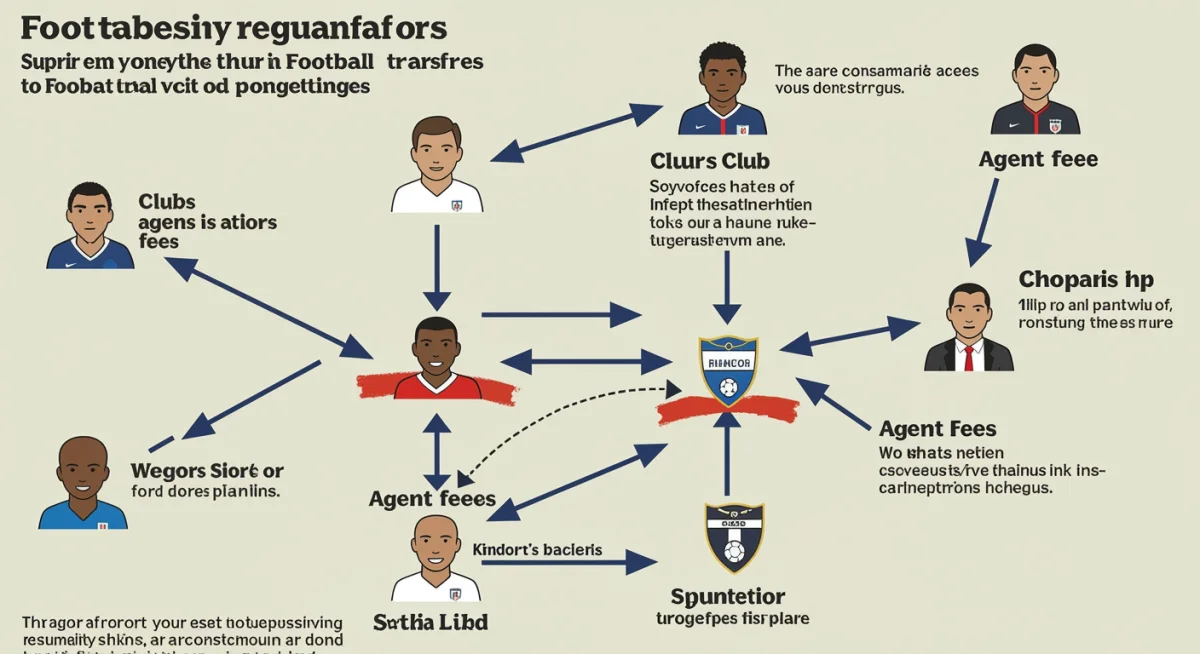
- Reporting Requirements: Enhanced transparency will be enforced through mandatory reporting of all transfer-related payments, including agent fees, to a central FIFA clearing house.
- Conflict of Interest Rules: Stricter rules will be put in place to prevent agents from representing both the player and the club in the same transaction, a practice that has often led to questions of impartiality.
The implementation of these regulations is expected to have far-reaching consequences, influencing everything from contract negotiations to the very structure of transfer strategies. Clubs, players, and agents alike are bracing for a transformative period, as the landscape of player representation is set for a significant overhaul.
The Economic Rationale Behind Fee Caps
At the heart of the new agent regulations lies the controversial, yet pivotal, concept of fee caps. For years, agent commissions have been a significant expenditure for clubs, sometimes reaching double-digit percentages of a player’s transfer fee or salary. Such figures have often drawn criticism, with many arguing that these payments divert funds that could otherwise be invested in youth development, infrastructure, or even directly into player wages.
The economic rationale behind imposing these caps is multifaceted. Firstly, it seeks to rebalance the financial distribution within the transfer market, shifting a larger share of the value back towards clubs and players. Secondly, it aims to reduce the overall cost of transfers, potentially making player acquisitions more financially viable for a broader range of clubs, especially those outside the elite.
Projected Financial Impact on Clubs
Clubs, particularly those with less financial muscle, stand to benefit from reduced agent fees. This could free up capital for other investments. Larger clubs might find their negotiating power enhanced, as agents will have less room to maneuver on commission percentages. However, the impact isn’t universally positive for all parties.
- Reduced Transfer Costs: Lower agent fees directly translate to a decrease in the total cost of acquiring a player, benefiting purchasing clubs.
- Increased Player Wages: Some argue that the savings from agent fees could be redirected towards higher player wages, a potential boon for athletes.
- Competitive Advantage: Clubs that are adept at navigating these new rules and minimizing agent influence might gain a competitive edge in the market.
While the intention is to create a more equitable system, the actual economic fallout remains a subject of intense speculation and debate. The interplay between reduced agent fees and player valuations will be a critical area to observe as these regulations take hold.
Player Valuations: The 10% Shift Hypothesis
The central question driving much of the discussion around these new agent regulations is whether they will indeed lead to a 10% shift in player valuations. This hypothesis suggests that by curtailing agent fees, the perceived value of a player, and consequently their transfer fee, will either decrease by a similar margin or that the saved funds will be reallocated, impacting how clubs budget for acquisitions.
The theory posits that if agents are receiving, for example, 10% of a player’s transfer fee, and that percentage is significantly reduced or capped, then clubs will either pay less for the player (because the total cost including agent fees is lower) or the player’s net value to the club increases, allowing for a slightly higher base salary while keeping the total outlay similar. The reality is likely more complex, influenced by market demand, player performance, and club financial health.
Factors Influencing Valuation Adjustments
Several factors will determine the extent of any shift in player valuations:
- Market Demand: For highly sought-after players, demand from multiple clubs might still drive up transfer fees, regardless of agent commission caps.
- Player Bargaining Power: Elite players with strong negotiating positions might demand higher salaries to compensate for any perceived loss in agent benefits, indirectly influencing their overall value.
- Club Financial Strategies: Clubs will adapt their budgeting. Some might choose to pay less for players, while others might reallocate savings to wages or other investments.
While a direct 10% reduction in player valuations might be an oversimplification, it is undeniable that the financial calculus behind transfer fees will change. The shift might manifest in various ways, from slightly lower headline transfer figures to more favorable wage structures for players, all contributing to a re-evaluation of what a player is truly ‘worth’ in the new regulatory environment.
Challenges and Potential Loopholes for Agents
No regulatory framework is without its challenges, and the new agent regulations are no exception. While designed to curb excesses, the ingenuity of the transfer market, combined with the significant financial stakes, means that agents and clubs will inevitably seek ways to navigate or even circumvent the new rules. This could lead to the emergence of new strategies and, potentially, new loopholes.
Agents, whose livelihoods depend on successful transfers and profitable commissions, are highly motivated to maintain their income streams. This could involve shifting their business models, exploring alternative revenue sources, or finding creative interpretations of the regulations. The regulatory bodies will face an ongoing battle to monitor and enforce the new rules effectively.
Anticipated Agent Responses
Agents might adapt in several ways to the new landscape:
- Increased Focus on Player Services: Agents might broaden their service offerings beyond just transfer negotiation, including financial planning, brand management, and legal advice, to justify fees.
- Complex Contract Structures: We might see more intricate contract clauses, perhaps linking agent payments to player performance bonuses or long-term loyalty, falling outside direct transfer fee caps.
- Third-Party Influences: The involvement of third-party entities, such as investment funds or consulting firms, could increase, potentially creating new avenues for indirect payments that bypass direct agent commission rules.
The success of the new regulations will hinge not only on their initial implementation but also on the agility of regulatory bodies to adapt to and close any emerging loopholes. The cat-and-mouse game between regulation and circumvention is a constant feature of highly regulated industries, and football will likely be no different.
Impact on Smaller Clubs and Emerging Talents
The ramifications of the new agent regulations extend beyond the financial giants of European football, potentially having a profound impact on smaller clubs and the development of emerging talents. These regulations could present both opportunities and challenges for the less affluent segments of the football pyramid.
For smaller clubs, reduced agent fees could mean a significant saving, allowing them to retain more of their transfer income or invest more in their academies. This could foster greater financial stability and a more level playing field, at least in theory. However, the impact on emerging talents is a more nuanced consideration, as agents often play a crucial role in identifying and nurturing young players.
Opportunities and Challenges
The changes could manifest as:
- Empowering Smaller Clubs: With lower costs associated with transfers, smaller clubs might find it easier to acquire and retain talent without being burdened by excessive agent fees.
- Direct Player Relationships: There could be a shift towards more direct relationships between clubs and players, especially at younger ages, reducing the early influence of agents.
- Risk for Scouting Networks: Some fear that reduced agent incentives might diminish the extensive scouting networks that agents often operate, potentially making it harder for hidden gems to be discovered.
The long-term health of football relies on a robust talent pipeline, and how these regulations affect the discovery and development of young players will be a key indicator of their overall success. Balancing financial prudence with the nurturing of future stars will be a critical challenge for the sport.
The Broader Implications for Football’s Ecosystem
The new agent regulations are not an isolated policy; they are part of a broader movement towards greater financial sustainability and integrity within football. Their impact will ripple throughout the entire ecosystem, affecting not just transfers but also club finances, player careers, and the overall competitive balance of the sport. Examining these wider implications is crucial for a complete understanding of the changes ahead.
From the structure of youth academies to the strategies of national federations, every facet of football could feel the effects. The intention is to create a more equitable and transparent environment, but achieving this in practice, given the global and complex nature of football, will be a monumental task.
Systemic Changes Expected
- Increased Focus on Youth Development: If external talent acquisition becomes less reliant on agent-driven deals, clubs might be incentivized to invest more heavily in their own youth academies.
- Enhanced Financial Fair Play: The regulations align with existing Financial Fair Play (FFP) rules, contributing to a more sustainable financial model across leagues.
- Legal Challenges and Adaptations: Expect legal challenges from agent associations, leading to potential refinements or adaptations of the regulations over time.
Ultimately, the success of these regulations will be measured by their ability to foster a healthier, more transparent, and financially stable football landscape. The journey to 2026 and beyond will be a period of significant adjustment and, hopefully, positive evolution for the beautiful game.
| Key Point | Brief Description |
|---|---|
| Agent Fee Caps | New regulations will limit agent commissions, reducing transfer costs for clubs. |
| Player Valuation Shift | Potential 10% shift in player valuations due to reallocated funds and reduced agent influence. |
| Increased Transparency | Mandatory reporting of all transfer payments to a central FIFA clearing house. |
| Impact on Clubs | Smaller clubs may benefit from reduced costs; larger clubs may see enhanced negotiating power. |
Frequently Asked Questions About New Agent Regulations
The main goals are to enhance transparency, increase financial stability, and improve ethical conduct in player transfers. This includes capping agent fees and implementing a stricter licensing system to ensure fair practices across the football industry.
Fee caps are expected to reduce the overall cost of transfers for clubs by limiting agent commissions. This could lead to either lower headline transfer fees or a reallocation of funds towards player wages, influencing the net valuation of players.
While a 10% shift is a strong hypothesis, it’s not guaranteed. Player valuations are influenced by multiple factors, including market demand and individual performance. The regulations will undoubtedly cause a re-evaluation, but the exact percentage may vary.
Agents face challenges in maintaining income streams due to fee caps. They may adapt by offering broader services, exploring complex contract structures, or seeking alternative revenue models to compensate for reduced commissions, leading to potential loopholes.
The regulations could encourage clubs to invest more in their own youth academies, as external talent acquisition becomes less agent-dependent. However, there’s also a concern that reduced agent incentives might affect the extensive scouting networks that discover young talents.
Conclusion
The upcoming new agent regulations in 2026 represent a pivotal moment for global football, promising a more transparent and financially sustainable transfer market. While the exact magnitude of the impact, particularly the hypothesized 10% shift in player valuations, remains to be fully seen, the foundational changes are undeniable. Clubs, players, and agents will need to adapt to a new paradigm where financial prudence and ethical conduct are prioritized. The journey ahead will be complex, marked by adjustments and potential challenges, but the ultimate goal is a healthier, more equitable future for the beautiful game. As WorldSoccerInsights.com continues to monitor these developments, one thing is clear: the football landscape is on the cusp of significant transformation.