Breaking Down the Low Block: A 6-Step Attacking Framework for 2026
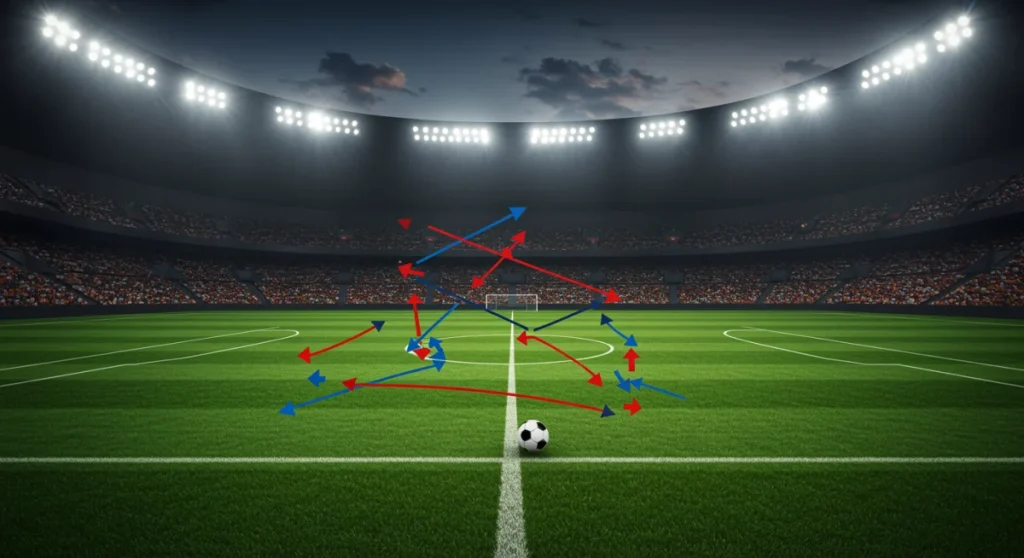
This article outlines a comprehensive 6-step attacking framework designed to effectively break down a low defensive block in soccer, providing practical solutions for teams aiming for success in 2026 and beyond.
In modern soccer, encountering a deep, compact defensive shape – commonly known as a low block – is an increasingly frequent challenge for attacking teams. This article delves into a comprehensive 6-step attacking framework, offering practical solutions for success against this tactical setup, paving the way for teams to thrive by 2026.
Understanding the low block: a tactical overview
Before devising strategies to break down a low block, it’s crucial to understand its fundamental principles. A low block is a defensive tactic where a team sits deep within its own half, often with two compact lines of four or five players, aiming to deny space in central areas and force opponents wide. This approach prioritizes defensive solidity and often relies on quick transitions for counter-attacking.
Teams employing a low block aim to frustrate their opponents, limit clear-cut chances, and capitalize on mistakes. Their success hinges on disciplined positioning, collective pressing triggers, and quick reactions to second balls. Recognizing these characteristics is the first step in formulating an effective attacking response.
Key characteristics of a low block
- Compactness: Minimal space between defenders and midfielders, both horizontally and vertically.
- Central density: Prioritizing protection of the central attacking zones, forcing play wide.
- Deep positioning: Defenders often sit close to their own penalty area, limiting space in behind.
- Counter-attacking threat: Reliance on quick breaks and long balls to exploit space left by attacking teams.
Understanding these defensive tenets allows attacking teams to anticipate movements and identify potential weaknesses. The goal is not just to bypass the block, but to disorganize it and create numerical or positional advantages in critical areas.
Step 1: creating width and stretching the defense
The initial phase of breaking down a low block involves manipulating the opponent’s defensive shape through effective use of width. A compact low block is inherently narrow, so stretching it horizontally is paramount. This creates larger gaps between defenders, making it easier to penetrate vertically or exploit half-spaces.
Wingers, full-backs, and even central midfielders can contribute to this by taking wide positions, occupying opposition wide players, and drawing them out of their central structure. The aim is to make the defensive lines wider than they want to be, thereby opening up passing lanes and dribbling opportunities.
Utilizing wide players effectively
Wide players should hug the touchline, stretching the opponent’s defensive line. This creates dilemmas for full-backs: either they follow, opening central channels, or they stay narrow, allowing the winger to receive with time and space. Overloads on one flank can also draw defenders, creating space on the opposite side for a quick switch of play.
- High and wide wingers: Positioned to receive the ball on the touchline, forcing full-backs to engage.
- Overlapping full-backs: Providing an additional wide threat, creating 2v1 situations against the opponent’s full-back.
- Diagonal runs: Wingers making runs into the half-spaces or behind the full-back after receiving wide.
The constant threat of wide play forces the low block to make decisions, often leading to momentary disorganization. This disorganization is precisely what attacking teams seek to exploit.
Step 2: quick ball circulation and positional rotations
Once width is established, the next crucial step is to circulate the ball quickly and intelligently. Slow, predictable passing allows the low block to maintain its shape and shift cohesively. Rapid ball movement, coupled with positional rotations, can disorient defenders and open up new avenues for attack.
Positional rotations involve players interchanging positions fluidly, creating confusion for markers and opening up new passing angles. A midfielder might drop deep, a forward might drift wide, or a full-back might invert. These movements must be coordinated and purposeful, aiming to create numerical superiority or qualitative advantages in key areas.
The importance of tempo and movement
Varying the tempo of play is vital. Sometimes, a slow build-up can draw opponents out, only to be followed by a sudden acceleration of passes. Constant movement off the ball is equally important, as static players are easy to mark. Players should be looking for spaces between lines, behind defenders, or in the half-spaces.
This dynamic interplay of ball circulation and player movement forces defenders to constantly adjust, making them more prone to errors. The objective is to create a rhythm that the low block finds difficult to track, leading to openings.
Step 3: penetrating the half-spaces and central channels
After stretching the defense wide and circulating the ball, the focus shifts to penetrating the most dangerous areas: the half-spaces and central channels. The half-spaces, located between the opponent’s center-back and full-back, are particularly vulnerable against a low block as they create immediate dilemmas for defenders.
Penetrating these areas can lead to direct goal-scoring opportunities, or create cut-back chances. Players making runs into these zones, often attacking midfielders or inverted wingers, must be supported by quick passes and intelligent off-the-ball movement from teammates.
Exploiting the gaps between lines
The central channels represent the shortest path to goal. Overloading these areas with vertical runs, quick one-two passes, and through balls can be devastating. This requires precise timing and excellent technical ability to execute under pressure. The aim is to get players facing goal in dangerous positions.
- Through balls: Incisive passes played into the path of a forward running behind the defensive line.
- Overloads in half-spaces: Two or more attackers occupying the same half-space to create numerical superiority.
- Third-man runs: A player making a run into a vacated space created by a teammate’s movement.
Successful penetration in these areas often leads to high-quality chances, as defenders are forced to commit or leave critical areas exposed.
Step 4: effective crossing and cut-backs
When direct central penetration proves difficult, effective crossing and cut-backs become vital tools. If the low block successfully denies central access, it often leaves space out wide. Capitalizing on this requires high-quality deliveries into the penalty area, targeting strategically positioned attackers.
Crosses shouldn’t be aimless. They need to be directed to specific zones or players, considering the movement of both attackers and defenders. Cut-backs, where the ball is pulled back from the byline to an attacker arriving from deeper, are often more effective as they allow attackers to shoot with an open view of the goal and less pressure from defenders.
Varying delivery types and targets
The type of cross should vary depending on the situation. Early crosses can catch defenders off guard, while whipped crosses from deeper positions can be harder to defend. Cut-backs, especially from the byline, often bypass the first line of defense and find players in prime scoring positions near the penalty spot or top of the box.
- Early crosses: Delivered before the defense is fully set, often aimed at the far post.
- Driven crosses: Low, fast crosses that are difficult for defenders to clear effectively.
- Cut-backs: Pulling the ball back from the byline to an attacker arriving into space.
The synergy between the wide player delivering the ball and the attackers making runs into the box is crucial for converting these opportunities.
Step 5: shooting from distance and second ball attacks
Against a well-organized low block, clear-cut chances from within the box can be scarce. Therefore, developing the ability to shoot effectively from distance becomes an important attacking weapon. Long-range shots can force the goalkeeper into saves, leading to rebounds and second ball opportunities that can be capitalized on by alert attackers.
Moreover, shots from distance can draw defenders out, creating space within the block. When a shot is taken, all attacking players must anticipate a rebound or deflection, positioning themselves to react quickly to the “second ball.” This often leads to chaotic situations in the box, which can be exploited.
Capitalizing on rebounds and deflections
Training players to strike from outside the box with power and accuracy is essential. Equally important is the collective understanding of how to attack the second ball. This involves follow-up runs, aggressive challenges for loose balls, and quick reactions. These moments of chaos can be decisive against a disciplined defense.
Encouraging players to take calculated risks with long-range efforts adds another dimension to the attack, forcing the low block to adapt and potentially compromise its defensive integrity.
Step 6: set pieces as a tactical weapon
When open play struggles to yield results against a stubborn low block, set pieces become incredibly valuable. Corners, free-kicks near the box, and even longer-range free-kicks can be meticulously planned and executed to create scoring opportunities. These situations offer a controlled environment to exploit defensive weaknesses.
Set-piece routines can involve blocks, screens, decoy runs, and movements to create space for key players. The element of surprise and precise execution are critical. Teams that invest in developing a diverse array of set-piece plays often find success against compact defenses.
Designing effective set-piece routines
Analyzing opponent weaknesses, such as zonal marking vulnerabilities or individual aerial deficiencies, can inform set-piece design. Variation is key; constantly using the same routine makes it easy for defenders to anticipate. Mixing short corners with deliveries into the box, or direct shots with creative free-kick routines, keeps the opposition guessing.
- Near-post runs: Drawing defenders to the front post to create space elsewhere.
- Blocks and screens: Illegally impeding defenders to free up teammates for headers or shots.
- Short corners: Creating an overload on the wing to deliver a cross from a different angle.
Set pieces provide a clear opportunity to reset the attacking phase and apply pressure, often leading to crucial goals when open play is stifled.
| Key Attacking Principle | Brief Description |
|---|---|
| Create Width | Stretch the compact low block horizontally to open central gaps. |
| Quick Circulation | Move the ball rapidly with positional rotations to disorient defenders. |
| Penetrate Half-Spaces | Exploit key zones between central and wide defenders for dangerous attacks. |
| Utilize Set Pieces | Design and execute clever routines to create scoring chances from dead ball situations. |
Frequently asked questions about breaking down a low block
The primary objective of a low block is to deny space in dangerous central areas, forcing opponents wide and limiting clear-cut goal-scoring opportunities. It focuses on defensive solidity, often aiming to absorb pressure and launch quick counter-attacks upon winning possession.
Creating width stretches the opponent’s defensive lines horizontally, increasing the distances between defenders. This action generates larger gaps in central and half-spaces, making it easier for attacking players to penetrate, dribble, or find passing lanes that were previously unavailable.
Positional rotations are crucial because they create confusion for opposition markers and open up new passing angles. By interchanging positions fluidly, players can create numerical superiorities or qualitative advantages, disrupting the low block’s organized structure and making it harder to track individual movements.
Half-spaces are the vertical channels located between the central defenders and the full-backs. They are key because penetrating these zones creates immediate defensive dilemmas, often forcing full-backs or center-backs out of position, which can lead to direct goal-scoring chances or dangerous cut-back opportunities near the goal.
Set pieces offer controlled situations to exploit defensive weaknesses that might not be apparent in open play. With planned routines, teams can create specific movements, blocks, and screens to free up players for shots or headers, providing crucial scoring opportunities when open play is stifled by a compact defense.
Conclusion
Successfully dismantling a low block requires a multi-faceted approach, combining tactical intelligence with technical execution. The 6-step framework outlined – from creating width and quick circulation to penetrating key areas, utilizing crosses, shooting from distance, and leveraging set pieces – provides a comprehensive blueprint for attacking success. As soccer continues to evolve towards 2026, teams that master these principles will undoubtedly gain a significant advantage against defensively resolute opponents, turning frustrating stalemates into decisive victories. The key lies in continuous practice, strategic analysis, and the collective understanding of how to exploit every inch of space and every moment of defensive disorganization.