2026 World Cup Midfield Battle: Positional Play & Transitional Tactics
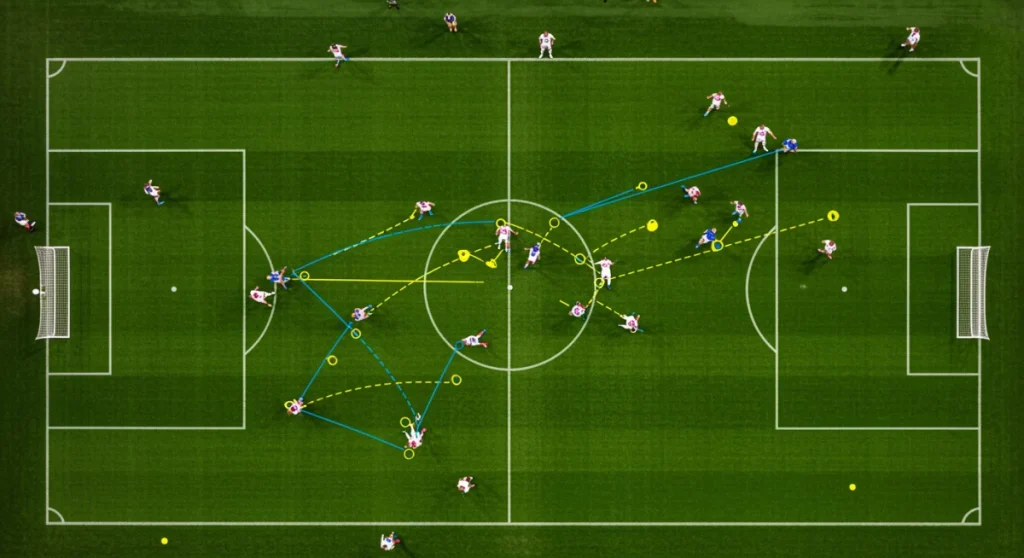
The 2026 World Cup midfield battle will be pivotal, demanding sophisticated positional play and mastery of two key transitional tactics – offensive and defensive – to control possession, dictate tempo, and create scoring opportunities.
The upcoming 2026 World Cup promises to be a spectacle of tactical evolution, and nowhere will this be more evident than in the 2026 World Cup midfield. As teams vie for global supremacy, the engine room of any successful side—the midfield—becomes the ultimate battleground where games are won and lost.
the evolving role of midfield in modern football
In contemporary football, the midfield is far more than just a link between defense and attack; it is the tactical heartbeat of a team. Modern midfielders are expected to be multi-faceted athletes, capable of contributing defensively, initiating attacks, and maintaining possession under intense pressure. This evolution has led to a greater emphasis on tactical intelligence and versatility.
The demands on midfielders have increased exponentially. They are now central to a team’s pressing schemes, responsible for winning back possession high up the pitch, and equally crucial in building intricate attacking patterns. Their ability to read the game, anticipate opponent movements, and execute precise passes under duress can often determine the flow and outcome of a match.
possession and control
Control of the midfield often translates directly into control of the game. Teams that dominate this area typically dictate the tempo, limit the opponent’s attacking opportunities, and create more chances for themselves. This control is not merely about retaining possession but about using it purposefully.
- Tempo Dictation: Midfielders control the speed of play, slowing it down to consolidate possession or accelerating it to exploit space.
- Spatial Awareness: Understanding how to occupy key areas and create passing lanes is fundamental.
- Defensive Shield: Protecting the backline by intercepting passes and breaking up opposition attacks.
Ultimately, the role of the midfield has become comprehensive, requiring a blend of physical endurance, technical skill, and profound tactical understanding. Teams that excel in this domain will undoubtedly be strong contenders in 2026.
understanding positional play in the midfield
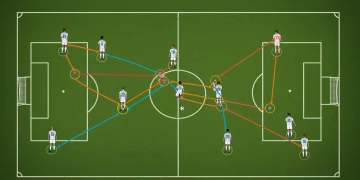
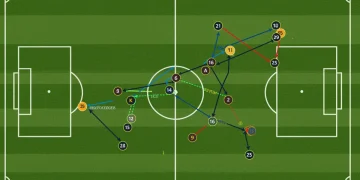
Positional play, or ‘Juego de Posición,’ is a philosophy that prioritizes creating numerical and positional superiorities across the pitch, particularly in the midfield. It’s about occupying specific zones to facilitate fluid ball movement and create advantageous situations. This tactical approach is foundational for many top national teams and clubs, and its mastery will be crucial for any team aspiring to lift the World Cup trophy.
At its core, positional play is about intelligent movement off the ball, creating triangles and rhombuses to ensure multiple passing options are always available. It’s not just about where a player is, but why they are there and what options their position opens up for teammates. The midfield acts as the central nervous system for this system, orchestrating movements and unlocking defenses.
key principles of positional play
Successful implementation of positional play in the midfield relies on several interconnected principles that foster cohesion and effectiveness.
- Numerical Superiority: Creating more players than the opponent in a specific area to overwhelm them.
- Positional Superiority: Occupying spaces that give players an advantage in receiving the ball or influencing play.
- Third-Man Runs: Using a third player to receive a pass after two players have exchanged the ball, often breaking defensive lines.
- Ball Circulation: Keeping the ball moving quickly to stretch the opposition and create gaps.
Teams like Spain and Germany have historically showcased brilliant examples of positional play, with their midfielders forming intricate webs of passes and movements that are incredibly difficult to disrupt. The ability of midfielders to interchange positions seamlessly and maintain a compact yet expansive shape is paramount.
transitional tactics: offensive transitions (gegenpressing)
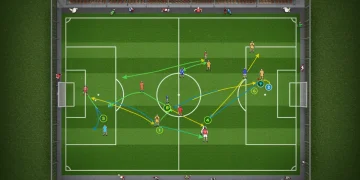
One of the most impactful transitional tactics in modern football, especially relevant to the 2026 World Cup midfield, is the offensive transition, often spearheaded by ‘Gegenpressing.’ This tactic involves immediately pressing the opponent the moment possession is lost, aiming to win the ball back high up the pitch before the opposition can organize their defense. It transforms a defensive action into an immediate attacking opportunity.
The philosophy behind gegenpressing is simple yet brutally effective: the opponent is most vulnerable right after winning possession, as their players are typically spread out in attacking positions and their defensive structure is yet to be established. By winning the ball back quickly in these advanced areas, teams can launch swift, dangerous attacks against a disorganized defense.
implementing effective gegenpressing
Successful gegenpressing requires a collective effort, high energy levels, and meticulous organization. It’s not just about individual pressing; it’s a coordinated team movement.
- Immediate Reaction: Players must react instantly to the loss of possession, closing down the ball carrier and cutting off passing lanes.
- Collective Pressing: Multiple players converge on the ball, creating a numerical overload to suffocate the opponent.
- Trigger Points: Identifying specific moments or areas on the pitch where the press should be initiated, such as a poor pass or an opponent turning their back to goal.
- Cover Shadows: Using body positioning to block passing options while pressing the ball carrier.
Midfielders are absolutely central to this tactic. They are often the first line of defense after a turnover, responsible for setting the tone of the press and ensuring that the opponent has no easy out. Their stamina, aggression, and tactical awareness are indispensable for making gegenpressing a formidable weapon.
transitional tactics: defensive transitions (compactness and recovery)
Equally vital to success in the 2026 World Cup will be the mastery of defensive transitions. This refers to a team’s ability to quickly shift from an attacking shape to a compact defensive structure immediately after losing possession in their attacking half. The goal is to prevent the opponent from launching effective counter-attacks and regain control of the game.
While offensive transitions focus on winning the ball back immediately, defensive transitions are about minimizing danger when the immediate press fails or is not feasible. It emphasizes rapid recovery runs, disciplined positioning, and creating a solid defensive block that denies space and forces the opponent into predictable areas.
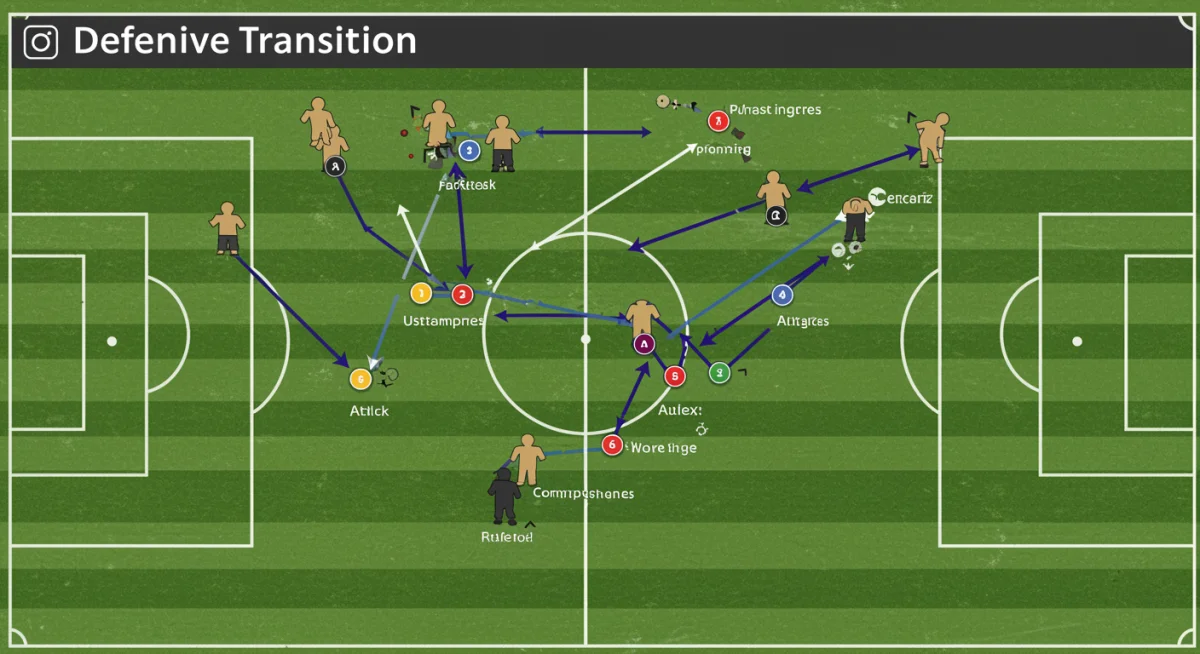
The transition from attack to defense is often the most vulnerable moment for any team. Without a well-drilled defensive transition, even the most potent attacks can be undermined by swift counter-attacks from the opposition. Therefore, teams must practice these movements relentlessly, ensuring every player understands their role.
executing robust defensive transitions
A strong defensive transition hinges on collective discipline and a clear understanding of roles and responsibilities.
- Immediate Shape Adjustment: Players must quickly drop back and reform into a compact defensive block, denying central spaces.
- Recovery Runs: Attacking players must track back diligently, supporting the midfield and defense.
- Pressing in Stages: If the initial press is bypassed, subsequent players must engage the ball carrier while others cover.
- Channeling Opponents: Forcing the opponent wide or into areas where they are less dangerous.
Midfielders play a critical role here, often acting as the first line of defense, screening passes, and delaying the opponent’s progress until the rest of the team can recover. Their ability to cover ground, make timely interceptions, and engage in duels is paramount to a successful defensive transition.
case studies: potential midfield powerhouses for 2026
Looking ahead to the 2026 World Cup, several national teams already exhibit the tactical prowess in midfield that could make them serious contenders. Their current setups and player profiles suggest a strong emphasis on both sophisticated positional play and clinical transitional tactics. Analyzing these teams offers insight into what success might look like.
Brazil, for instance, under their evolving tactical approach, always possesses a wealth of midfield talent. Players capable of both breaking up play and orchestrating attacks are abundant. Their challenge will be to integrate these individual talents into a cohesive system that maximizes their collective strength in all phases of the game. The blend of their technical brilliance with tactical discipline will be key.
contenders and their midfield strategies
Each potential powerhouse brings a unique flavor to the midfield battle, reflecting different tactical philosophies.
- France: Known for their athletic and dynamic midfielders, France often relies on powerful box-to-box players who can dominate physically and contribute to both attack and defense. Their transitional play is often driven by individual brilliance and rapid breaks.
- Spain: Historically champions of positional play, Spain’s midfield maestros will likely continue to prioritize intricate passing, ball retention, and numerical superiority. Their challenge will be to add more directness and defensive solidity to their possession game.
- Argentina: With a blend of experienced veterans and emerging talents, Argentina’s midfield combines grit and creativity. They excel at winning the ball back and launching quick counter-attacks, leveraging the speed of their forwards.
- England: Boasting a new generation of technically gifted midfielders, England aims for a more controlled possession-based game complemented by aggressive pressing. Their ability to adapt between holding possession and rapid transitions will be crucial.
These teams, and others, will undoubtedly fine-tune their midfield strategies in the lead-up to 2026, adapting to opponent strengths and leveraging their own unique player profiles. The midfield battle will truly be a chess match of tactical wits and physical endurance.
the future of midfield dominance in 2026
As the 2026 World Cup approaches, the emphasis on midfield excellence will only intensify. The demands on players in this crucial area of the pitch are becoming more complex, requiring a blend of physical, technical, and tactical attributes that few positions demand. Teams that invest in developing versatile, intelligent midfielders will undoubtedly reap the rewards.
The future of midfield dominance lies in adaptability. Teams will need midfielders who can seamlessly switch between different tactical roles within a single match, responding to the ebb and flow of the game. This means players who are comfortable in possession, aggressive in pressing, and disciplined in defensive recovery. The ability to perform these roles consistently at the highest level will separate the contenders from the pretenders.
innovations and adaptations
Coaches are constantly seeking new ways to gain an edge, and midfield tactics are a prime area for innovation.
- Hybrid Roles: Players adopting roles that blur traditional positions, such as ‘inverted full-backs’ or ‘deep-lying playmakers’ who also press high.
- Data Analytics: Using advanced metrics to optimize player positioning, pressing triggers, and recovery runs.
- Psychological Preparedness: The mental fortitude to maintain intense focus and decision-making under extreme pressure for 90+ minutes.
Ultimately, the teams that can assemble a midfield unit capable of mastering intricate positional play while also executing lightning-fast offensive and defensive transitions will be best positioned for glory in the 2026 World Cup. The midfield battle will not just be about individual talent, but about collective intelligence and unwavering tactical discipline.
| Key Midfield Concept | Brief Description |
|---|---|
| Positional Play | Creating numerical and positional superiorities to facilitate fluid ball movement and control. |
| Offensive Transition (Gegenpressing) | Immediately pressing to regain possession high up the pitch after losing the ball. |
| Defensive Transition | Rapidly reforming into a compact defensive shape after losing possession to prevent counter-attacks. |
| Midfield Versatility | Players capable of performing multiple roles: defense, attack, and ball retention. |
frequently asked questions about 2026 World Cup midfield tactics
Midfield control is crucial because it dictates a game’s tempo, allows teams to maintain possession, and provides a defensive shield for the backline. Dominating this area enables teams to create more scoring opportunities while limiting the opponent’s attacking threat, directly influencing match outcomes.
Positional play benefits a team by creating numerical and positional superiorities, ensuring multiple passing options, and facilitating fluid ball movement. This systematic approach helps unlock defenses, maintain possession under pressure, and control key areas of the pitch, leading to more effective attacks.
Offensive transition (like gegenpressing) involves immediately pressing to win the ball back high up the pitch after losing possession, aiming for quick counter-attacks. Defensive transition focuses on rapidly reforming a compact defensive shape after a turnover to prevent the opponent from launching effective counter-attacks.
Teams like France, Spain, Argentina, and England are expected to excel due to their strong player pools and tactical emphasis on midfield dominance. Their ability to balance physical prowess, technical skill, and tactical discipline in both positional play and transitional moments will be key to their success.
Midfielders now need to be highly versatile, contributing to defense, attack, and ball retention. They must possess exceptional tactical intelligence, physical endurance, and technical skill to execute complex pressing schemes, intricate passing patterns, and rapid transitions, making them the tactical heart of any successful team.
conclusion
The 2026 World Cup is poised to be a testament to tactical sophistication, with the midfield serving as the epicenter of competition. Mastery of both intricate positional play and dynamic transitional tactics—offensive and defensive—will be non-negotiable for any team hoping to lift the coveted trophy. The teams that can effectively blend individual brilliance with collective tactical discipline in the engine room of their squad will undoubtedly emerge as the strongest contenders. As we look forward to 2026, the midfield battle promises to be a fascinating study in strategic depth and athletic prowess.