2026 World Cup: Evolving Tactical Setups for US Pitches
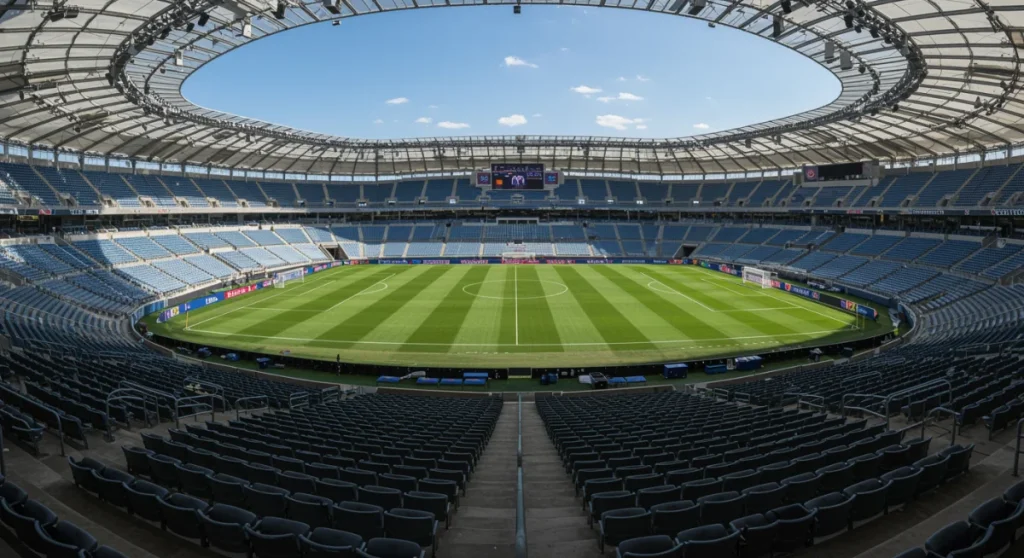
Top international teams are meticulously refining their tactical approaches for the 2026 World Cup Tactics in the US, focusing on adaptability to diverse pitch conditions and evolving opponent strategies.
The 2026 World Cup Tactics will undoubtedly be a fascinating spectacle of strategic evolution, as top teams from around the globe prepare to compete on North American soil. The unique conditions presented by various US pitches, from climate to altitude and even turf variations, demand a sophisticated level of tactical adaptability. This tournament isn’t just about individual brilliance; it’s about how coaches and players collectively optimize their formations and game plans to secure victory.
The Evolving 4-3-3: Balance and Attacking Prowess
The 4-3-3 formation has long been a staple in modern football, renowned for its balance between defensive solidity and attacking fluidity. However, for the 2026 World Cup, teams are not simply deploying a standard 4-3-3; they are meticulously refining its nuances to exploit opponent weaknesses and maximize their own strengths within the unique US environment. This evolution often involves more flexible roles for wide players and central midfielders.
Dynamic Wing Play and Inverted Forwards
One significant adaptation within the 4-3-3 is the increased emphasis on dynamic wing play, often featuring inverted forwards. These players, typically right-footed on the left wing or left-footed on the right, cut inside to create shooting opportunities or link up with central attackers, rather than simply hugging the touchline. This creates unpredictability and stretches opposition defenses in new ways.
- Goal Threat: Inverted wingers often lead to more shots on goal from central positions.
- Overlaps: Full-backs provide width, creating dangerous overlapping runs.
- Midfield Link: They can drop deeper to aid in build-up play, offering an extra passing option.
Midfield Control and Pressing Schemes
The central midfield trio in an evolving 4-3-3 is crucial for dictating the tempo and implementing effective pressing schemes. One holding midfielder provides defensive cover, while two more advanced midfielders link defense to attack. Their ability to win back possession quickly and distribute the ball efficiently will be vital on potentially varied US pitches, where quick transitions can be game-changing.
The 4-3-3’s strength lies in its ability to adapt. Teams are likely to use it as a base, with subtle shifts in player roles and responsibilities depending on the opponent and the specific match conditions. Expect to see variations where one central midfielder acts as a deep-lying playmaker, initiating attacks from behind, while the other two push higher to support the front line.
Ultimately, the refined 4-3-3 for the 2026 World Cup will prioritize intelligent movement, quick transitions, and tactical flexibility. Teams that master these elements will find significant success, leveraging the formation to dominate possession and create numerous scoring opportunities while maintaining defensive discipline.
The Resurgent 3-4-3: Width, Overload, and Defensive Solidity
The 3-4-3 formation, once considered highly attacking and somewhat risky, is experiencing a resurgence, especially among teams looking to dominate wide areas and press intensely. Its modern iteration is far more sophisticated, emphasizing wing-backs who provide both defensive cover and offensive thrust. This setup allows for numerical superiority in various zones, making it a formidable challenge for opponents.
Wing-Backs as Key Playmakers
In the contemporary 3-4-3, the wing-backs are arguably the most critical players. They are responsible for covering the entire flank, contributing to both defense and attack. Their stamina, crossing ability, and defensive awareness are paramount. On US pitches, where space might be at a premium in certain venues, these players will be instrumental in stretching the play and creating crossing opportunities.
- Defensive Coverage: Track back to support the three central defenders.
- Attacking Impetus: Provide width and deliver crosses into the box.
- Transition Speed: Crucial for quick counter-attacks down the flanks.
Central Overload and Pressing Traps
The three central defenders offer a strong defensive base, while the two central midfielders provide a compact unit that can control the center of the park. This central overload allows teams to set pressing traps, forcing opponents into wide areas where the wing-backs can engage. The three forwards, often a central striker supported by two wide forwards, complete the attacking threat, providing varied options for interplay and finishing.
Teams employing the 3-4-3 are often characterized by their high-energy pressing and quick ball recovery. This formation demands exceptional fitness and tactical discipline from every player, particularly the wing-backs who have extensive ground to cover. The ability to switch seamlessly between defensive compactness and offensive expansion will be a hallmark of successful 3-4-3 teams in 2026.
The 3-4-3’s adaptability to different game states makes it an attractive option. It can morph into a 5-4-1 defensively, offering robust protection, and then swiftly transition into a 3-2-5 in attack, overwhelming opponents with numbers in the final third. This tactical flexibility will be key to navigating the varied challenges of the World Cup.
The Solid 4-2-3-1: Counter-Attacking Power and Defensive Stability
The 4-2-3-1 remains one of the most popular formations globally, prized for its defensive stability and potent counter-attacking capabilities. For the 2026 World Cup, teams are refining this setup to prioritize quick transitions and efficient use of space, especially against possession-dominant opponents. The double pivot in midfield is central to its effectiveness, shielding the defense and launching attacks.
The Pivotal Double Pivot
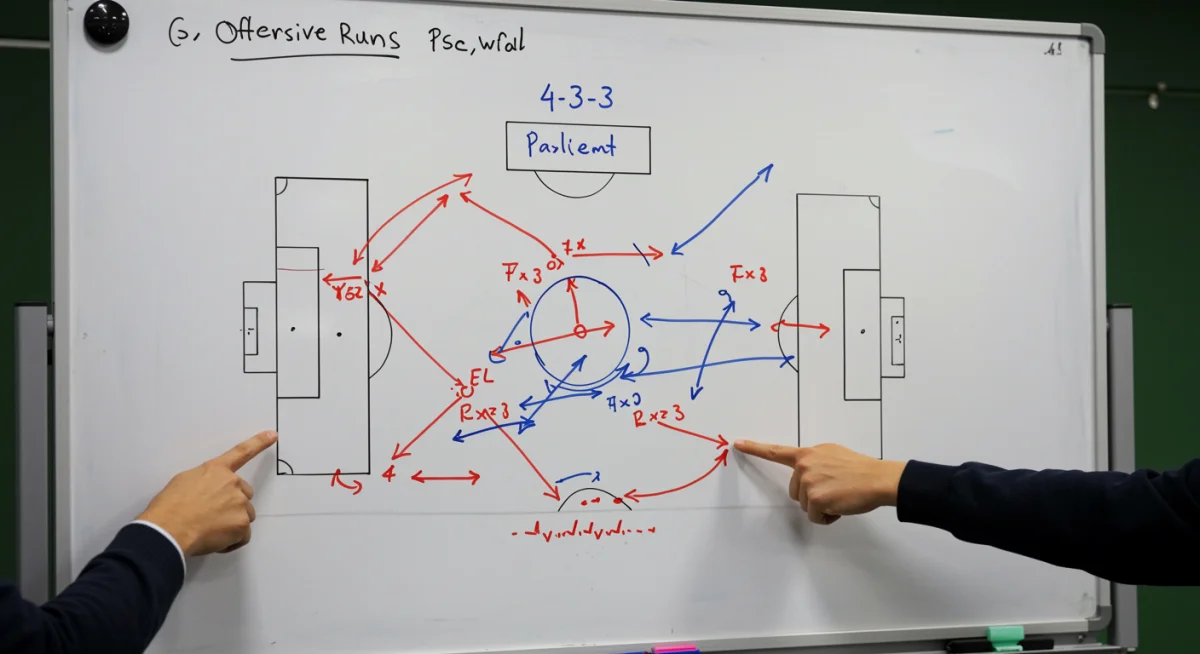
The two defensive midfielders forming the ‘double pivot’ are the engine room of the 4-2-3-1. They provide a crucial screen for the back four, breaking up play and winning second balls. Their ability to distribute the ball accurately and quickly is paramount for initiating counter-attacks. One midfielder might be more defensively oriented, while the other offers more progressive passing and support to the attacking players.
Attacking Midfielder and Wide Forwards Synergy
The attacking midfielder, positioned just behind the lone striker, is the creative hub, responsible for unlocking defenses with incisive passes and timely runs. Supported by two wide forwards who can either cut inside or provide width, this attacking quartet offers a dynamic threat. Their coordinated movement and interchange of positions will be vital for breaking down well-organized defenses.
- Creative Hub: The number 10 orchestrates attacks and provides through balls.
- Versatile Wings: Wide players can dribble, cross, or shoot, adding unpredictability.
- Target Man: The lone striker holds up play and finishes chances created.
The 4-2-3-1 excels at absorbing pressure and then launching rapid counter-attacks. This approach can be particularly effective on US pitches, where some teams might struggle to adapt to varying conditions, leading to errors that can be swiftly exploited. The formation’s inherent balance allows for both defensive resilience and sharp offensive thrusts, making it a difficult system to play against.
Successful implementation of the 4-2-3-1 for the 2026 World Cup will hinge on the quality of the players in key positions and their understanding of tactical roles. The ability of the double pivot to protect the defense and initiate attacks, coupled with the creativity and pace of the attacking quartet, will be crucial for any team adopting this formation with aspirations of lifting the trophy.
Impact of US Pitch Conditions on Tactical Choices
The diverse range of venues across the United States will present unique challenges and opportunities for tactical deployment at the 2026 World Cup. From humid coastal cities to higher-altitude locations, and stadiums potentially using different turf types, coaches must consider how these factors influence player performance and, consequently, their tactical decisions. This requires a deeper level of preparation than ever before.
Altitude and Player Stamina
Matches played at higher altitudes, such as in Denver or Mexico City (though Mexico City is not in the US, it highlights the general challenge for North American venues), can significantly impact player stamina and aerobic capacity. Teams might opt for formations that conserve energy, prioritize defensive solidity, and rely on quick, decisive attacks rather than prolonged periods of high pressing.
- Energy Conservation: Formations with a compact midfield to reduce running.
- Shorter Passes: Limiting long, speculative balls that require more chasing.
- Strategic Substitutions: Earlier changes to maintain intensity.
Turf Variations and Ball Control
While FIFA mandates natural grass for World Cup matches, the specific grass types and maintenance can vary between stadiums. These subtle differences can affect ball roll, bounce, and player footing, influencing passing accuracy and dribbling. Teams might train on various surfaces to prepare, and tactical plans may need slight adjustments based on pre-match pitch inspections.
Furthermore, weather conditions, particularly heat and humidity in summer months, will play a significant role. Teams might prefer formations that allow for more rotation of players or those that enable quick, incisive attacks to limit prolonged exertion in oppressive conditions. Hydration and recovery strategies will be as important as tactical blueprints.
The ability of coaches to analyze and adapt to these varied environmental factors will be a critical determinant of success. Teams that can quickly adjust their tactical approach, whether through subtle role changes or complete formation shifts, will gain a considerable advantage over those who stick rigidly to a single strategy, regardless of the conditions.
Strategic Adaptations: Flexibility and In-Game Adjustments
Beyond the initial formation choice, the true tactical genius at the 2026 World Cup will lie in a team’s ability to implement strategic adaptations and make effective in-game adjustments. Modern football is increasingly fluid, demanding that players are versatile and coaches are proactive in responding to the flow of the match and the opponent’s strategy. This goes beyond just substitutions; it involves subtle shifts in roles and responsibilities.
Mid-Game Formation Shifts
Successful teams will not be confined to a single formation for 90 minutes. It’s common to see a 4-3-3 shift to a 4-2-3-1, or a 3-4-3 drop into a 5-4-1 defensively. These changes are often triggered by the scoreline, an opponent’s tactical change, or simply the need to gain control in a specific area of the pitch. Players must be well-drilled in multiple systems to execute these transitions seamlessly.
- Responding to Opponents: Countering an opponent’s tactical change.
- Chasing/Protecting a Lead: Shifting to a more attacking or defensive setup.
- Exploiting Weaknesses: Adapting to target newly identified vulnerabilities.
Player Versatility and Rotational Roles
The modern footballer is expected to be versatile, capable of playing in multiple positions or performing different roles within the same position. A winger might drop deep to assist the midfield, or a full-back might push high to act as an auxiliary winger. This fluidity allows for dynamic tactical variations without needing to make substitutions, keeping opponents guessing.
The bench will also play a critical role. Impact substitutes, capable of changing the game’s complexion, will be deployed not just for fresh legs but for specific tactical purposes. Introducing a fast winger against tiring full-backs, or a strong defensive midfielder to shore up the center, can be the decisive factor in tight encounters. These planned changes are part of the broader strategic adaptation.
Ultimately, the teams that demonstrate the highest levels of tactical flexibility and the ability to make intelligent, timely in-game adjustments will be the ones that navigate the challenges of the 2026 World Cup most effectively. This requires not only astute coaching but also a squad of intelligent and adaptable players.
Data Analytics and Scouting: The Edge in Tactical Preparation
In the lead-up to the 2026 World Cup, data analytics and advanced scouting will provide an unparalleled edge in tactical preparation. Modern football relies heavily on quantitative and qualitative data to inform every aspect of a team’s strategy, from opponent analysis to player performance optimization. This scientific approach minimizes guesswork and maximizes efficiency on the pitch.
Advanced Opponent Analysis
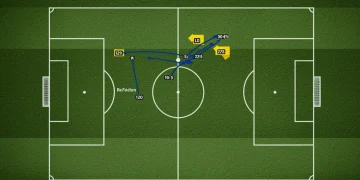
Teams will utilize sophisticated software and dedicated analysts to dissect every aspect of their opponents’ play. This includes identifying preferred passing patterns, defensive vulnerabilities, set-piece routines, and individual player tendencies. This granular data allows coaches to tailor their tactical setups precisely, aiming to neutralize threats and exploit weaknesses with surgical precision.
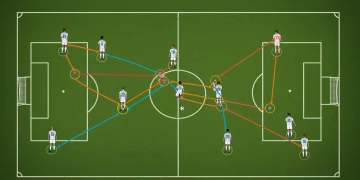
- Passing Networks: Understanding how opponents build attacks.
- Defensive Gaps: Pinpointing areas where teams are vulnerable.
- Set-Piece Tendencies: Preparing for offensive and defensive set-piece plays.
Player Performance Optimization
Beyond opponent analysis, data analytics is crucial for optimizing a team’s own players. GPS tracking, heart rate monitors, and other biometric data help coaching staff manage player workload, prevent injuries, and ensure peak physical condition. Tactical data also helps players understand their roles better, showing them where they need to position themselves or how to improve their decision-making in specific scenarios.
The insights gained from these analytical tools extend beyond the pitch to include environmental factors. Data on historical weather patterns at specific venues, combined with predictive models, can help teams prepare for heat, humidity, or even potential rainfall. This comprehensive data integration ensures that tactical plans are robust and adaptable to all foreseen circumstances.
The reliance on data analytics and scouting will only grow as the 2026 World Cup approaches. Teams that invest heavily in these areas and effectively translate complex data into actionable tactical strategies will undoubtedly possess a significant advantage, allowing them to fine-tune their approaches with a level of detail previously unimaginable.
The Human Element: Leadership, Psychology, and Team Cohesion
While tactical setups, pitch conditions, and data analytics provide the framework, the human element—leadership, psychology, and team cohesion—will ultimately determine success at the 2026 World Cup. The pressure of international competition, especially on such a grand stage, demands mental fortitude and an unbreakable team spirit. No matter how brilliant the tactics, they are only as effective as the players executing them.
Leadership On and Off the Pitch
Strong leadership, both from the captain and other experienced players, is vital for maintaining discipline and focus. On the pitch, leaders guide teammates, communicate tactical instructions, and inspire confidence during challenging moments. Off the pitch, they foster a positive team environment, ensuring that all players feel valued and motivated, which is critical for navigating a long tournament.
Psychological Preparation for High Stakes
The psychological aspect of preparing for a World Cup cannot be overstated. Players must be equipped to handle immense pressure, media scrutiny, and the emotional highs and lows of competition. Sports psychologists are increasingly integrated into national teams, helping players develop resilience, manage stress, and maintain optimal performance under duress. This mental readiness is as crucial as physical conditioning.
- Stress Management: Techniques to cope with high-pressure situations.
- Focus and Concentration: Maintaining attention throughout demanding matches.
- Resilience Building: Bouncing back from setbacks and mistakes.
Team cohesion, built through shared experiences, mutual trust, and a collective goal, underpins everything. A squad that truly believes in each other and their collective mission is capable of overcoming tactical deficiencies or moments of individual error. This intangible quality often separates the good teams from the great ones, especially when faced with adversity.
Ultimately, the most successful teams at the 2026 World Cup will be those that master the interplay between sophisticated tactics and the unyielding human spirit. The blend of strategic brilliance with strong leadership, robust psychology, and deep team cohesion will be the formula for lifting the coveted trophy.
| Key Tactical Aspect | Description for 2026 World Cup |
|---|---|
| Evolving Formations | Teams refine classic 4-3-3, 3-4-3, and 4-2-3-1 for greater flexibility and specialized player roles. |
| US Pitch Adaptations | Tactical choices influenced by altitude, climate, and varied turf conditions across US venues. |
| In-Game Adjustments | Coaches prioritize flexibility, mid-game formation shifts, and versatile players to counter opponents. |
| Data-Driven Strategy | Advanced analytics and scouting provide insights for opponent analysis and player optimization. |
Frequently Asked Questions About 2026 World Cup Tactics
US pitch conditions, including varied altitudes and climate zones, will necessitate tactical flexibility. Teams might prioritize energy conservation in high-altitude games, or use formations that allow for quick transitions in hot, humid environments, adapting their pressing intensity and passing strategies accordingly.
The 4-3-3, 3-4-3, and 4-2-3-1 are expected to be highly prevalent. These formations offer a strong balance of defense and attack, with modern adaptations emphasizing dynamic player roles, flexible positioning, and efficient transitions to suit the fast-paced nature of contemporary football.
Player versatility is critically important. Modern tactical planning requires players who can adapt to multiple positions or roles within a single game, allowing coaches to make seamless in-game adjustments without needing substitutions and to exploit opponent weaknesses more effectively.
Data analytics plays a crucial role by providing detailed insights into opponent strengths and weaknesses, as well as optimizing player performance. This data informs strategic decisions, helps tailor game plans, and ensures teams are prepared for various scenarios and environmental conditions.
Beyond tactical brilliance, strong leadership, robust psychological preparation, and deep team cohesion will be crucial. The ability to manage pressure, maintain focus, and foster a unified team spirit will be instrumental in navigating the challenges and sustained demands of a World Cup tournament.
Conclusion
The 2026 World Cup promises to be a battle of wits as much as a display of athletic prowess. Top teams are not merely selecting formations; they are meticulously evolving their tactical setups, adapting them to the unique challenges of US pitches, and leveraging advanced data analytics to gain every possible advantage. The emphasis on flexibility, player versatility, and the crucial human elements of leadership and psychology will define success. Ultimately, the teams that can seamlessly blend strategic innovation with unwavering mental fortitude will be the ones that etch their names into World Cup history.