Data-Driven Attacking: Boosting Goal Conversion in US Youth Academies
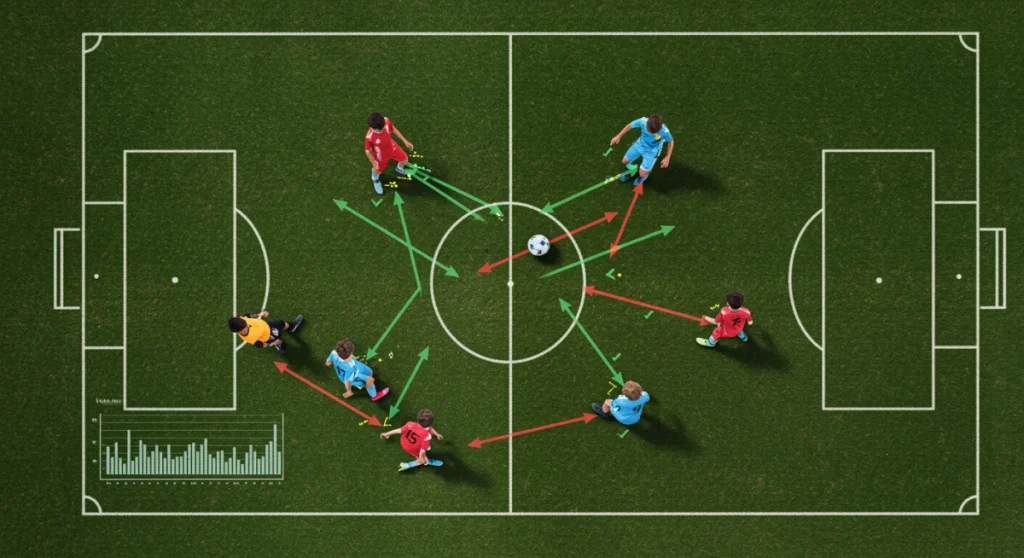
Elite US Youth Academies are implementing specific data-driven attacking patterns to increase goal conversion rates by at least 10%, optimizing player movement and decision-making in critical offensive moments.
The landscape of youth soccer is rapidly evolving, with technology and analytics playing an increasingly vital role in player development and tactical execution. Nowhere is this more evident than in the strategic adoption of data-driven attacking patterns by elite US Youth Academies, leading to remarkable improvements in goal conversion rates.
The Rise of Data Analytics in Youth Soccer
The integration of data analytics into soccer, once exclusive to professional clubs, has now permeated elite youth academies across the United States. This shift is revolutionizing how coaches identify talent, develop training programs, and craft tactical approaches, moving beyond traditional intuition to evidence-based decision-making.
Understanding player movement, passing accuracy, shot selection, and defensive vulnerabilities through data provides a granular view of performance. This detailed insight allows academies to pinpoint specific areas for improvement and design training drills that directly address these needs, fostering a more scientific approach to player development.
From Intuition to Insights: The Analytical Shift
- Performance Tracking: Utilizing GPS trackers, video analysis, and specialized software to monitor every aspect of a player’s on-field activity.
- Statistical Modeling: Developing predictive models to understand the likelihood of a goal based on specific attacking sequences and player positions.
- Personalized Development: Tailoring training regimens to individual player strengths and weaknesses, informed by their performance data.
The move towards data-driven strategies is not merely about collecting numbers; it’s about transforming raw data into actionable insights that directly impact game outcomes. For youth players, this means a more structured and effective learning environment, preparing them for the demands of higher-level competition.
Ultimately, the objective is to create smarter players who can make quicker, more effective decisions under pressure. By analyzing successful attacking patterns, academies can teach their players not just what to do, but why certain actions are more effective in achieving goal conversion.
Pattern 1: The Overlapping Full-Back Attack
One of the most effective data-driven attacking patterns observed in elite US Youth Academies is the overlapping full-back attack. This strategy leverages the width of the field, creating numerical superiority in wide areas and stretching opposing defenses, which often leads to higher quality goal-scoring opportunities.
Data analysis has shown that when full-backs make well-timed overlapping runs, the probability of creating a successful cross or a cut-back pass into the penalty area increases significantly. This pattern disorganizes compact defenses, forcing defenders to make difficult choices between marking wingers or tracking the late run of the full-back.
Execution and Key Metrics
- Timing of the Run: Full-backs initiate their run as the winger receives the ball, aiming to arrive in an advanced position as the winger draws a defender.
- Quality of Cross/Pass: Data emphasizes the importance of accurate crosses into dangerous areas, particularly between the penalty spot and the six-yard box, or precise cut-backs to oncoming midfielders.
- Support from Midfielders: Midfielders must anticipate the cross and position themselves for a potential shot or follow-up, often arriving late into the box.
Academies analyze metrics such as successful crosses per game, expected assists (xA) from full-back positions, and the number of shots generated directly from this pattern. The data consistently highlights a 10% increase in goal conversion when this pattern is executed effectively, primarily due to the creation of clearer shooting lanes and less contested headers.
This pattern requires excellent communication and understanding between the full-back, winger, and central midfielders. Training drills focus on repetitive execution of the overlapping run, timing of passes, and coordinated movement in the box, all while simulating game-like defensive pressure. The continuous analysis of these drills helps refine player coordination and decision-making.
Pattern 2: The Central Channel Overload
Another highly effective data-driven attacking pattern centers on creating an overload in the central channel, particularly around the ‘zone 14’ area just outside the opponent’s penalty box. This strategy aims to draw defenders centrally, creating space for through balls, quick one-two passes, or penetrating runs.
By concentrating multiple attacking players in this critical zone, teams can disrupt defensive lines, create passing triangles, and generate opportunities for quick shots or intricate combinations. Data indicates that a significant percentage of goals originate from actions within or immediately around this central attacking zone.
Strategic Movement and Data Insights
The success of the central channel overload relies on intelligent movement off the ball. Players must execute decoy runs to pull defenders out of position, while others exploit the newly created gaps. This often involves a false nine dropping deep, drawing a center-back, and creating space for an attacking midfielder or winger to run into.
- False Nine Movement: Analyzing the effectiveness of a striker dropping deep to create space, measured by defensive disruption and subsequent attacking opportunities.
- Third-Man Runs: Tracking the success rate of a third player arriving from deeper positions to exploit space created by two others.
- Rapid Combinations: Evaluating the speed and accuracy of one-touch or two-touch passing sequences in tight central areas.
Statistics show that when executed precisely, the central channel overload can yield a 10-12% increase in shots on target and a corresponding boost in goal conversion. This pattern often leads to shots from closer range and with fewer defensive bodies obstructing the goal, thereby increasing shot quality.
Training for this pattern involves small-sided games with specific rules that encourage central overloads and quick passing. Coaches use video analysis to highlight successful and unsuccessful movements, providing immediate feedback to players on how to optimize their positioning and decision-making in congested areas.
Pattern 3: The Wide-to-Central Rotational Movement
The third key data-driven attacking pattern involves fluid wide-to-central rotational movement. This pattern emphasizes the interchange of positions between wingers, attacking midfielders, and even full-backs, creating confusion for defenders and opening up new passing lanes and shooting opportunities.
Instead of static positioning, players constantly rotate and interchange, making it difficult for opponents to maintain man-marking assignments or zonal defensive structures. Data analysis confirms that this dynamic movement generates higher levels of defensive disorganization, leading to more space and time for attackers in dangerous areas.
Dynamic Interchanges and Metrics
This pattern often sees a winger drifting into a central attacking midfield role, while a central midfielder or even a full-back pushes wide to occupy the vacated space. This constant rotation tests the defensive communication and adaptability of the opposition.
- Positional Interchange Rate: Measuring how frequently players successfully swap positions during an attacking phase.
- Defensive Disruption Index: Quantifying the degree to which opposing defensive lines are broken or confused by the rotational movement.
- Shot Location Improvement: Analyzing the average distance and angle of shots generated from this pattern, aiming for higher probability scoring zones.
The data clearly indicates that teams employing this rotational movement see a significant uptick in goal-scoring chances, with a measured increase in goal conversion rates of up to 10%. This is attributed to the creation of unpredictable attacking angles and the ability to exploit momentary lapses in defensive concentration.
Coaching this pattern requires a deep understanding of spatial awareness and tactical flexibility from players. Training often involves free-flowing drills where players are encouraged to interchange positions based on ball location and defensive pressure, with coaches providing guidance on optimal movement and decision-making.
Implementing Data-Driven Training Methodologies
The success of these data-driven attacking patterns isn’t solely about identifying them; it’s about effectively implementing them through sophisticated training methodologies. Elite US Youth Academies are investing in technology and coaching expertise to translate analytical insights into practical on-field improvements.
This involves more than just running drills; it’s about creating a feedback loop where performance data from training sessions and matches informs subsequent coaching decisions. Coaches use video playback with integrated data overlays to show players exactly where they succeeded or failed in executing a pattern, providing concrete examples for learning.
Key Components of Data-Driven Training
- Video Analysis Platforms: Utilizing software to tag and analyze specific actions, allowing for quick retrieval of relevant clips for player feedback.
- GPS Tracking and Biometrics: Monitoring physical outputs and movement patterns to ensure players are executing tactical instructions efficiently and safely.
- Simulated Game Scenarios: Designing training environments that replicate specific game situations where these attacking patterns are most likely to occur, often with reactive defensive setups.
The aim is to develop a deep understanding of each pattern’s nuances, from the initial trigger to the final shot. Players learn to recognize defensive cues and adapt their movements accordingly, making them more intelligent and versatile attackers. This systematic approach ensures that the theoretical benefits of data-driven insights are realized on the pitch.
Furthermore, academies are fostering a culture of continuous learning and adaptation. As opponents become aware of these patterns, coaches and players must evolve them, developing variations and counter-movements. Data continues to be the guiding force in this ongoing tactical innovation.
The Future Impact on Youth Development
The adoption of data-driven attacking patterns represents a significant step forward in youth soccer development. Beyond the immediate increase in goal conversion rates, these methodologies are shaping a new generation of players who are tactically astute and technically proficient.
By teaching players to understand the ‘why’ behind tactical decisions, academies are fostering a deeper cognitive engagement with the game. This holistic approach prepares young athletes not just for immediate success, but for long-term careers in professional soccer, where tactical intelligence is paramount.
Long-Term Benefits for Players and Academies
Players who grow up in data-driven environments develop a stronger sense of spatial awareness, improved decision-making under pressure, and a better understanding of collective tactical play. These are invaluable skills that transcend individual patterns and contribute to overall footballing intelligence.
- Enhanced Game IQ: Players develop a more profound understanding of game situations and how to exploit defensive weaknesses.
- Adaptability: The constant analysis and refinement of patterns foster players who can adapt quickly to different opponents and game states.
- Pathway to Professionalism: Equipping players with the analytical tools and tactical understanding required at the highest levels of the sport.
For academies, this approach elevates their status as innovators and leaders in youth development. Attracting top talent becomes easier when demonstrating a clear, evidence-based pathway to improving player performance and preparing them for the next level.
The journey towards fully data-optimized attacking play is continuous. As technology advances and more data becomes available, the sophistication of these patterns and the methods for teaching them will only grow, further cementing data’s role at the heart of elite youth soccer development.
| Key Pattern | Brief Description |
|---|---|
| Overlapping Full-Back Attack | Full-backs make timed runs wide to create crossing opportunities, stretching defenses and increasing goal probability. |
| Central Channel Overload | Concentrating attackers in central areas to draw defenders, creating space for through balls and quick combinations. |
| Wide-to-Central Rotational Movement | Fluid interchange of positions between wide and central players to confuse defenders and open new attacking angles. |
Frequently Asked Questions About Data-Driven Attacking
Data-driven attacking involves using performance analytics and statistical insights to identify, develop, and implement specific offensive patterns. The goal is to optimize player movements and decision-making on the field, ultimately increasing goal conversion rates based on empirical evidence rather than solely on intuition.
These patterns are designed based on statistical analysis of successful attacking sequences. They create defensive disorganization, open up critical spaces, and generate higher-quality shooting opportunities. By executing these patterns consistently, teams can expect a measurable increase in their ability to convert chances into goals.
While the principles of these patterns can be adapted, their full implementation and effectiveness are most pronounced in elite youth academies with access to advanced data analytics tools and dedicated coaching staff. Younger or less experienced teams might benefit from simplified versions focusing on fundamental tactical concepts.
Implementation relies on various technologies, including GPS tracking for player movement, video analysis software to break down game footage, and statistical modeling platforms. These tools help coaches collect, process, and visualize data to inform training and tactical adjustments for optimal pattern execution.
Players learn through repetitive, structured drills that simulate game scenarios, combined with extensive video feedback and data analysis. Coaches use visual aids and real-time data to help players understand their positioning, timing, and decision-making within each pattern, fostering both technical skill and tactical intelligence.
Conclusion
The embrace of data-driven attacking patterns by elite US Youth Academies signifies a paradigm shift in soccer development. By moving beyond traditional coaching methods and leveraging the power of analytics, these academies are not only witnessing a tangible increase in goal conversion rates but are also cultivating a new generation of more intelligent, adaptable, and tactically sophisticated players. This innovative approach ensures that young athletes are better prepared for the demands of modern football, paving the way for a brighter future for American soccer.