
The beautiful game of soccer is constantly evolving, with tactical innovations shaping the way teams approach every match. In Major League Soccer (MLS), a league known for its dynamism and rapid growth, one tactical approach has truly come to define the elite teams of 2026: the counter-press. This high-intensity strategy, perfected by European giants and now expertly adapted by MLS powerhouses, is not just about winning the ball back; it’s about dominating possession, controlling the tempo, and creating immediate attacking opportunities. This article delves deep into the art of the MLS Counter-Press Tactics, exploring how top teams are implementing these schemes to achieve unparalleled success and what the future holds for this captivating style of play.
For years, MLS was often characterized by its direct play and athletic prowess. However, as the league has matured, attracting world-class talent and investing heavily in coaching and infrastructure, the tactical sophistication has skyrocketed. The counter-press, or Gegenpressing as it’s known in its German origins, is a prime example of this evolution. It’s a philosophy that demands relentless effort, impeccable organization, and a deep understanding of spatial awareness from every player on the pitch. It transforms the moment of losing possession from a defensive weakness into an offensive weapon, catching opponents off guard and off-balance.
Understanding the Core Principles of MLS Counter-Press Tactics
At its heart, the counter-press is a proactive defensive strategy that aims to regain possession immediately after losing it. Instead of retreating into a defensive shape, players swarm the opponent who has just won the ball, cutting off passing lanes and limiting their options. The objective is twofold: first, to recover the ball as high up the pitch as possible, thereby creating a short path to goal; and second, to prevent the opponent from launching their own counter-attack or settling into a comfortable possession phase. This aggressive, front-foot approach is a hallmark of successful MLS Counter-Press Tactics.
The "Five-Second Rule" and Immediate Pressure
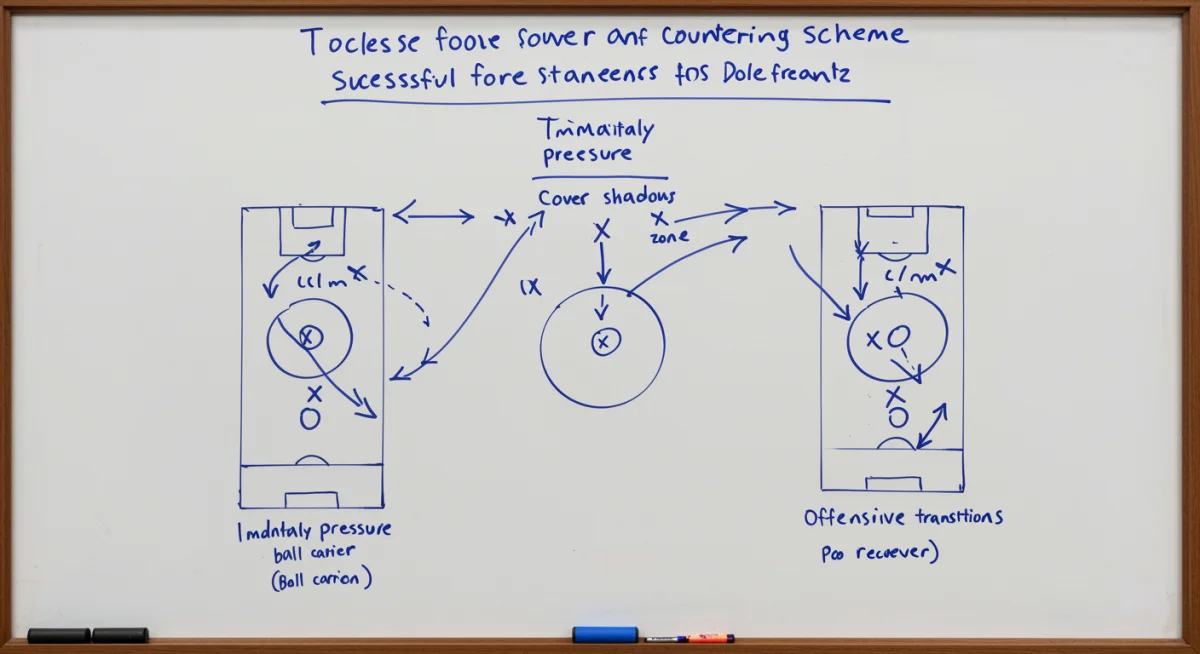
Many coaches adhere to a "five-second rule" or similar principle: within five seconds of losing possession, the team must attempt to win the ball back. This isn’t a rigid timer but a psychological trigger. As soon as the ball is lost, the nearest players are expected to press the ball carrier, while teammates adjust their positions to block passing options and cover potential runs. This immediate, collective pressure is crucial. It denies the opponent time and space to think, forcing hurried decisions and often misplaced passes, which are then pounced upon by the pressing team.
The Importance of Positional Play and Compactness
Effective counter-pressing is not just about individual sprints; it’s deeply intertwined with excellent positional play when in possession. Teams that excel at MLS Counter-Press Tactics maintain a compact shape even when attacking. This means that when possession is lost, players are already in close proximity to the ball and to each other, making it easier to form a defensive block and apply pressure. If players are spread too wide or too far apart, the counter-press becomes disjointed and ineffective, leaving large spaces for the opponent to exploit.
Triggering Mechanisms: When and Where to Press
Successful counter-pressing isn’t random; it’s triggered by specific events. Common triggers include:
- Loss of Possession: The most obvious trigger.
- Opponent’s First Touch: A heavy or poor first touch from an opponent signals an opportunity to press.
- Backward Pass: When an opponent passes backward, it often indicates a lack of immediate forward options, making them vulnerable.
- Sideline or Corner: Pressing an opponent near the touchline or corner flag limits their escape routes, creating a "pressing trap."
- Goalkeeper Distribution: High pressing on goal kicks or open play distribution from the keeper can force errors.
These triggers are drilled into players, becoming instinctual reactions rather than conscious decisions. This level of automation is what differentiates good counter-pressing from truly elite MLS Counter-Press Tactics.
Key Components of a Successful MLS Counter-Press System in 2026
Building a robust counter-pressing system requires more than just a desire to win the ball back quickly. It demands specific qualities from players, meticulous coaching, and a deep understanding of tactical nuances.
Physical Demands: The Engine Room of the Counter-Press
The high-intensity nature of the counter-press places immense physical demands on players. They must be able to repeatedly sprint, accelerate, decelerate, and change direction, often for extended periods. Stamina, strength, and explosive power are non-negotiable. Teams employing effective MLS Counter-Press Tactics often rotate players more frequently or invest heavily in sports science departments to manage player load and ensure peak physical condition throughout the long MLS season. The ability to maintain intensity for 90 minutes, plus stoppage time, is a significant competitive advantage.
Tactical Intelligence and Communication
Players need to be tactically astute, understanding not just their own role but also the roles of their teammates. They must be able to read the game, anticipate opponent movements, and make split-second decisions under pressure. Effective communication is paramount: players must constantly vocally and non-vocally signal to each other about pressing triggers, cover assignments, and potential threats. A silent counter-press is a disorganized counter-press.
Technical Proficiency Under Pressure
While often seen as a defensive strategy, the counter-press relies heavily on technical skill, especially when possession is regained. Players must be able to control the ball instantly, make accurate passes, and execute quick attacking moves while still under pressure. The transition from defense to offense must be seamless. A team that wins the ball back but immediately gives it away due to poor technique negates all the effort of the press.
Coaching and Training Methodology
Coaches implementing sophisticated MLS Counter-Press Tactics devote significant training time to specific drills that simulate game situations. Rondo drills, small-sided games with specific pressing rules, and tactical simulations are common. The emphasis is on developing collective understanding, quick decision-making, and the physical conditioning required to execute the strategy consistently. Video analysis plays a crucial role, allowing players to review their pressing actions and identify areas for improvement.
Top MLS Teams Dominating with Counter-Press Tactics in 2026
Several MLS teams have distinguished themselves in 2026 by mastering the counter-press, turning it into a cornerstone of their tactical identity. These teams often share common characteristics: strong leadership, a clear tactical vision from the coaching staff, and a roster built with players possessing the requisite physical and technical attributes.
Example 1: The "Red Bulls Reloaded"
The New York Red Bulls, historically known for their high-pressing "Red Bull Way," have evolved their approach in 2026. Their MLS Counter-Press Tactics are now more refined, focusing on intelligent traps in the midfield and immediate transitions. They use a 4-2-3-1 formation that morphs into a compact 4-4-2 or 4-3-3 when pressing, with the attacking midfielder and wingers playing crucial roles in cutting off passing lanes to the opponent’s full-backs and central midfielders. Their ability to sustain this intensity for large portions of the game has made them incredibly difficult to play against, often leading to early goals from high turnovers.
Example 2: Atlanta United’s Dynamic Approach
Atlanta United, under their current coaching regime, has integrated counter-pressing into their free-flowing attacking style. They emphasize quick transitions, and their counter-press is designed not just to win the ball but to launch immediate attacks. Their wide players and central midfielders are exceptional at winning duels and then quickly distributing the ball to swift attackers. This blend of defensive aggression and offensive flair has made them one of the most exciting teams to watch, showcasing the attacking potential inherent in effective MLS Counter-Press Tactics.
Example 3: Seattle Sounders’ Strategic Execution
The Seattle Sounders, known for their tactical flexibility and robust defensive structures, have added a more pronounced counter-pressing element to their game in 2026. While always defensively sound, their current iteration actively seeks to disrupt opponents higher up the pitch. They often utilize their central midfielders and forwards to initiate the press, forcing opponents into uncomfortable areas. Their backline, known for its experience, then steps up to compress space, making it nearly impossible for opponents to play through them. This strategic application of MLS Counter-Press Tactics has added another dimension to their already formidable game.
The Benefits of Mastering MLS Counter-Press Tactics
The advantages of successfully implementing a counter-pressing system are manifold, impacting both defensive solidity and offensive potency.
Dominating Possession (Indirectly)
While seemingly contradictory, a strong counter-press can lead to indirect possession dominance. By winning the ball back quickly and high up the pitch, teams spend less time defending deep and more time in attacking positions. This doesn’t necessarily mean holding the ball for long periods in their own half, but rather regaining it in areas where they can immediately threaten the opponent’s goal. This aggressive ball recovery is a key aspect of modern MLS Counter-Press Tactics, shifting the field position battle decisively.
Creating High-Value Scoring Opportunities
When possession is regained in the opponent’s half, especially after a forced error, the opponent’s defensive structure is often disorganized. This creates prime opportunities for quick, incisive attacks against an unsettled defense. These high-value chances, often leading to one-on-one situations or shots from close range, are a direct result of effective counter-pressing. The element of surprise and the opponent’s lack of defensive shape are critical.
Disrupting Opponent Rhythms and Building Momentum
A relentless counter-press can be incredibly demoralizing for opposing teams. It denies them time on the ball, prevents them from building attacks, and forces them into constant defensive reactions. This disruption can break an opponent’s rhythm, leading to frustration and more mistakes. Conversely, successful ball recoveries and subsequent attacks build immense momentum for the pressing team, fueling their intensity and confidence. This psychological edge is a significant, yet often underestimated, benefit of MLS Counter-Press Tactics.
Enhanced Defensive Security
By preventing opponents from progressing the ball out of their own half, the counter-press acts as a first line of defense. It reduces the number of times the ball reaches the defending team’s penalty area, thereby decreasing the risk of conceding goals. Even if the press isn’t always successful in winning the ball, it forces the opponent into less dangerous areas and less comfortable positions, making their attacks easier to defend. It transforms the entire team into a cohesive defensive unit, starting from the front.
Challenges and Countering the Counter-Press
While highly effective, the counter-press is not without its challenges, and opponents are constantly seeking ways to nullify its impact.
Physical Fatigue and Injury Risk
The high-intensity nature of the counter-press makes players susceptible to fatigue and, consequently, a higher risk of injury. Managing player load, implementing robust recovery protocols, and ensuring squad depth are crucial for teams employing these MLS Counter-Press Tactics over a long season. Burnout can quickly diminish the effectiveness of the system.
Vulnerability to Long Balls and Direct Play
Teams that press high can be vulnerable to long balls played over their pressing lines, especially if their defensive line is also pushed high. A well-placed long pass to a fast forward can bypass the entire midfield press, leading to one-on-one situations with the goalkeeper. Opponents with strong aerial players or clinical long passers can exploit this weakness. This necessitates careful coordination between the pressing players and the defensive line.
Breaking the Press: Tactical Solutions for Opponents
Opposing teams have developed several strategies to counter the counter-press:
- Quick One-Touch Passing: Moving the ball quickly with one or two touches can bypass the initial wave of pressure before it can fully materialize.
- Playing Over the Press: As mentioned, long passes over the pressing lines can be effective if executed precisely.
- Goalkeeper as a "Third Center-Back": Goalkeepers who are comfortable with the ball at their feet can act as an extra passing option, helping to circulate the ball and draw out pressing players.
- Positional Overloads: Creating numerical superiority in certain areas of the pitch can make it difficult for the pressing team to win the ball back.
- Exploiting Wide Areas: If the central areas are heavily pressed, switching play quickly to isolated wingers or full-backs can create space.
The constant tactical battle between pressing and breaking the press is what makes modern soccer so fascinating, and MLS Counter-Press Tactics are at the forefront of this evolution.
The Evolution of MLS Counter-Press Tactics Towards 2026 and Beyond
Looking ahead, the sophistication of MLS Counter-Press Tactics is only set to increase. The influx of talented young players, often with backgrounds in academies that emphasize these modern tactical approaches, will continue to raise the bar. The role of data analytics and sports science will also become even more critical.
Data-Driven Pressing
Teams are increasingly using data to analyze pressing effectiveness. Metrics like "pressure regains," "high turnovers," and "PPDA (passes per defensive action)" provide objective insights into how well a team is executing its counter-press. This data allows coaches to fine-tune strategies, identify individual player contributions, and detect patterns in opponent build-up play that can be exploited. The integration of advanced analytics into MLS Counter-Press Tactics is a game-changer.
Individualized Pressing Roles
While the counter-press is a collective effort, coaches are also developing more individualized pressing roles. Certain players might be designated as "pressing triggers," while others are responsible for "cover shadows" or "intercepting lanes." This specialization allows players to focus on specific tasks, enhancing the overall efficiency of the system. Understanding these nuanced roles is key to truly excelling in MLS Counter-Press Tactics.
The "Hybrid" Approach
Not all teams will adopt a full-throttle, 90-minute counter-press. Many are developing "hybrid" approaches, where they apply high pressure in specific phases of the game or against particular opponents, while retreating into a more conventional defensive block at other times. This tactical flexibility requires intelligent players and masterful coaching, allowing teams to adapt their MLS Counter-Press Tactics to different game states and energy levels.
Impact of Technology and Training
Advanced training methodologies, including GPS tracking, heart rate monitors, and even virtual reality simulations, are allowing players to train more effectively for the demands of counter-pressing. These technologies help coaches monitor player fatigue, optimize training loads, and provide immediate feedback on tactical positioning and decision-making. The marriage of technology and coaching is propelling MLS Counter-Press Tactics to new heights.

Conclusion: The Enduring Power of MLS Counter-Press Tactics
The art of the counter-press is a testament to the dynamic and ever-evolving nature of modern soccer. In 2026, top MLS teams are not just adopting this high-intensity scheme; they are mastering it, adapting it to the unique characteristics of the league, and using it as a powerful tool to dominate possession, create chances, and ultimately achieve success. From the relentless physical demands to the intricate tactical intelligence required, the counter-press is a comprehensive philosophy that demands excellence from every facet of a club.
As MLS continues its ascent on the global soccer stage, the sophistication of its tactical approaches, particularly in areas like MLS Counter-Press Tactics, will only grow. Fans can expect to see even more refined pressing strategies, more tactically astute players, and an even higher standard of play. The battle for possession, once a simple matter of who held the ball, has been transformed into a thrilling, high-stakes tactical chess match, with the counter-press emerging as one of the most potent weapons in a team’s arsenal. The future of MLS soccer is bright, intense, and undoubtedly, heavily influenced by the art of the counter-press.