
Unveiling the Latest Data: How 3 Key Performance Metrics Are Reshaping MLS Player Profiles in 2026
The beautiful game of soccer, particularly in Major League Soccer (MLS), is undergoing a profound transformation. Gone are the days when raw talent and anecdotal observations solely dictated a player’s worth. We are now firmly entrenched in an era where data analytics and advanced statistical models are not just supplementary tools but fundamental pillars in understanding, evaluating, and developing players. As we look towards 2026, a pivotal year for North American soccer with the FIFA World Cup on the horizon, the focus on specific MLS Player Metrics 2026 is intensifying, reshaping how clubs scout, train, and strategize.
The evolution of sports science and the accessibility of sophisticated tracking technologies have democratized data, allowing for deeper insights into every facet of a player’s contribution. From physical exertion to tactical intelligence, the modern footballer is a walking data point, and understanding these points is key to unlocking their full potential. This article will delve into the three most impactful performance metrics that are not only defining current MLS player profiles but are also set to be critical differentiators in 2026 and beyond.
These metrics go beyond the traditional goals and assists, offering a more holistic and nuanced view of a player’s influence on the pitch. They highlight the rise of the ‘modern athlete’ – a player who is not only technically proficient but also tactically astute, physically dominant, and capable of executing complex roles within a system. For fans, coaches, scouts, and aspiring players, grasping these evolving benchmarks is essential to appreciate the direction MLS is heading.
The Data Revolution in MLS: A Foundation for 2026
Before we dive into the specific metrics, it’s crucial to acknowledge the broader context of data integration in MLS. Over the past decade, MLS has embraced analytics with an increasing fervor. Clubs are investing heavily in sports scientists, data analysts, and advanced tracking systems (GPS, optical tracking) to gain a competitive edge. This commitment to data is not merely a trend; it’s a strategic imperative aimed at enhancing player development, optimizing performance, and mitigating injury risks.
The landscape of MLS is unique, characterized by salary cap restrictions, a diverse player pool, and a growing emphasis on developing young North American talent. In this environment, efficient resource allocation and precise player evaluation become paramount. Data provides the objective framework for these decisions, moving away from subjective biases and towards a more evidence-based approach. The MLS Player Metrics 2026 are a direct consequence of this evolving data culture.
By 2026, the sophistication of data analysis tools will have reached new heights. Machine learning algorithms will be routinely employed to identify patterns, predict future performance, and even suggest tactical adjustments in real-time. This isn’t science fiction; it’s the present reality rapidly accelerating towards the near future. Understanding how these tools interpret and prioritize certain metrics is vital for anyone involved in the sport.
The goal is not to replace the human element of scouting and coaching but to augment it. Data provides the ‘what,’ while human expertise provides the ‘why’ and ‘how.’ The synergy between these two components is what will ultimately define success in the modern game, particularly as MLS continues to grow its global footprint and competitive stature.
Metric 1: Progressive Ball Carrying & Receiving (PBCR)
Defining Progressive Ball Carrying & Receiving
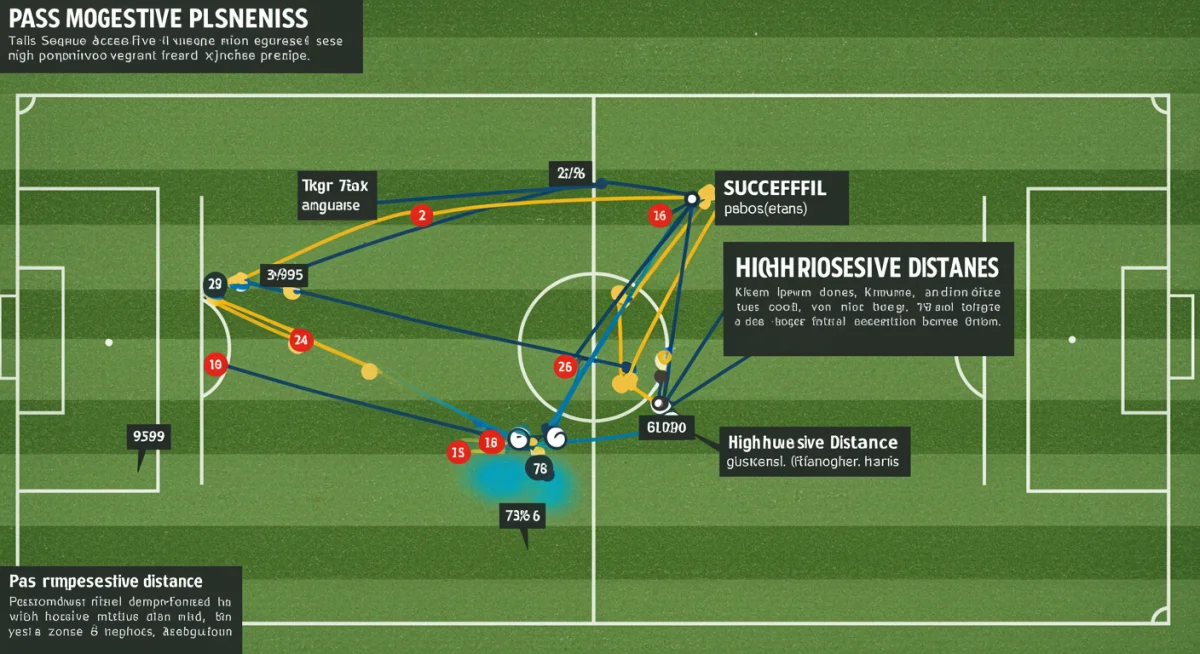
In modern soccer, possession for possession’s sake is often futile. What truly matters is progressive possession – moving the ball into dangerous areas of the pitch. This is where Progressive Ball Carrying & Receiving (PBCR) emerges as a crucial MLS Player Metric 2026. PBCR quantifies a player’s ability to advance the ball towards the opponent’s goal, either by dribbling (carrying) or by receiving passes in advanced positions.
Specifically, Progressive Carries are defined as ball carries that move the ball at least 10 yards closer to the opponent’s goal, or into the penalty area. Progressive Receptions are passes received in the final third or those that move the ball at least 10 yards closer to the opponent’s goal from the point of origin. This metric moves beyond simple pass completion rates, which can be inflated by safe, sideways passes, and instead focuses on actions that genuinely threaten the opposition.
Why PBCR is Crucial for MLS in 2026
The tactical trends in MLS are increasingly favoring dynamic, transition-oriented play. Teams are looking for players who can break lines, either through individual brilliance with the ball at their feet or by finding pockets of space to receive passes in dangerous areas. A high PBCR score indicates a player’s bravery, vision, and technical ability to impact offensive transitions and sustained attacks. It highlights players who are not just involved in the build-up but are actively progressing the play towards goal.
For attacking midfielders, wingers, and even full-backs, a strong PBCR profile demonstrates their capacity to be direct threats. For defensive midfielders, it shows their ability to turn defense into attack with incisive carrying or by being available for progressive outlets. In a league where athleticism and directness are highly valued, players who consistently exhibit high PBCR numbers will be highly sought after.
Furthermore, PBCR is an excellent indicator of a player’s decision-making under pressure. It’s not just about running with the ball, but running with it effectively, identifying space, and executing actions that put the team in a better attacking position. This metric is invaluable for identifying playmakers who might not always register traditional assists or goals but are instrumental in creating the conditions for those events.
Impact on Player Scouting and Development
Scouts will increasingly prioritize PBCR in their evaluation processes. A young player with high PBCR potential, even if their goal/assist numbers are not yet elite, signifies a player who can grow into a potent offensive force. Development programs will focus on drills that enhance ball carrying under pressure, spatial awareness, and decision-making in advanced areas. This metric will help coaches identify players who can consistently break down defenses and create opportunities.
For established players, monitoring PBCR can reveal a decline or improvement in their offensive impact, guiding coaching interventions or tactical adjustments. It also allows for a more accurate comparison of players across different roles and systems, offering a standardized way to measure their progressive contribution to the team’s attack. The emphasis on PBCR will undoubtedly lead to a new generation of MLS players who are more direct, more incisive, and more effective in advancing the ball.
Metric 2: Defensive Pressure Regains (DPR)
Understanding Defensive Pressure Regains
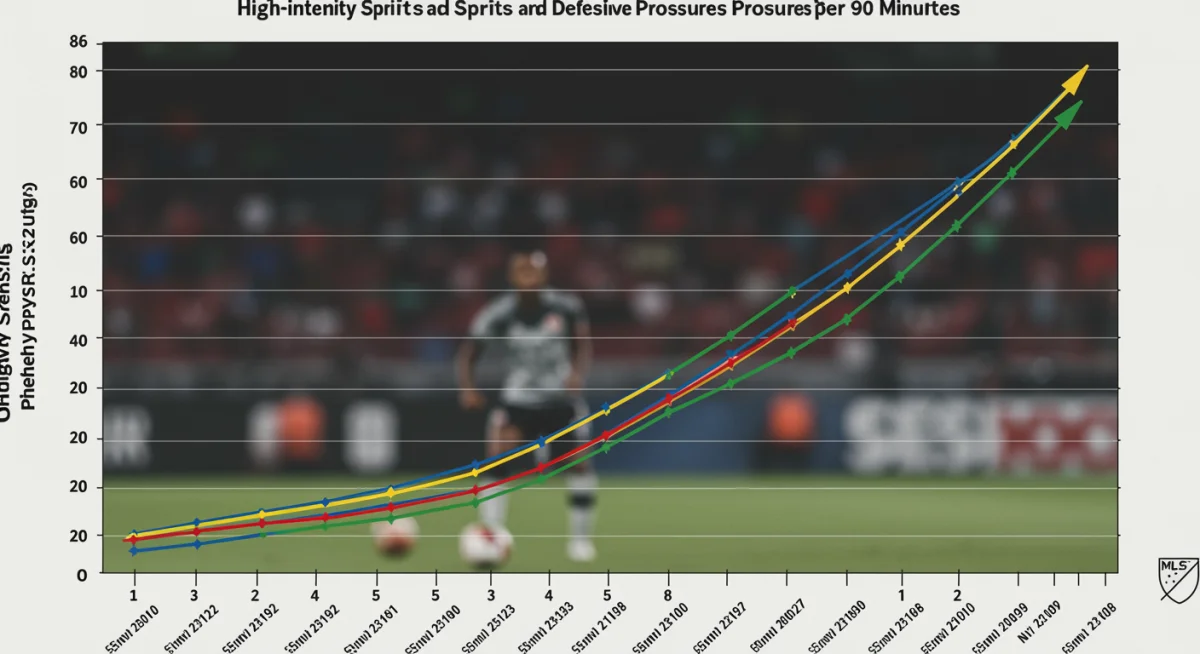
The second critical MLS Player Metric 2026 is Defensive Pressure Regains (DPR). This metric quantifies a player’s ability to win the ball back for their team shortly after losing possession, or by applying pressure to an opponent who has just received the ball. It’s a measure of a player’s defensive work rate, tactical awareness, and their effectiveness in initiating counter-pressing or high-pressing schemes.
A ‘pressure’ is recorded when a player applies pressure to an opposing player who is in possession of the ball. A ‘regain’ occurs when, within a short timeframe (typically 5-7 seconds) after that pressure, the ball is won back by the pressuring player or a teammate. DPR highlights players who are actively involved in the defensive phase, not just in their own half, but all over the pitch, contributing to turnovers in dangerous areas.
The Growing Importance of DPR in MLS
Modern soccer, including MLS, is characterized by intense pressing and counter-pressing. Teams that can win the ball back quickly in advanced areas often create the most dangerous scoring opportunities. DPR directly measures a player’s contribution to this crucial phase of the game. It’s no longer enough to be a good tackler or interceptor; players must also be adept at disrupting opponent build-up and forcing turnovers through relentless pressure.
For midfielders and forwards, a high DPR indicates their willingness and ability to contribute defensively from the front, setting the tone for the team’s pressing strategy. For defenders, it shows their proactiveness in stepping up to win the ball and prevent opponents from establishing control. This metric is a key indicator of a player’s tactical intelligence – their ability to read the game, anticipate passes, and position themselves to apply effective pressure.
In a league like MLS, where athletic prowess and high-intensity play are highly valued, players with exceptional DPR numbers are invaluable. They disrupt opposition rhythm, create transitions, and often lead to high-probability scoring chances. As tactical sophistication in MLS continues to grow, so too will the premium placed on players who excel in Defensive Pressure Regains. The physical demands of consistently executing high DPR are immense, making it a true test of a player’s fitness and commitment.
DPR’s Role in Team Structure and Player Roles
Coaches will use DPR to evaluate the effectiveness of their pressing schemes and to identify players who are best suited to execute those strategies. It helps in building a cohesive defensive unit, where every player understands their role in winning the ball back. For individual player development, training will increasingly incorporate drills focused on quick transitions, defensive positioning in advanced areas, and the timing of pressure application.
The ability to regain possession quickly after losing it is a hallmark of successful teams globally, and MLS is no exception. As the league strives to elevate its competitive standard, the importance of DPR as a key MLS Player Metric 2026 will only grow. It allows teams to build a roster of players who are not only technically gifted but also possess the tactical discipline and physical stamina to dominate the midfield and disrupt opposition attacks from the first line of defense.
Metric 3: Expected Threat (xT) from Open Play
Deconstructing Expected Threat (xT)
The third and perhaps most advanced MLS Player Metric 2026 we will explore is Expected Threat (xT) from Open Play. Unlike goals and assists, which are outcome-based, xT is a process-based metric that quantifies the probability of a shot leading to a goal from any given position on the field. It measures how much a player’s action (a pass or a carry) increases their team’s probability of scoring a goal. Essentially, it values actions that move the ball into more dangerous areas, even if they don’t directly lead to a shot or goal in that specific sequence.
xT models typically divide the pitch into a grid, assigning a ‘threat value’ to each square based on historical data of how often a scoring opportunity or goal has resulted from that zone. When a player moves the ball from a less threatening zone to a more threatening one via a pass or carry, they accumulate xT. This metric is revolutionary because it gives credit to creative players who unlock defenses but might not get an assist, or to defenders who make incisive passes that bypass multiple lines of pressure.
Why xT is a Game-Changer for MLS in 2026
Traditional metrics often fail to capture the true offensive impact of certain players, especially those who are instrumental in the build-up but don’t finish with a direct assist or goal. xT rectifies this by valuing the creation of dangerous situations. In MLS, where tactical systems can vary widely and individual brilliance often shines, xT offers a standardized, objective way to measure offensive contribution beyond the final product.
For creative midfielders, deep-lying playmakers, and even defenders who initiate attacks, a high xT score signifies their ability to consistently increase their team’s scoring probability. It identifies players who have a profound understanding of space, passing lanes, and how to manipulate defenses. As MLS teams increasingly adopt more sophisticated tactical approaches, the ability to generate xT will become a premium skill.
xT is particularly valuable in a league like MLS, where the quality of finishing can sometimes be inconsistent. A player might consistently create high-xT opportunities, but if their teammates fail to convert, their impact might be underestimated by traditional metrics. xT provides a more accurate reflection of their creative prowess, making it an indispensable tool for player evaluation and team building. It highlights the ‘key passes’ that lead to further key passes, eventually breaking down the opponent.
Leveraging xT for Strategic Advantage
Clubs will utilize xT to identify undervalued creative talents who might not be racking up traditional assist numbers but are consistently moving the ball into high-threat zones. It will also inform tactical decisions, encouraging players to make passes or carries that maximize xT, even if they appear risky at first glance. Training regimens will adapt to focus on improving players’ ability to recognize and exploit spaces that yield high xT, fostering a more analytically driven approach to offensive play.
Furthermore, xT can be used to analyze opponent weaknesses. By identifying which areas of the pitch opponents concede high xT from, teams can tailor their attacking strategies to exploit these vulnerabilities. This metric represents the pinnacle of analytical sophistication in soccer, providing a deep, granular understanding of offensive contribution that will be absolutely critical for success in the competitive landscape of MLS Player Metrics 2026.
The Synergy of Metrics: Building the Ideal MLS Player Profile for 2026
While each of these three metrics – Progressive Ball Carrying & Receiving (PBCR), Defensive Pressure Regains (DPR), and Expected Threat (xT) from Open Play – offers unique insights, their true power lies in their combined application. The ‘ideal’ MLS player profile for 2026 will likely be characterized by a strong performance across all or a combination of these metrics, depending on their specific position and role.
Imagine a midfielder who not only boasts a high PBCR, constantly driving the ball forward and breaking lines, but also demonstrates exceptional DPR, winning the ball back relentlessly in advanced areas. Add to that a high xT score, indicating their ability to consistently create dangerous situations through passes and carries, and you have a truly elite, all-action player. This holistic view allows clubs to identify and develop complete footballers who can impact the game in multiple phases.
For example, a modern full-back in MLS will be expected to contribute significantly to both PBCR (overlapping runs, carrying the ball into the final third) and DPR (pressing high, regaining possession after turnovers). A forward is no longer just judged on goals but also on their DPR (leading the press) and their xT (making runs and passes that increase scoring probability, even if they don’t score themselves).
This integrated approach to MLS Player Metrics 2026 moves beyond pigeonholing players into narrow categories. It celebrates versatility, tactical intelligence, and a relentless work ethic – qualities that are increasingly becoming non-negotiable in top-tier soccer. Clubs will seek players who offer a balanced statistical profile, capable of excelling in both offensive and defensive transitions, and who can consistently contribute to increasing their team’s chances of scoring.
Challenges and Future Outlook for MLS Player Metrics
While the adoption of these advanced metrics offers immense benefits, it also presents challenges. Data interpretation requires skilled analysts who can translate complex numbers into actionable insights for coaches. There’s also the risk of over-reliance on data, potentially overlooking intangible qualities like leadership, resilience, and adaptability that are harder to quantify but crucial for team success.
Furthermore, the data collection methods themselves are constantly evolving. The precision of tracking technologies will continue to improve, offering even more granular data. The development of new metrics, perhaps focusing on off-ball movement, defensive positioning in relation to teammates, or even psychological indicators through biometric data, is on the horizon. The field of sports analytics is dynamic, and what constitutes a ‘key metric’ will continue to evolve.
Looking ahead to 2026, the integration of these MLS Player Metrics 2026 will be seamless. Data will not just be a post-match analysis tool but an integral part of real-time decision-making, in-game adjustments, and personalized training programs. The competitive landscape of MLS will be further sharpened by this data-driven approach, pushing clubs and players to new heights of performance.
The goal is to create a league where talent is objectively identified, nurtured, and maximized, leading to a higher quality of play and more exciting matches for fans. The insights derived from PBCR, DPR, and xT will be instrumental in achieving this vision, ensuring that MLS continues its trajectory as a prominent and innovative soccer league on the global stage.
Conclusion: The Data-Driven Future of MLS Player Profiles
The journey to 2026 for Major League Soccer is one of continuous evolution, driven significantly by the relentless pursuit of performance optimization through data. The three key metrics – Progressive Ball Carrying & Receiving (PBCR), Defensive Pressure Regains (DPR), and Expected Threat (xT) from Open Play – are not just fleeting trends; they are foundational elements that are fundamentally reshaping how we understand player value and contribution in modern soccer.
These metrics provide a more comprehensive, nuanced, and objective lens through which to view a player’s impact, moving beyond traditional statistics to capture the true essence of their influence on the game. They highlight the rise of the multi-faceted player who can excel in various phases of play, contributing to both offensive progression and defensive disruption.
As MLS continues to grow in stature and ambition, the ability of clubs to effectively leverage these MLS Player Metrics 2026 will be a critical determinant of their success. For players, understanding and developing these aspects of their game will be paramount for career longevity and progression. For fans, appreciating these advanced statistics will enrich their viewing experience, offering deeper insights into the tactical intricacies and individual brilliance on display.
The future of MLS is undeniably data-driven, and the players who embody excellence across these key performance indicators will be the ones who lead their teams to glory and define the next generation of soccer stars in North America. The era of informed decision-making is here, and it’s making the beautiful game even more fascinating.