US Midfielders: Tactical Evolution in the Last Year
Top US midfielders have significantly adapted their tactical profiles over the last 12 months, integrating advanced defensive responsibilities, enhanced playmaking from deeper positions, and increased versatility to meet modern soccer’s evolving demands.
The landscape of modern soccer is in constant flux, demanding players to evolve at an unprecedented pace. For top US midfielders, the last 12 months have been a period of significant transformation, marked by crucial tactical adaptations that have reshaped their roles and impact on the pitch. This analysis delves into the most significant shifts in their play, examining how these changes contribute to their effectiveness and influence on team performance, providing insights into the evolving demands of the beautiful game.
The Rise of the Hybrid Midfielder: Balancing Defense and Attack
The traditional lines between defensive, central, and attacking midfielders have become increasingly blurred. In the modern game, coaches demand more from their players, especially in the engine room. Over the past year, we’ve witnessed a notable trend among top US midfielders: the embrace of a hybrid role, necessitating both robust defensive contributions and incisive attacking prowess.
This evolution isn’t merely about individual skill; it’s a systemic shift driven by tactical philosophies aiming for greater fluidity and control. Midfielders are now expected to be equally adept at breaking up opposition play as they are at initiating offensive sequences, often within the same passage of play. This requires an exceptional level of stamina, tactical intelligence, and technical versatility.
Increased Defensive Responsibilities
One of the most striking adaptations is the heightened defensive workload placed on midfielders who were once primarily seen as creative outlets. This includes:
- Pressing Intensity: Many US midfielders are now leading the press from the front, aggressively closing down opponents in advanced areas to win possession high up the pitch.
- Positional Discipline: A greater emphasis on maintaining defensive shape and covering for fullbacks or center-backs when they push forward.
- Tackling and Interceptions: An improvement in individual defensive metrics, reflecting a concerted effort to become more disruptive in the midfield battle.
These defensive contributions are no longer optional but fundamental to their roles, allowing teams to win the ball back quickly and launch counter-attacks. This tactical shift is evident in how players like Weston McKennie and Tyler Adams have become indispensable, not just for their passing range but for their relentless work rate off the ball.
Enhanced Playmaking from Deeper Positions
Simultaneously, these hybrid midfielders are tasked with orchestrating attacks from deeper positions. Gone are the days when a defensive midfielder solely recycled possession. Now, they are the primary architects of build-up play, dictating tempo and precision. This involves:
- Progressive Passing: A significant increase in forward passes that break lines and create goal-scoring opportunities.
- Ball Retention Under Pressure: The ability to calmly control possession and find teammates even when surrounded by opponents.
- Vision and Distribution: Exhibiting a broader range of passing, from intricate short passes to expansive cross-field balls, to unlock defenses.
The ability to transition seamlessly from winning the ball to launching an attack is a hallmark of this new breed of US midfielder. Their capacity to influence both ends of the pitch makes them invaluable assets, reflecting a growing understanding of complex tactical systems.
In essence, the hybrid midfielder represents the modern ideal: a player capable of influencing every phase of the game, bridging the gap between defense and attack with intelligence and athleticism. This dual role has become a cornerstone of tactical success for many US players in both domestic and international leagues.
Tactical Flexibility: Adapting to Multiple Formations and Roles
Another significant adaptation observed in top US midfielders over the last year is their enhanced tactical flexibility. The modern game often sees teams switch formations mid-game or adapt their approach based on the opponent. This necessitates players who can seamlessly transition between different roles and responsibilities without a drop in performance.
This adaptability is a testament to their improved tactical understanding and the diverse demands placed upon them by their club and national team coaches. It’s no longer enough to excel in one specific role; versatility has become a prized attribute, allowing coaches greater freedom in their strategic planning.
Positional Interchanges and Rotations
Many US midfielders are now regularly involved in positional interchanges, swapping roles and areas of the pitch with teammates to confuse opponents and create numerical advantages. This dynamic movement includes:
- Deep-lying playmaker to box-to-box: A midfielder starting deep but making late runs into the box to support attacks.
- Wide midfielder to central pivot: Drifting inside to help overload the midfield or create passing triangles.
- Defensive midfielder dropping into defense: Providing cover as a third center-back during build-up phases.
These rotations require excellent communication and an intuitive understanding of teammates’ movements, ensuring that the team remains defensively solid while maximizing attacking potential. The ability to perform these complex maneuvers under pressure is a significant step forward for US midfielders.
Adapting to Different Midfield Structures
Furthermore, US midfielders are increasingly proficient in playing within various midfield configurations, whether it’s a double pivot, a midfield three, or even as part of a diamond. Each structure imposes different demands:
- In a double pivot, they might be expected to share defensive responsibilities and initiate build-up.
- In a midfield three, one might be the primary ball-winner, another the box-to-box engine, and the third a creative number 10.
- Playing wide in a midfield four demands both defensive tracking and attacking width.
This level of adaptability allows coaches to tailor their tactics to exploit opponent weaknesses or mitigate their strengths, with the US midfielders acting as the critical pieces that make these systems work. Their capacity to adjust their game on the fly has made them more valuable and sought-after players in the global soccer market.
Ultimately, tactical flexibility has become a non-negotiable trait for top US midfielders, enabling them to thrive in complex, ever-changing tactical environments. Their ability to perform multiple roles and adapt to various formations underscores their growth and sophistication as players.
Enhanced Press Resistance and Ball Progression
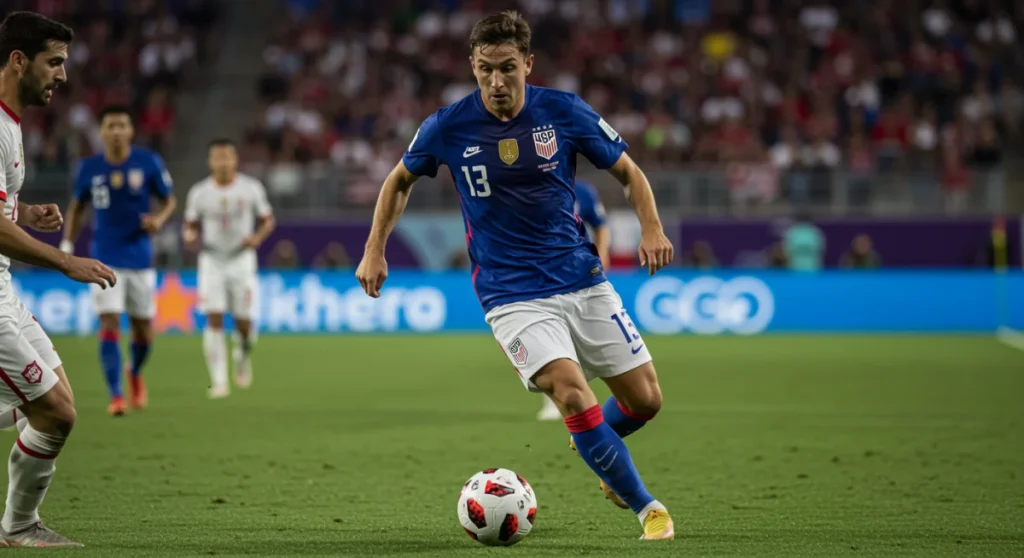
In an era where high-pressing tactics are prevalent, the ability of midfielders to resist pressure and progress the ball effectively is paramount. Over the past 12 months, top US midfielders have significantly improved in these areas, demonstrating greater composure, technical skill, and decision-making under duress.
This adaptation is crucial for maintaining possession, bypassing opposition presses, and launching successful attacks. Without players who can confidently navigate tight spaces and make accurate passes under pressure, teams risk losing possession in dangerous areas and inviting opposition attacks.
The demands of playing in top European leagues and high-stakes international matches have undoubtedly honed these skills, pushing US midfielders to elevate their game to an elite level. The tactical intelligence required to identify passing lanes and exploit space quickly has become a defining characteristic of their play.
Improving Dribbling and Close Control
A key component of press resistance is superior dribbling and close control. Many US midfielders have shown marked improvement in their ability to retain possession and evade markers in congested areas. This includes:
- Tight Control: Keeping the ball close to their feet, even at high speeds or when changing direction abruptly.
- Body Feints and Turns: Using their body to shield the ball and deceive opponents, creating space for themselves.
- Progressive Dribbling: Carrying the ball forward into dangerous areas, rather than simply passing it sideways or backward.
These individual technical improvements allow them to break free from tight marking and initiate attacks, turning what could be a dangerous situation for their team into an opportunity to advance the ball. Players like Yunus Musah and Luca de la Torre exemplify this growth in their ability to carry the ball forward under pressure.
Strategic Use of Space and Body Orientation
Beyond individual skill, there’s a strategic element to press resistance. Midfielders are now more adept at positioning themselves to receive the ball with an open body shape, allowing them to see more of the pitch and make quicker decisions. This involves:
- Scanning the Field: Constantly checking their surroundings before receiving the ball to identify potential threats and passing options.
- Receiving on the Half-Turn: Orienting their body to face forward upon receiving the ball, enabling immediate progression.
- One-Touch Passes: Utilizing quick, incisive one-touch passes to bypass pressing players and accelerate the game.
This intelligent use of space and body orientation minimizes the time opponents have to close them down, effectively nullifying press attempts. It highlights a greater tactical maturity and understanding of how to manipulate space and time on the pitch.
The enhanced press resistance and ball progression capabilities of US midfielders are critical for modern soccer. These adaptations allow them to dictate the tempo of the game, maintain possession under duress, and provide a stable platform for their teams to build attacks, showcasing their evolution into world-class operators.
The Impact of Data Analytics on Midfielder Development
The past year has also seen a deeper integration of data analytics into the development and tactical deployment of US midfielders. This isn’t just about tracking traditional stats like passes completed or tackles won; it delves into more nuanced metrics that illuminate player efficiency, tactical adherence, and overall contribution to team success.
Clubs and national team programs are leveraging advanced data to identify areas for improvement, tailor training regimes, and even scout potential talent. This data-driven approach is refining what it means to be a modern midfielder, pushing players to optimize every aspect of their game.
Tailored Training Regimes
Data analytics now directly informs the creation of highly personalized training programs. For midfielders, this means:
- Workload Management: Monitoring physical output to prevent injuries and ensure peak performance.
- Positional Specifics: Training scenarios designed to improve performance in specific tactical roles, such as breaking lines with passes or winning aerial duels in the midfield.
- Decision-Making Under Pressure: Using simulations and drills that replicate match-day pressure to enhance cognitive processing and quick decision-making.
This bespoke approach ensures that each midfielder’s development path is optimized to address their individual strengths and weaknesses, aligning with the tactical demands of their roles. It’s a significant departure from generalized training, leading to more specialized and effective players.
Performance Analysis and Tactical Adjustments
Post-match analysis heavily relies on data to provide objective insights into player performance. Midfielders can review their:
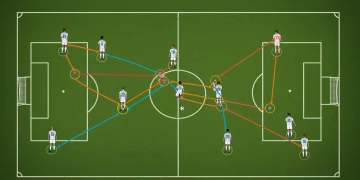
- Passing Networks: Understanding who they connect with most, and whether their passes are progressive or conservative.
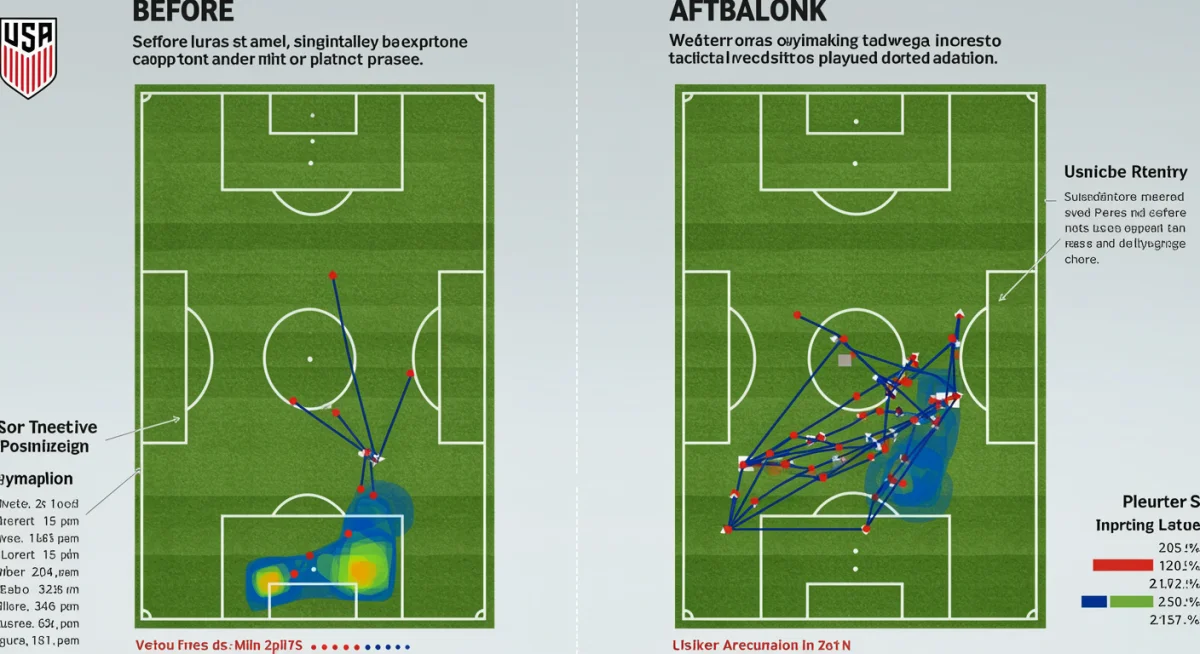
- Defensive Contribution Maps: Visualizing where they make tackles, interceptions, and pressures, identifying areas of high and low activity.
- Movement Patterns: Analyzing off-ball movement to see if they are occupying optimal spaces for both defense and attack.
This detailed feedback allows players and coaches to make informed tactical adjustments for future games, refining individual roles and overall team strategy. The ability to quantify performance in such detail has accelerated the tactical growth of US midfielders, making them more astute and adaptable.
The influence of data analytics has transformed midfielder development, moving it from anecdotal observation to precise, measurable improvement. This data-driven evolution has been pivotal in shaping the sophisticated tactical adaptations observed in top US midfielders over the last year.
The Mental Game: Resilience and Leadership in Midfield
Beyond the physical and technical aspects, the past 12 months have highlighted a significant evolution in the mental fortitude and leadership qualities of top US midfielders. As tactical demands increase and the stakes grow higher, the ability to maintain composure, make critical decisions under pressure, and drive team performance has become more pronounced.
Midfielders are often the central figures on the pitch, influencing both offensive and defensive transitions. Their mental resilience, therefore, directly impacts the team’s ability to navigate challenging moments, recover from setbacks, and execute tactical plans effectively.
Composure Under Pressure
The modern game is incredibly fast-paced, with little time for hesitation. US midfielders have shown an increased capacity for composure, especially when:
- Receiving in Tight Spaces: Maintaining calm when surrounded by opponents, making accurate passes or effective dribbles.
- Making Key Decisions: Choosing the right pass, shot, or defensive action in critical moments of a game.
- Dealing with Adversity: Recovering quickly from errors and maintaining focus throughout the match, regardless of the scoreline.
This mental toughness is vital for controlling the tempo of a game and preventing opponents from gaining momentum. It reflects a deeper understanding of the psychological demands of elite-level soccer.
Emergent Leadership Roles
Many US midfielders have also stepped into more prominent leadership roles within their teams. This leadership manifests through:
- On-Field Communication: Directing teammates, organizing presses, and coordinating defensive shapes.
- Motivational Influence: Inspiring teammates through their work rate, determination, and positive attitude.
- Tactical Guidance: Acting as an extension of the coaching staff on the pitch, ensuring tactical instructions are followed.
Players like Tyler Adams and Kellyn Acosta have become vocal leaders, guiding their teams through difficult periods and reinforcing tactical discipline. This growth in leadership is not just about wearing the armband; it’s about consistently influencing the team’s dynamics and performance.
The mental game, encompassing resilience and leadership, has become a critical area of growth for US midfielders. These psychological adaptations enable them to thrive in high-pressure environments, making them not just technically proficient but also emotionally intelligent players who can inspire and guide their teams to success.
Future Outlook: Continuous Evolution and Global Recognition
The tactical adaptations witnessed in top US midfielders over the past year are not isolated incidents but part of a continuous evolutionary process. As soccer tactics continue to develop globally, these players will face new challenges and opportunities, further shaping their profiles and impact.
The increasing presence of US midfielders in top European leagues is a testament to their growth and the effectiveness of their tactical development. This exposure to diverse playing styles and high-level competition will only accelerate their evolution, making them even more versatile and sophisticated players.
Anticipated Tactical Trends
Looking ahead, we can anticipate further tactical evolutions, potentially including:
- Increased Specialization within Hybrid Roles: While versatility is key, some midfielders might develop highly specialized skills within their hybrid roles, becoming experts in specific types of pressing or unique playmaking patterns.
- Greater Emphasis on Positional Play: Enhanced understanding and execution of positional play principles, allowing for more fluid and unpredictable attacking patterns.
- Advanced Data Integration: Even more sophisticated use of AI and machine learning to analyze performance, predict tactical outcomes, and personalize training.
These trends suggest that US midfielders will need to remain adaptable and open to learning, constantly refining their technical, physical, and mental attributes to stay at the forefront of the game. The demands will only increase, but so too will the opportunities for growth.
Growing Global Recognition
The tactical maturity and adaptability of US midfielders are earning them greater global recognition. Their ability to perform in complex tactical systems, contribute significantly in both attack and defense, and demonstrate leadership qualities makes them valuable assets for any team.
This recognition is crucial for the growth of US soccer as a whole, inspiring future generations of players and demonstrating that American talent can compete at the highest levels of the sport. The continued success and evolution of these midfielders will undoubtedly pave the way for more US players to make their mark on the international stage.
The future for US midfielders is bright, characterized by continuous evolution and growing global acknowledgment. Their ongoing tactical adaptations are not just improving their individual game but are also elevating the standard and reputation of US soccer worldwide.
| Key Adaptation | Brief Description |
|---|---|
| Hybrid Role Development | Midfielders now balance increased defensive duties with enhanced playmaking from deeper positions, blurring traditional roles. |
| Tactical Flexibility | Ability to seamlessly adapt to multiple formations and roles, including positional interchanges and varied midfield structures. |
| Press Resistance & Ball Progression | Improved dribbling, close control, and strategic use of space to resist pressure and advance the ball effectively. |
| Mental Resilience & Leadership | Enhanced composure under pressure and emergent leadership qualities on the field for strategic guidance. |
Frequently Asked Questions About US Midfielder Evolution
A hybrid midfielder in the US context is a player who seamlessly combines significant defensive responsibilities, such as pressing and tackling, with advanced playmaking duties, including progressive passing and ball distribution from deeper positions, contributing effectively across both ends of the pitch.
Tactical flexibility has allowed US midfielders to thrive in dynamic systems, adapting to various formations and roles mid-game. This versatility enables coaches to exploit opponent weaknesses and gives players more opportunities to impact the game from different positions, increasing their overall value.
Press resistance is crucial because it allows midfielders to retain possession and progress the ball effectively under high pressure from opponents. This skill, involving close control, dribbling, and smart body orientation, prevents turnovers in dangerous areas and helps launch successful attacks, essential in today’s high-pressing game.
Data analytics provides objective insights into player performance, informing tailored training regimes and tactical adjustments. It helps identify areas for improvement in pressing, passing networks, and movement patterns, enabling highly personalized development paths for US midfielders to optimize their game.
Leadership qualities among US midfielders have evolved to include greater composure under pressure, effective on-field communication, and motivational influence. They increasingly act as tactical extensions of the coaching staff, guiding teammates and maintaining focus during critical game moments, enhancing overall team performance.
Conclusion
The evolution of top US midfielders over the last 12 months underscores a profound shift in their player profiles, driven by the relentless demands of modern soccer. From embracing hybrid roles that blend defensive grit with creative flair, to mastering tactical flexibility across various formations, and significantly enhancing their press resistance and ball progression, these athletes are continually redefining their capabilities. Supported by advanced data analytics and demonstrating burgeoning leadership, their journey reflects not just individual growth, but the increasing sophistication of American soccer on the global stage. This ongoing adaptation ensures they remain pivotal figures in their teams, poised for even greater impact in the seasons to come.