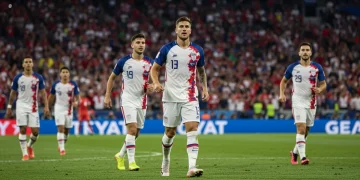
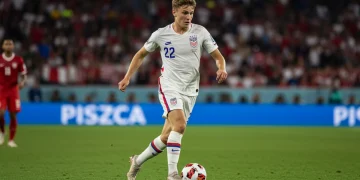
Counter-Pressing Masterclass: European Strategies for US Soccer in 2026
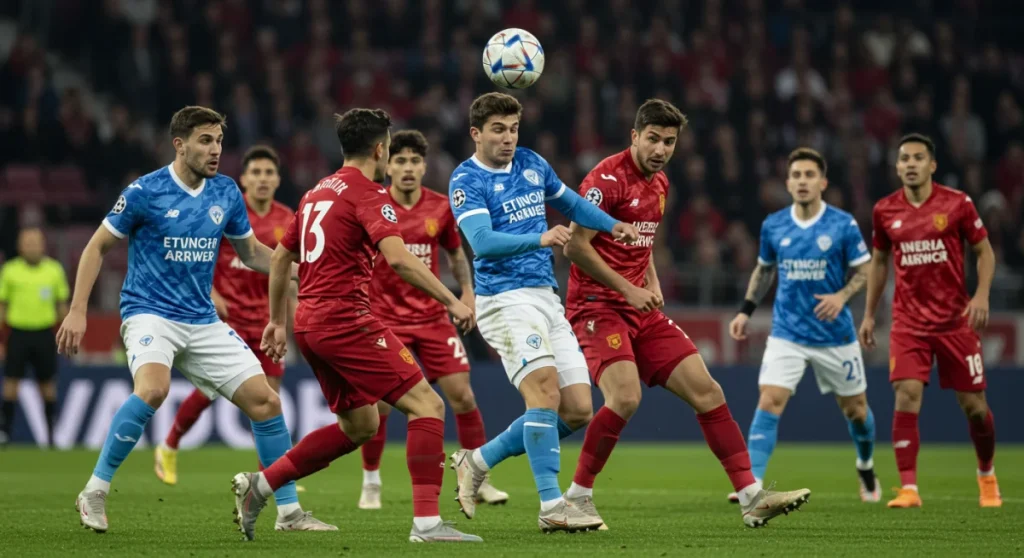
Understanding and implementing advanced counter-pressing strategies from European giants is crucial for elevating US Soccer’s tactical approach and competitiveness leading into the 2026 World Cup.
As the 2026 World Cup approaches, hosted partly on home soil, the spotlight on US Soccer intensifies. To truly compete at the highest level, a deep dive into advanced tactical concepts is essential. This article explores the US Soccer Counter-Pressing masterclass, drawing inspiration from four European football giants and examining how their elite strategies can be adapted and implemented to bolster the US Men’s National Team (USMNT) and Major League Soccer (MLS) ahead of 2026.
Understanding the Counter-Press: A Modern Football Imperative
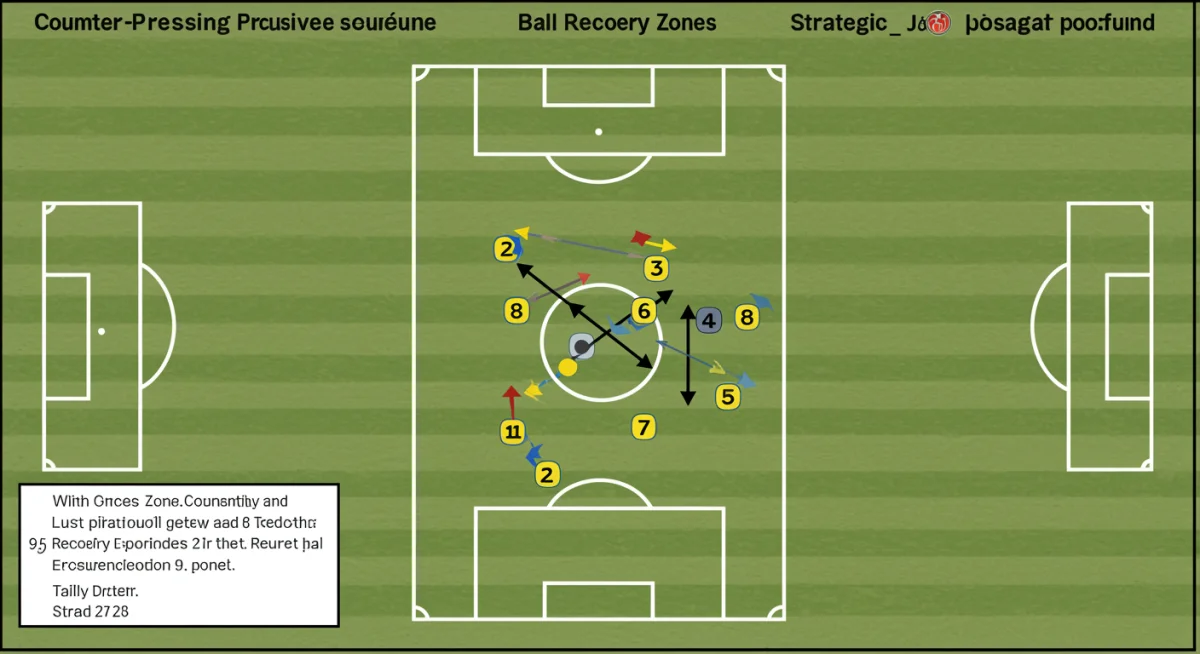
The counter-press, or Gegenpressing, is more than just winning the ball back; it’s a philosophy that dictates how a team reacts immediately after losing possession. Instead of retreating, players are instructed to aggressively hunt the ball in the opponent’s territory, aiming to recover it quickly and launch a new attack while the opposition is disorganized. This proactive defensive strategy has become a cornerstone of modern attacking football.
Its effectiveness lies in exploiting the momentary vulnerability of opponents who have just won possession. Often, their passing options are limited, and their shape is stretched. A well-executed counter-press can lead to high turnovers, creating immediate goal-scoring opportunities from advantageous positions.
The Core Principles of Counter-Pressing
- Immediate Reaction: Players must transition instantly from attack to defense upon losing the ball, closing down the ball carrier and cutting off passing lanes.
- Collective Effort: It’s not one or two players pressing; it’s a coordinated team effort where multiple players converge on the ball and surrounding opponents.
- Compactness: Maintaining a tight team shape, even when pressing high, is vital to prevent opponents from playing through lines.
- Aggression and Intensity: A relentless mindset is required to win back possession quickly, often involving quick sprints and physical challenges.
The counter-press demands high levels of physical fitness, tactical intelligence, and strong communication among players. It transforms defensive actions into offensive springboards, making it a powerful weapon for teams looking to dominate possession and create chances.
In essence, mastering the counter-press allows teams to control the game even without the ball, dictating the tempo and flow by denying opponents time and space. This tactical approach is dynamic and requires constant adaptation based on the opponent’s play and the game state.
Liverpool: The Anfield Avalanche
Jürgen Klopp’s Liverpool revolutionized the Premier League with their intense, suffocating counter-press. Their strategy, often dubbed ‘heavy metal football,’ is built on relentless pressure and quick transitions. When Liverpool loses the ball, the nearest players immediately swarm the ball carrier, while others block passing lanes and cover potential outlets. This creates a trap, forcing errors or hurried long balls.
Their success stems from a combination of factors: world-class athletes, an unwavering commitment to the system, and tactical discipline. Midfielders like Fabinho and Jordan Henderson are crucial in winning second balls and cutting out passes, while the front three initiate the press with incredible energy.
Key Elements of Liverpool’s Counter-Press
- Trigger Press: Specific cues, such as a poor pass or a heavy touch, signal the entire team to initiate the press.
- Narrowing the Pitch: Players quickly shift to make the playing area small, reducing the opponent’s options.
- High Line: The defensive line often pushes high to compress space and support the press from the front.
- Fast Transitions: Once the ball is won, the team immediately looks to attack, often targeting the spaces left by the dispossessed opponent.
Liverpool’s approach demonstrates that counter-pressing is not just about individual effort but a symphony of coordinated movements. Their ability to sustain this intensity for 90 minutes often overwhelms opponents, leading to turnovers in dangerous areas and subsequent goal-scoring opportunities.
The effectiveness of Liverpool’s system is evident in their numerous trophies, including the Premier League and Champions League. Their methodology provides a clear blueprint for any team looking to implement a high-intensity, ball-winning philosophy.
Bayern Munich: The Bavarian Blitz
Bayern Munich has consistently been among Europe’s elite, and their counter-pressing style is a significant contributor to their dominance. Under various coaches, including Hansi Flick and Julian Nagelsmann, Bayern’s ability to win the ball back high up the pitch and immediately transition into attack has been a hallmark. Their physical prowess and tactical flexibility allow them to execute this strategy with devastating effect.
The Bavarian Blitz often involves their wingers and central midfielders pressing aggressively, supported by a high defensive line. They aim to force opponents into mistakes in their own half, leading to quick shots on goal. Their players are incredibly well-drilled in understanding when and where to press, making their system highly efficient.
Bayern’s Tactical Nuances in Counter-Pressing
Bayern’s counter-press is characterized by several tactical nuances that distinguish it. They often employ a ‘rest defense’ structure, meaning that even when attacking, certain players are positioned to immediately engage in counter-pressing should possession be lost. This ensures defensive stability while maintaining offensive threat.
Their central midfielders, such as Joshua Kimmich and Leon Goretzka, are pivotal. They possess the engine to cover vast amounts of ground, the tactical intelligence to read the game, and the technical ability to distribute the ball effectively once won. The full-backs also play a crucial role, often pushing high to support the wingers in the press and quickly closing down wide areas.
Another key aspect is their ability to adapt the press based on the opponent. Against teams that try to build from the back, Bayern will press even higher, aiming to win the ball close to the opponent’s goal. Against more direct teams, they might drop slightly deeper but still maintain a compact shape to launch their counter-press.
The success of Bayern’s counter-press is also deeply tied to their squad depth, allowing them to rotate players and maintain high energy levels throughout a demanding season. Their comprehensive approach to fitness and recovery supports the physical demands of their playing style, making them a formidable force.
Manchester City: Positional Play and Pressing Traps
Pep Guardiola’s Manchester City offers a slightly different, yet equally effective, interpretation of counter-pressing. While Liverpool and Bayern emphasize immediate, aggressive ball recovery, City’s counter-press is often more about control and creating pressing traps within their positional play framework. They aim to win the ball back quickly, but often with the intention of regaining possession to continue their build-up, rather than always launching a direct attack.
City’s players are positioned to form triangles and diamonds, ensuring multiple passing options when in possession and immediate pressing angles when possession is lost. The goal is to box in the opponent, denying them clear passing lanes and forcing them into congested areas where City players can outnumber them.
Guardiola’s Pressing Principles
- Positional Superiority: Players are always in positions to support the ball carrier and immediately press if possession is lost.
- Control and Suffocation: The press aims to suffocate the opponent’s options, forcing them backwards or into predictable long balls.
- Regaining Possession for Build-Up: While direct attacks can occur, the primary goal is often to regain control and restart their intricate passing sequences.
- Collective Intelligence: High levels of tactical understanding are required, as players must anticipate opponent moves and react in unison.
Manchester City’s counter-press is a testament to the idea that pressing can be both aggressive and cerebral. Their highly technical players execute this complex system with precision, making them incredibly difficult to play against.
The tactical discipline and understanding within the City squad are paramount. Each player knows their role in the pressing scheme, from the striker initiating the first line of defense to the defenders pushing up to maintain compactness. This collective intelligence allows them to adapt their pressing intensity and shape based on the situation, often leading to rapid ball recoveries in advantageous areas.
Furthermore, City’s ability to maintain high levels of possession means that their counter-pressing efforts are often shorter and more intense bursts, rather than prolonged defensive phases. This conserves energy and allows them to sustain their high-intensity approach throughout the match, a crucial factor in their consistent success.
Real Madrid: Adaptability and Situational Pressing
Real Madrid, unlike the high-intensity systems of Liverpool or Bayern, often employs a more adaptable and situational counter-press. While they can press high, particularly in key moments or against certain opponents, their overall approach is less about constant, relentless pressure and more about strategic bursts of intensity. This is often dictated by the flow of the game, the opponent’s strengths, and the energy levels of their star players.
Under coaches like Carlo Ancelotti, Real Madrid’s counter-press is integrated into a system that values defensive solidity and rapid transitions. When they lose the ball, there’s an immediate attempt to recover it, especially in central areas, but if the initial press is bypassed, they are quick to drop into a compact defensive shape.
The Pragmatism of Real Madrid’s Press
Real Madrid’s counter-pressing is often characterized by a pragmatic approach. They understand that their world-class attacking talent means they don’t always need to dominate possession or press relentlessly to win games. Instead, they pick their moments, pressing vigorously when the opportunity arises to create a turnover in a dangerous area, or to disrupt an opponent’s build-up.
Their midfield, particularly players like Casemiro (historically) and now Tchouameni and Camavinga, are crucial in this aspect, providing the engine and defensive cover to allow the more attacking players to conserve energy for offensive bursts. The experienced defenders also play a key role in organizing the immediate defensive shape and stepping up to support the press.
Real Madrid’s system also highlights the importance of individual brilliance within a tactical framework. While the collective press is important, the individual defensive actions of players like Vinicius Jr. or Rodrygo, who can track back and win the ball, are also highly valued. This blend of individual quality and situational pressing makes them a dangerous and unpredictable opponent.
The ability to switch between phases of intense pressing and more conservative defensive blocks is a testament to the tactical intelligence and versatility of Real Madrid’s squad. This flexibility allows them to adapt to different game scenarios and opponent strategies, a trait that has contributed significantly to their sustained success in European competitions.
Applying European Counter-Pressing to US Soccer in 2026
For US Soccer, integrating advanced counter-pressing strategies is not just about copying European models, but adapting them to the unique strengths and challenges of American football culture and player development. The 2026 World Cup provides a critical deadline to refine these tactical approaches.
One of the primary challenges is the need for a fundamental shift in mentality. American players, while often physically gifted, need to develop a more ingrained understanding of tactical transitions and collective defensive responsibilities. This begins at the youth level and extends through MLS academies to the national team setup.
Strategic Implementation for US Soccer
- Mentality Shift: Instill a proactive, aggressive defensive mindset from youth to professional levels, emphasizing immediate ball recovery.
- Physical Conditioning: Develop fitness programs tailored to the demands of high-intensity pressing, focusing on endurance, speed, and repeated sprints.
- Tactical Education: Implement consistent coaching methodologies across all levels, teaching players the principles of pressing triggers, collective movement, and defensive shape.
- Player Profiling: Identify and develop players who possess the necessary attributes for counter-pressing: strong work ethic, tactical intelligence, and physical resilience.
MLS clubs can serve as laboratories for these tactical experiments, allowing coaches to test and refine counter-pressing variations. The national team can then draw from a pool of players who are already familiar and proficient in these systems.
The USMNT, with its increasingly talented pool of players in top European leagues, already has individuals exposed to these high-level tactical demands. The challenge is to create a cohesive national team identity that seamlessly integrates these individual experiences into a collective, formidable counter-pressing unit.
By focusing on these areas, US Soccer can develop a distinct and effective counter-pressing identity that not only competes but potentially dominates on the world stage by 2026. This tactical evolution is crucial for closing the gap with traditional footballing powers.
Challenges and Adaptations for the US Context
While the benefits of counter-pressing are clear, its implementation in the US soccer landscape presents unique challenges. The MLS, for instance, has different roster rules, salary caps, and an extensive travel schedule, all of which can impact player fitness and tactical consistency. Adapting European models requires careful consideration of these factors.
The development pathway for American players also differs. Many promising talents move to Europe at a young age, gaining exposure to these advanced tactics. However, ensuring a consistent tactical education for those who remain in the US system is paramount. This includes coaches at all levels understanding and teaching these complex concepts.
Overcoming Implementation Hurdles
One significant hurdle is the need for high-level tactical coaching education across the country. Coaches, from youth to professional, must be equipped with the knowledge and tools to effectively teach and implement counter-pressing strategies. This involves investing in coaching licenses, workshops, and continuous professional development.
Another challenge is the physical demands. The MLS schedule, with its frequent cross-country travel and varying climates, can make it difficult to maintain the high-intensity physical output required for a sustained counter-press. Sport science and recovery protocols will need to be cutting-edge to support such a demanding style of play.
Furthermore, the cultural aspect of soccer in the US is still evolving. While passion for the game is growing, the ingrained tactical understanding seen in traditional footballing nations takes time to cultivate. Patience and a long-term vision are necessary to embed these sophisticated approaches into the national soccer identity.
Ultimately, successful adaptation will involve a hybrid approach: learning from the European masters while innovating to suit the American context. This includes leveraging the athleticism of American players and fostering a tactical intelligence that allows for flexible and efficient counter-pressing.
| Key Aspect | Impact on US Soccer 2026 |
|---|---|
| Mentality Shift | Fosters proactive, aggressive defensive play crucial for high-level competition. |
| Physical Preparation | Develops endurance and speed necessary for sustained high-intensity pressing. |
| Tactical Education | Ensures consistent understanding and execution of complex pressing schemes. |
| Squad Depth & Rotation | Allows for maintaining high energy levels and tactical flexibility throughout tournaments. |
Frequently Asked Questions about Counter-Pressing and US Soccer
Counter-pressing is a tactical approach where a team, immediately after losing possession, aggressively presses the opponent to win the ball back high up the pitch. The goal is to recover possession quickly and launch a new attack while the opposition is still disorganized, turning defensive actions into offensive opportunities.
Implementing effective counter-pressing can significantly enhance US Soccer’s competitiveness for the 2026 World Cup. It allows the team to control game tempo, create more scoring chances from turnovers, and better compete against tactically advanced European and South American teams, elevating their overall performance and tactical identity.
Liverpool under Jürgen Klopp, Bayern Munich, and Manchester City under Pep Guardiola are widely considered masters of counter-pressing. Real Madrid also employs a highly effective, albeit more situational, pressing strategy. Each club offers unique insights into the execution and philosophy behind this modern tactical approach.
MLS teams can benefit by adopting European training methodologies, focusing on tactical education, and improving player conditioning for high-intensity play. Implementing these strategies can lead to more dynamic and exciting football, better player development, and ultimately, a stronger talent pool for the USMNT, preparing them for international competition.
Key challenges include a need for consistent tactical education across all levels, adapting to the physical demands within the MLS schedule, and fostering a deep-seated tactical mentality. Overcoming these requires significant investment in coaching development, sports science, and a long-term vision for player development and cultural shift.
Conclusion
The journey to the 2026 World Cup represents a monumental opportunity for US Soccer to showcase its growth and potential on the global stage. By meticulously studying and intelligently adapting the counter-pressing philosophies of European giants like Liverpool, Bayern Munich, Manchester City, and Real Madrid, the USMNT can forge a formidable tactical identity. This involves not only physical preparation but a profound shift in tactical understanding and collective mentality across all levels of American soccer. Embracing a sophisticated counter-pressing strategy will be a cornerstone for success, enabling US Soccer to compete with the world’s best and leave an indelible mark on the beautiful game.