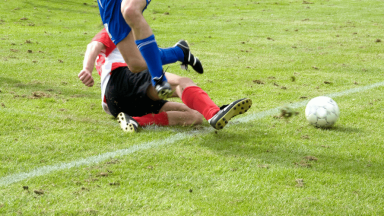
The beautiful game of soccer is often won and lost in the midfield. For US Soccer coaches looking ahead to the 2026 World Cup, mastering this crucial area of the pitch is not just an advantage; it’s a necessity. The global stage demands tactical sophistication, relentless effort, and an innate understanding of how to dictate the flow of a match from the center. This in-depth guide will explore three key tactical adjustments that US Soccer coaches can implement to ensure their teams dominate the midfield, control possession, stifle opposition attacks, and create goal-scoring opportunities. We’ll delve into practical solutions, drilling down into the specifics that can make the difference between a good performance and a truly world-class one.
The journey to 2026 is a significant one for US Soccer. As co-hosts, the pressure to perform will be immense. The development of a robust and adaptable midfield strategy is paramount. This isn’t just about individual talent; it’s about cohesion, communication, and a collective tactical intelligence that allows the team to adapt to different opponents and game situations. By focusing on these critical midfield adjustments, coaches can equip their players with the tools needed to compete at the highest level.
The Paramount Importance of Midfield Control in Modern Soccer
In contemporary soccer, the midfield acts as the engine room, the brain, and the shield of a team. It’s where battles are won and lost, where transitions are initiated, and where the rhythm of the game is established. A team that controls the midfield often controls the match. This control manifests in several ways: dictating possession, preventing opposition build-up, creating numerical superiority, and launching incisive attacks. For US Soccer, elevating their game means elevating their midfield play. Without a dominant midfield, even the most talented attackers can be isolated, and the most resolute defense can be overwhelmed. The ability to consistently win the US Soccer midfield battles will be a cornerstone of any success in 2026.
Historically, soccer has seen various approaches to midfield play. From the classic defensive midfielder shielding the backline to the free-roaming attacking midfielder linking play, the roles have evolved. Modern soccer, however, demands a more fluid and collective approach. Midfielders are expected to be multi-functional, capable of contributing to both defense and attack with equal proficiency. They must possess exceptional technical skills, tactical awareness, and the physical endurance to cover vast amounts of ground. This holistic expectation means that any tactical adjustment must consider the all-around development of the US Soccer midfield unit.
The tactical landscape of international soccer is constantly shifting. Teams are becoming more adept at pressing high, transitioning quickly, and exploiting spaces. To counter this, US Soccer needs a midfield that is not only robust defensively but also intelligent and creative in possession. The tactical adjustments discussed in this article are designed to foster these qualities, providing a framework for coaches to build a midfield unit that can withstand pressure, retain possession under duress, and unlock stubborn defenses. Embracing these strategies will be crucial in preparing for the diverse challenges presented by the world’s best teams.
Tactical Adjustment 1: Implementing a Dynamic Midfield Triangulation System
The first crucial tactical adjustment for US Soccer coaches centers on implementing a dynamic midfield triangulation system. This strategy emphasizes creating constant three-player triangles in various zones of the midfield, both in possession and out of possession. The primary goal is to provide multiple passing options, facilitate quick ball circulation, and create numerical superiority in key areas. When defending, these triangles help to press opponents effectively and cut off passing lanes.
Understanding Dynamic Triangulation
Dynamic triangulation is not simply about three players being close together; it’s about their intelligent movement and positioning relative to the ball, opponents, and teammates. In possession, one player receives the ball, while two others position themselves to offer immediate support, creating angles for short, quick passes. This reduces the risk of turnovers and allows the team to maintain possession under pressure. The constant shifting of these triangles makes it difficult for opponents to mark players and anticipate passes.
For US Soccer, this means training midfielders to always look for these triangular formations, whether they are playing in a 4-3-3, 4-2-3-1, or other systems. The central midfielders, along with a wide player or a dropping forward, can form these triangles. The key is fluidity and understanding of roles. One midfielder might drop deep to receive, while another pushes forward, and the third provides width. This constant rotation and interchange of positions are vital for disrupting opposition defensive structures and creating space.
Practical Implementation and Drills
To implement this, US Soccer coaches should focus on drills that emphasize quick passing, positional awareness, and decision-making in small-sided games. Rondo drills (possession games in a confined space with a numerical advantage for the attacking team) are excellent for teaching players to find angles and create passing triangles. Another effective drill involves a central box with three midfielders, surrounded by four or five opposing players. The goal is for the midfielders to maintain possession within the box, constantly forming triangles and rotating positions, while the opponents try to win the ball. This forces players to think quickly and intelligently about their positioning.
Furthermore, video analysis plays a significant role. Coaches can show examples of top international teams effectively using triangulation to break down defenses or absorb pressure. Highlighting successful sequences and also pointing out instances where triangulation broke down can provide invaluable learning opportunities for US Soccer players. Repetition and constant feedback are crucial for players to internalize these concepts and apply them instinctively in match situations. The aim is to make dynamic triangulation a natural part of their game, allowing them to control the US Soccer midfield with confidence.
Tactical Adjustment 2: Aggressive Counter-Pressing and Transitional Play
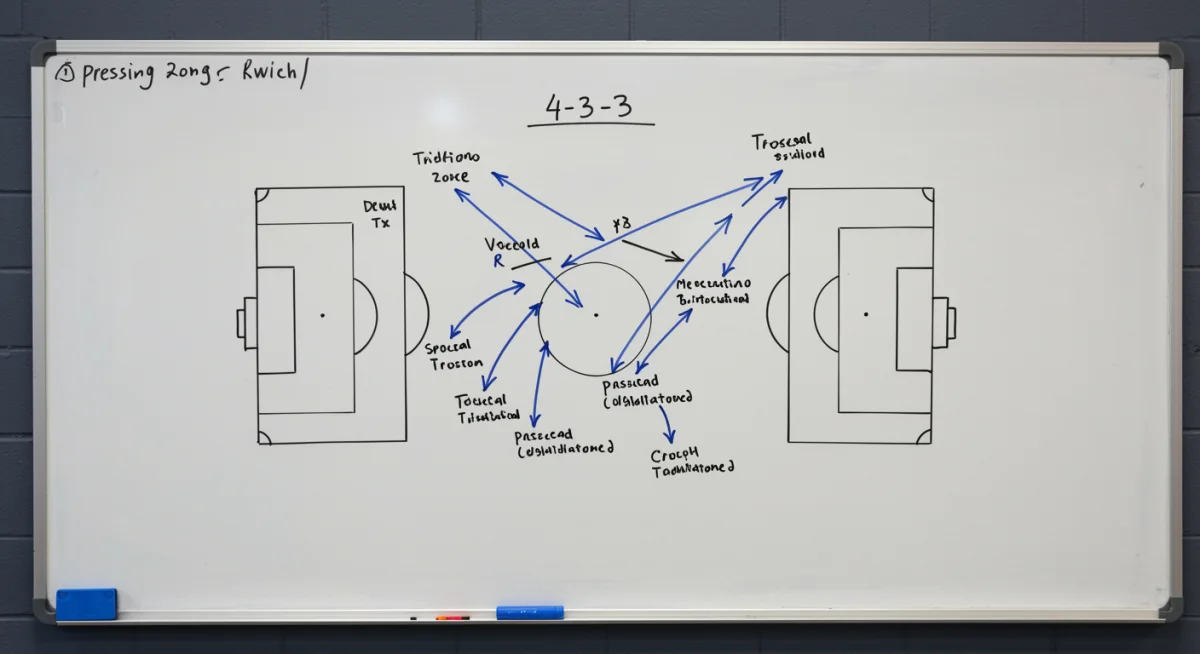
The second critical adjustment is the implementation of an aggressive counter-pressing strategy combined with rapid transitional play. Modern soccer demands that teams not only be good in possession but also devastating immediately after losing it. Counter-pressing, often referred to as ‘Gegenpressing,’ involves immediately attempting to win the ball back within a few seconds of losing possession, ideally close to where it was lost. This tactic aims to disorganize the opponent’s counter-attack and create new attacking opportunities while they are still transitioning from defense to offense.
The Principles of Aggressive Counter-Pressing
For US Soccer, this means training midfielders to react instantly to losing the ball. Instead of retreating, players closest to the ball immediately close down the opponent in possession, while teammates nearby cut off passing lanes and provide support. The goal is to create a ‘trap’ or a ‘cage’ around the ball carrier, forcing a hurried pass, a turnover, or a long ball that can be easily recovered. This requires immense physical fitness, mental sharpness, and a collective understanding of when and how to press.
The benefits of effective counter-pressing are manifold. It prevents opponents from building momentum, recovers possession in dangerous areas, and creates immediate goal-scoring chances when the opponent is least organized. It also conserves energy in the long run, as winning the ball back quickly means less time spent chasing the game. For US Soccer to compete with the world’s elite, their ability to transition rapidly from attack to defense and back to attack must be seamless and highly effective, especially in the US Soccer midfield.
Drills for Developing Counter-Pressing and Transitions
Coaches can develop this by incorporating drills that simulate game scenarios where possession is lost and immediately recovered. Small-sided games with specific rules, such as requiring players to win the ball back within 5 seconds of losing it, are highly effective. ‘Transition games’ where teams attack one goal and upon losing possession, must immediately defend the opposite goal, also help to instill the mindset of rapid transition. These drills should emphasize communication, collective effort, and anticipation.
Furthermore, specific physical conditioning tailored to repeated high-intensity sprints and recoveries is essential. Midfielders, in particular, will bear the brunt of this tactical approach, requiring exceptional stamina and anaerobic capacity. Coaches should also focus on tactical instruction regarding pressing triggers – when to press, who presses first, and how the rest of the team supports the press. Mastering these nuances will allow US Soccer to turn defensive moments into offensive opportunities, controlling the rhythm of the game from the midfield.
Tactical Adjustment 3: Enhancing Positional Interchangeability and Rotational Movement
The third key tactical adjustment for US Soccer involves enhancing positional interchangeability and rotational movement within the midfield. This strategy aims to create confusion for the opposition, exploit spaces, and provide varied attacking angles by having midfielders fluidly swap positions and make intelligent runs. It moves beyond rigid roles and embraces a more dynamic, unpredictable approach to midfield play.
The Concept of Positional Interchangeability
Positional interchangeability means that midfielders are not confined to a single role (e.g., holding midfielder, box-to-box, attacking midfielder) but are trained to perform aspects of each role depending on the game situation. For instance, a holding midfielder might push forward into an attacking role, while an attacking midfielder drops deep to link play or cover defensively. This fluidity makes it incredibly difficult for opponents to man-mark or maintain a consistent defensive structure.
Rotational movement complements this by ensuring that when one player moves out of their designated zone, another player immediately covers that space or moves into a new attacking position. This constant flux creates dilemmas for defenders: do they follow their man and leave space, or hold their position and allow an opponent to run free? For US Soccer, developing players who are comfortable and effective across multiple midfield roles will be a huge asset, providing tactical flexibility and unpredictability, especially in the US Soccer midfield.
Training for Fluidity and Rotations
To cultivate this, coaches need to design drills that encourage players to step out of their comfort zones and occupy different areas of the pitch. Rondo variations where players must swap positions after a certain number of passes, or small-sided games where players are given specific instructions to rotate and interchange, can be highly beneficial. For example, a drill might require a central midfielder to make an overlapping run into a wide area, with a wide midfielder then drifting centrally to cover.
Understanding spatial awareness is paramount. Players must be able to read the game, anticipate where space will open up, and move into those areas intelligently. Video analysis of elite teams known for their fluid midfield play (e.g., Pep Guardiola’s Manchester City or certain Spanish national teams) can provide excellent examples for US Soccer players. Coaches should emphasize decision-making under pressure, encouraging players to be brave and creative in their movement and passing choices. This holistic approach to developing US Soccer midfield talent will be crucial for success.
Integrating These Adjustments: The Holistic Approach
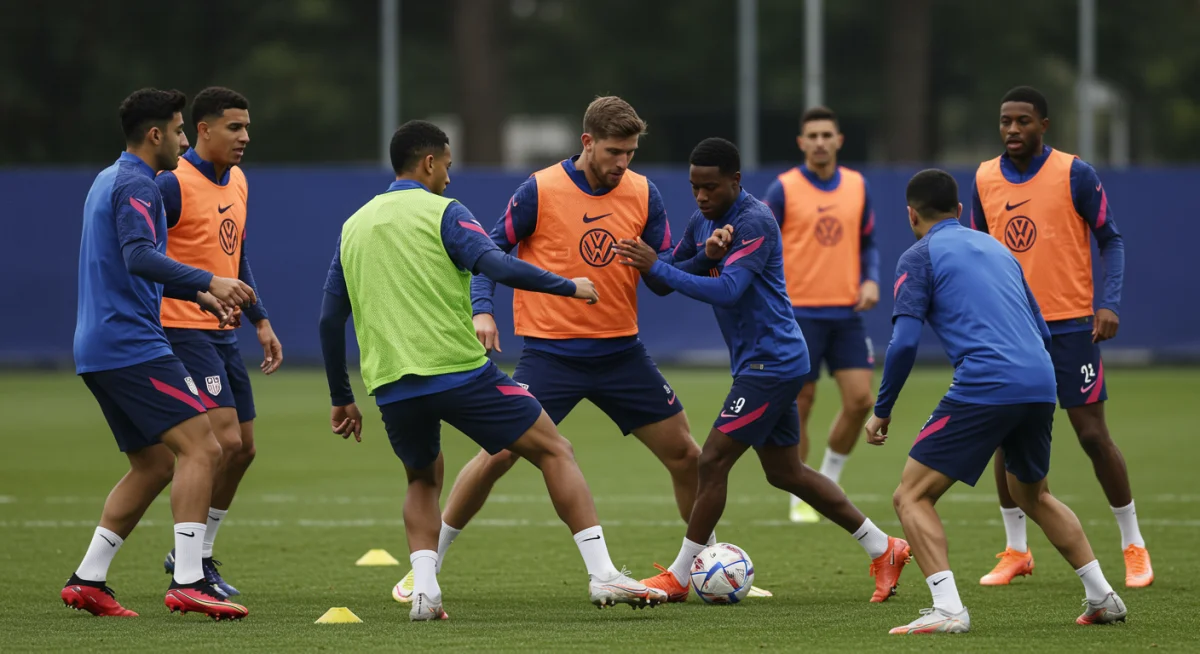
While each of these tactical adjustments – dynamic midfield triangulation, aggressive counter-pressing, and enhanced positional interchangeability – can be worked on individually, their true power lies in their integration. For US Soccer to truly master the midfield, these concepts must be woven together into a cohesive and fluid playing style. They are not isolated strategies but interconnected components of a comprehensive midfield philosophy.
Synergy in Action
Consider a scenario where the US Soccer midfield loses possession. Immediately, the aggressive counter-press kicks in, with players forming triangles around the ball carrier to win it back quickly. Upon recovery, the dynamic triangulation system ensures multiple passing options, allowing the team to retain possession and build an attack. As the attack develops, positional interchangeability comes into play, with midfielders rotating and swapping positions to create space and confuse defenders. This seamless transition between phases of play is what defines elite midfield performance.
Coaches must therefore design training sessions that progressively combine these elements. Full-sided games with specific tactical objectives, where players are encouraged to apply all three adjustments simultaneously, are essential. This might involve setting up scenarios where the team practices winning the ball high, maintaining possession through triangulation, and then creating a scoring chance through rotational movement. The complexity of these drills should increase as players gain proficiency, pushing them to think and react faster.
Leadership and Communication in the Midfield
Beyond tactical schemes, effective leadership and constant communication are vital. Midfielders are often the vocal leaders on the pitch, directing teammates, organizing the press, and calling for passes. US Soccer coaches should foster an environment where players are encouraged to communicate clearly and decisively. This includes verbal cues, hand signals, and an intuitive understanding of each other’s movements. Developing a strong sense of camaraderie and trust within the midfield unit will enhance their ability to execute complex tactical instructions under pressure.
Furthermore, the physical and mental demands of implementing these adjustments are significant. Players must be exceptionally fit, capable of performing high-intensity actions repeatedly throughout a match. They also need mental fortitude to make split-second decisions under duress. Coaches should incorporate sports psychology techniques to build resilience, focus, and decision-making skills under pressure, ensuring the US Soccer midfield is not only tactically astute but also mentally robust.
Challenges and Adaptations for US Soccer
Implementing these advanced tactical adjustments won’t be without challenges for US Soccer. The player pool, while growing in talent, still needs consistent exposure to these high-level tactical demands. Adapting these strategies to different opponents and varying game states will also be crucial. Some teams might sit deep, requiring patience and intricate passing, while others might press high, demanding quick decision-making and precise execution under pressure.
Overcoming Opposition Strategies
For example, against teams that employ a low block and defend with many players behind the ball, the emphasis on dynamic triangulation and rotational movement becomes even more critical. The US Soccer midfield will need to be adept at finding half-spaces, making penetrative runs, and quickly switching the point of attack to disorganize the compact defense. Against high-pressing teams, the focus shifts to quick passing combinations to bypass the initial press, with the holding midfielder often playing a crucial role in distributing the ball effectively.
Coaches must also be prepared to make in-game adjustments. If an opponent effectively neutralizes one aspect of the US Soccer midfield strategy, the team must have the tactical flexibility to adapt. This might involve changing the midfield shape, altering pressing triggers, or adjusting player roles. This level of adaptability comes from extensive training, detailed scouting of opponents, and a deep understanding of the team’s own strengths and weaknesses. The ability to control the US Soccer midfield is not static; it’s a dynamic process of continuous adaptation and improvement.
Youth Development and Long-Term Vision
Finally, for these tactical adjustments to become ingrained in the fabric of US Soccer, they must be introduced at earlier stages of player development. Youth academies and development pathways should begin teaching concepts like triangulation, counter-pressing, and positional fluidity from a young age. This long-term vision will ensure that by the time players reach the senior national team, these tactical principles are second nature, providing a consistent and robust foundation for future success. Developing a strong US Soccer midfield pipeline is key.
The 2026 World Cup represents an unparalleled opportunity for US Soccer. By focusing on these three key tactical adjustments – dynamic midfield triangulation, aggressive counter-pressing and transitional play, and enhanced positional interchangeability and rotational movement – coaches can lay the groundwork for a midfield that is not only competitive but dominant on the world stage. The path to success in 2026 runs directly through the midfield, and with these practical solutions, US Soccer can be well-equipped to control the center and dictate their destiny.
Conclusion: Forging a Resilient US Soccer Midfield for 2026 and Beyond
The journey to the 2026 World Cup is a marathon, not a sprint, and the development of a world-class midfield is a cornerstone of US Soccer’s ambitions. We have explored three pivotal tactical adjustments: implementing a dynamic midfield triangulation system, embracing aggressive counter-pressing and rapid transitional play, and fostering enhanced positional interchangeability and rotational movement. Each of these components, when integrated effectively, contributes to a holistic and formidable midfield strategy capable of competing with the best teams globally.
By prioritizing dynamic triangulation, US Soccer teams can ensure consistent possession, create passing options under pressure, and methodically break down opposition defenses. This tactical intelligence in ball retention is fundamental to controlling the pace and direction of any match. The emphasis on aggressive counter-pressing transforms defensive moments into immediate offensive threats, allowing the US Soccer midfield to quickly regain possession in dangerous areas and exploit disorganized opponents. This relentless intensity is a hallmark of modern elite soccer.
Furthermore, cultivating positional interchangeability and rotational movement adds an unpredictable dimension to the US Soccer midfield. This fluidity confuses markers, creates space, and unlocks new attacking avenues, making the team incredibly difficult to defend against. It empowers players to think creatively and take initiative, fostering a proactive rather than reactive approach to the game. These strategic shifts move beyond basic formations, focusing instead on the dynamic interactions and collective intelligence of the midfield unit.
The successful implementation of these tactical adjustments requires dedicated coaching, rigorous training, and a commitment to player development across all levels of US Soccer. It demands players who are not only technically proficient but also tactically astute, physically robust, and mentally resilient. Coaches must continuously educate their players, utilizing video analysis, specific small-sided games, and full-sided tactical drills to ingrain these principles until they become second nature.
The 2026 World Cup on home soil presents a unique opportunity for US Soccer to showcase its evolution on the international stage. By mastering the US Soccer midfield battles through these targeted tactical adjustments, the national team can establish a dominant presence in the center of the park, dictate the flow of games, and ultimately achieve the success that the nation craves. The future of US Soccer is bright, and its foundation will be built upon a resilient, intelligent, and dynamic midfield that controls the very heart of the game.