
The anticipation for the 2026 FIFA World Cup, hosted jointly by the United States, Canada, and Mexico, is already reaching a fever pitch. For the United States Men’s National Team (USMNT), this tournament represents an unprecedented opportunity to showcase their talent on home soil and make a profound statement on the global stage. The team, under the guidance of coach Gregg Berhalter, is a fascinating blend of experienced veterans and an exciting crop of young, ambitious players. The focus for many fans and analysts alike is squarely on these burgeoning talents, the USMNT rising stars, who are expected to form the core of the squad that will compete for glory in three years’ time. Their evolving player profiles, tactical adaptability, and sheer potential will be critical factors in determining the USMNT’s success.
The journey to 2026 is not merely about individual brilliance; it’s about cohesion, tactical understanding, and the ability to perform under immense pressure. The players highlighted in this article are not just promising; they are already making significant waves in top European leagues and within the national team setup. Their development over the next few years will be meticulously tracked, as they refine their skills, adapt to different tactical systems, and mature into true leaders on and off the pitch. This deep dive into the USMNT rising stars will explore why these particular individuals are generating so much excitement, what their current strengths are, and how their roles might evolve to best serve the team’s ambitions for the 2026 World Cup.
The Road to 2026: A Unique Opportunity for USMNT Rising Stars
The 2026 World Cup offers a unique confluence of factors for the USMNT. Hosting the tournament provides an automatic qualification, eliminating the arduous and often stressful CONCACAF qualifying campaign. This allows for a more focused and strategic approach to player development, friendly matches, and tactical experimentation. The home advantage, with passionate crowds across major American cities, cannot be overstated. It provides an emotional boost and a familiar environment that could propel the team to unprecedented heights. Furthermore, the timing aligns perfectly with the maturation of a generation of American players who have benefited from early exposure to high-level European football, a stark contrast to previous eras.
This generation of USMNT rising stars has, for the most part, been integrated into the national team setup for several years, gaining valuable experience in competitive matches, including the previous World Cup in Qatar, the CONCACAF Gold Cup, and the Nations League. This continuous exposure to international football accelerates their development, allowing them to understand the demands and nuances of playing at the highest level. The pressure will undoubtedly be immense, but these players have shown a remarkable resilience and a hunger for success that bodes well for the future. The spotlight will be brighter than ever, and how they respond will define their legacies.
Gregg Berhalter’s Vision and the Evolving Tactical Landscape
Gregg Berhalter’s return as head coach signifies a continuation of a project that began several years ago. His tactical philosophy, which emphasizes possession, high pressing, and fluid attacking play, is well-suited to the technical abilities of many of the USMNT rising stars. However, the international game is constantly evolving, and Berhalter will need to demonstrate tactical flexibility and an ability to adapt to different opponents and match situations. The next three years will be crucial for solidifying a core tactical identity while also fostering an environment where individual talents can flourish within that framework.
The role of each player within this system will be critical. Understanding how their individual strengths can be maximized and how they can contribute to the collective will be a continuous process. Berhalter’s challenge will be to find the right balance between continuity and innovation, ensuring that the team is both stable and unpredictable. The integration of new talents and the development of existing ones will be key to building a squad capable of competing with the world’s best. The USMNT rising stars will be at the forefront of this evolution, their versatility and tactical intelligence becoming increasingly important.
Spotlight on Five USMNT Rising Stars for 2026
While the USMNT boasts a deep pool of talent, certain players stand out as having the potential to be truly transformative figures for the 2026 World Cup. These individuals combine exceptional skill with a winning mentality and have already demonstrated their ability to perform on big stages. Let’s delve into five such USMNT rising stars, examining their current profiles and their projected impact.
1. Christian Pulisic: The Captain’s Evolution
While often considered a veteran due to his early debut, Christian Pulisic, at just 25 years old, is still very much a player in his prime and a crucial USMNT rising star. His move to AC Milan has revitalized his club career, allowing him to play in a more consistent attacking role where his dribbling, pace, and goal-scoring instincts can truly shine. Pulisic’s experience from the 2022 World Cup and his years in the Champions League will be invaluable. For 2026, his role will likely evolve from being solely the primary attacking threat to also becoming a more seasoned leader and playmaker. His ability to create chances, draw defenders, and score crucial goals will remain paramount, but his influence on the younger players and his tactical understanding will also be vital.
Pulisic’s player profile is that of a versatile attacking midfielder or winger, capable of playing on either flank or through the center. His close control, burst of speed, and ability to finish make him a constant danger to opposition defenses. The challenge for Pulisic will be to maintain his fitness and consistency, ensuring he arrives at 2026 in peak physical condition. His leadership, both by example and through communication, will be essential for a relatively young squad aiming for deep tournament success. He is the standard-bearer for the USMNT rising stars, demonstrating what is possible for American talent.
2. Gio Reyna: The Creative Maestro
Gio Reyna, despite facing injury setbacks, represents the pinnacle of creative talent within the USMNT. His vision, passing range, and ability to unlock defenses with a single pass are extraordinary. At Borussia Dortmund, he has shown flashes of brilliance, and if he can stay fit and find a consistent run of games, his potential is limitless. For 2026, Reyna could be the primary orchestrator in the attacking third, dictating the tempo and providing the incisive passes needed to break down resolute defenses. His ability to play as a number 10, a wide playmaker, or even a deeper-lying midfielder gives Berhalter significant tactical flexibility.
Reyna’s player profile is that of a classic playmaker, possessing exceptional technical ability, spatial awareness, and a calmness under pressure. His left foot is a wand, capable of delivering pinpoint crosses and powerful shots. The key for Reyna will be to build his physical robustness and mental resilience. If he can overcome his injury woes, he has the potential to be one of the breakout stars of the 2026 World Cup. His partnership with other attacking players, particularly Christian Pulisic and the strikers, will be crucial. He is arguably the most technically gifted of the USMNT rising stars.
3. Yunus Musah: The Engine Room Dynamo
Yunus Musah has firmly established himself as a vital component of the USMNT midfield. His boundless energy, ball-winning ability, and powerful forward runs make him a dynamic box-to-box midfielder. His move to AC Milan further solidifies his standing in a top European league, exposing him to high-pressure environments regularly. For 2026, Musah will be expected to be the engine of the midfield, providing defensive cover, transitioning play from defense to attack, and driving the team forward with his relentless work rate. His ability to cover ground and disrupt opposition play will be critical against top-tier opponents.
Musah’s player profile is that of a modern central midfielder – athletic, technically proficient, and tactically intelligent. He excels at carrying the ball through midfield, breaking lines with his dribbling, and winning possession back for his team. His partnership with other midfielders, such as Weston McKennie or Tyler Adams, will define the USMNT’s control of the middle of the park. As he matures, his decision-making in the final third and his goal contributions are likely to increase, making him an even more complete player. He is a workhorse among the USMNT rising stars, providing vital balance.
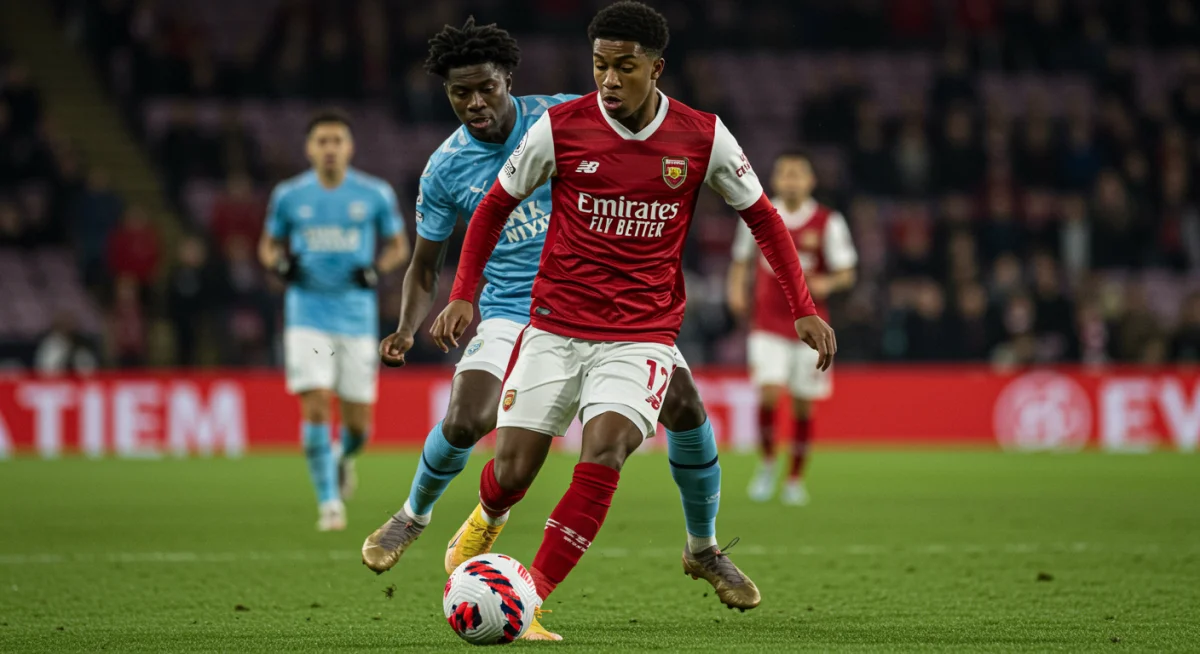
4. Folarin Balogun: The Clinical Finisher
Folarin Balogun’s decision to commit to the USMNT has been a monumental boost for the team’s attacking options. His prolific goal-scoring form in Ligue 1 with Reims, followed by his move to AS Monaco, has showcased his predatory instincts and clinical finishing. The USMNT has long sought a consistent goalscorer, and Balogun appears to be that player. For 2026, he will be expected to lead the line, providing the cutting edge in front of goal that can turn draws into wins and close games out. His movement off the ball, ability to play on the shoulder of the last defender, and composure in tight spaces are invaluable attributes.
Balogun’s player profile is that of a pure striker – a natural goalscorer with excellent positioning, pace, and a variety of finishes. He is comfortable playing as a lone striker or in a two-striker system. His integration into the national team has been seamless, and he has already demonstrated his ability to score at the international level. The challenge for Balogun will be to maintain his form and continue to develop his all-around game, including hold-up play and link-up play with the midfielders and wingers. He represents a significant upgrade in the attacking department for the USMNT rising stars.
5. Ricardo Pepi: The Poacher’s Growth
Ricardo Pepi’s journey has been one of resilience and continuous improvement. After a challenging spell at Augsburg, his successful loan at FC Groningen and subsequent move to PSV Eindhoven have reignited his career. Pepi is a classic poacher, known for his intelligent movement in the box and his knack for being in the right place at the right time. For 2026, Pepi will provide a crucial alternative or partner to Balogun, offering a different profile as a striker. His ability to score with both feet and his head, coupled with his improving link-up play, makes him a valuable asset. His determination to rebound from adversity speaks volumes about his character.
Pepi’s player profile is that of a traditional number 9, focused on goal-scoring. He possesses good aerial ability, strength to hold off defenders, and a calm demeanor in front of goal. While Balogun might offer more pace and dribbling, Pepi offers a more direct, physical presence and exceptional poaching instincts. His competition with Balogun will likely push both players to higher levels, ultimately benefiting the USMNT. The growth he has shown in Europe makes him a compelling figure among the USMNT rising stars, ready to seize his opportunity.
Tactical Implications and Player Interplay
The strength of the USMNT for 2026 will lie not just in individual talent but in how these USMNT rising stars integrate and complement each other within Berhalter’s tactical framework. The interplay between the midfield trio, the wide attackers, and the central striker will be paramount. For instance, the dynamic runs of Musah from midfield could create space for Pulisic or Reyna to operate in more central positions, while the clinical finishing of Balogun or Pepi will be dependent on the service provided by the creative players.
The versatility of players like Pulisic and Reyna, who can drift between wide and central areas, will make the USMNT attack unpredictable. Berhalter may opt for a fluid front three, allowing players to interchange positions and exploit weaknesses in opposition defenses. The ability of the midfielders to win the ball back quickly and launch counter-attacks will also be a key factor, leveraging the pace of the attacking players.
Developing Depth and Resilience
Beyond these five USMNT rising stars, the squad will need significant depth to navigate the rigors of a World Cup tournament. Injuries, suspensions, and tactical adjustments will necessitate a strong bench. Players like Brenden Aaronson, Weston McKennie (another key figure who, while established, is still relatively young for 2026), Timothy Weah, and emerging talents from MLS and European academies will all play crucial roles in providing competition and cover. The development of this broader talent pool is an ongoing process that will define the team’s ultimate potential.
Building a resilient team capable of performing under pressure will also be vital. The experience gained in the 2022 World Cup, where the USMNT showed flashes of brilliance but ultimately fell short, will serve as a valuable learning curve. The next three years will be about refining that experience, instilling a winning mentality, and ensuring that the players are mentally and physically prepared for the unique demands of a home World Cup. The USMNT rising stars will be at the forefront of this journey, their youthful exuberance tempered by growing experience.
The Impact of a Home World Cup on Player Development
Hosting the World Cup is not just about the tournament itself; it has a profound and lasting impact on soccer development within the host nation. For the USMNT rising stars, the prospect of playing in front of their home fans, friends, and family provides an unparalleled motivation. This heightened sense of occasion can push players to new levels of performance and solidify their place in the national sporting consciousness.
Furthermore, the increased media attention and grassroots interest generated by a home World Cup can inspire the next generation of American soccer players. The current USMNT rising stars will become role models, demonstrating that it is possible to reach the highest echelons of the sport. This virtuous cycle of inspiration and aspiration is crucial for the long-term growth of soccer in the United States, ensuring a continuous pipeline of talent for future national teams.
Leveraging Technology and Sports Science
Modern football relies heavily on technology and sports science to optimize player performance and minimize injuries. The USMNT has been at the forefront of adopting these advancements. For the 2026 World Cup cycle, the use of advanced analytics, GPS tracking, physiological monitoring, and personalized training programs will be even more critical. These tools will help Berhalter and his staff to manage player workloads, identify areas for improvement, and ensure that the USMNT rising stars are in peak condition when the tournament arrives.
The focus on holistic player development, encompassing physical, technical, tactical, and psychological aspects, will be vital. Nutritionists, sports psychologists, and specialized trainers will work closely with the players to ensure they are prepared for the immense pressures and physical demands of a World Cup. This comprehensive approach is essential for maximizing the potential of each of the USMNT rising stars.
Challenges and Expectations for the USMNT
While the excitement surrounding the 2026 World Cup is palpable, there will undoubtedly be significant challenges for the USMNT. The expectation from a home crowd will be immense, potentially creating a double-edged sword of motivation and pressure. Navigating this pressure cooker environment will require strong leadership, mental fortitude, and a clear tactical plan. The team will also face incredibly tough opposition, as the World Cup always brings together the very best footballing nations.
The USMNT’s goal for 2026 should be to progress further than any previous American side in the modern era. A deep run into the knockout stages, perhaps even reaching the semi-finals, would be considered a resounding success and a testament to the growth of American soccer. Achieving this will require every one of the USMNT rising stars to perform at their absolute peak, supported by a cohesive team effort and astute coaching decisions.
Conclusion: A Bright Future for USMNT Rising Stars
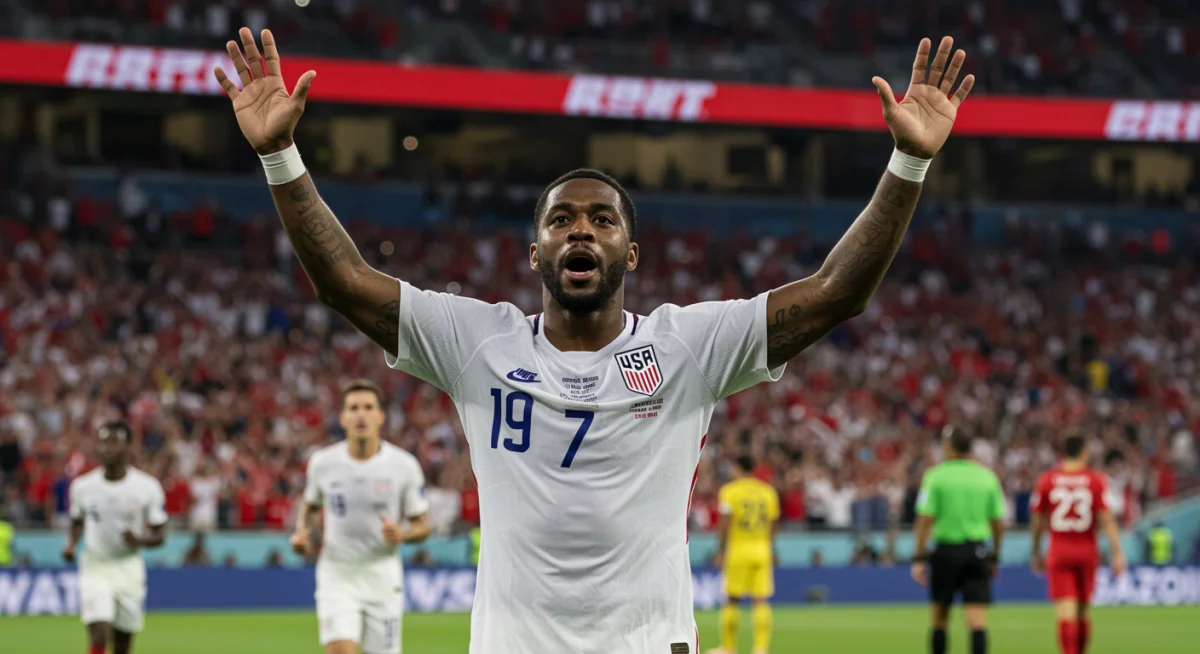
The 2026 World Cup represents a truly golden opportunity for the United States Men’s National Team. With a blend of established talent and an exciting cohort of USMNT rising stars, the team is poised to make a significant impact on home soil. Christian Pulisic, Gio Reyna, Yunus Musah, Folarin Balogun, and Ricardo Pepi are just five examples of the incredible potential within the squad. Their evolving player profiles, tactical contributions, and leadership will be instrumental in defining the team’s success.
The next three years will be a period of intense development, tactical refinement, and building team chemistry. The challenge for Gregg Berhalter and his staff will be to harness this talent, manage expectations, and create a resilient team capable of competing with the world’s elite. If these USMNT rising stars continue on their current trajectory, refining their skills and growing into their roles, the dream of a historic World Cup run for the USMNT could very well become a reality. The stage is set, the talent is undeniable, and the anticipation is building for what promises to be an unforgettable tournament.
The journey of these young athletes, from promising academy products to potential national heroes, is a narrative that will captivate millions. Their individual stories of perseverance, skill, and ambition will intertwine to form the collective saga of the USMNT’s quest for glory in 2026. As they continue to hone their craft in Europe’s top leagues and represent their country with pride, the future of American soccer looks incredibly bright, driven by the talent and dedication of these remarkable USMNT rising stars.